
Many maintenance teams struggle with the same questions. Where is the oil really coming from? Does it need a full teardown, or will a targeted seal do? Can the unit stay in service?
This guide explains how to judge leak severity, compare traditional regasketing with low-pressure leak sealing, and plan a repair that protects reliability while limiting outage time.
Key Takeaways
- Regasketing replaces failed seals; targeted sealing fits localized leaks on sound joints.
- Confirm the true leak source first, because oil migrates.
- Traditional regasketing generally means de-energizing, draining, and post-repair testing.
- Oil condition, containment, and equipment criticality should shape the repair plan.
Transformer Regasketing and Leak Repair: What They Involve
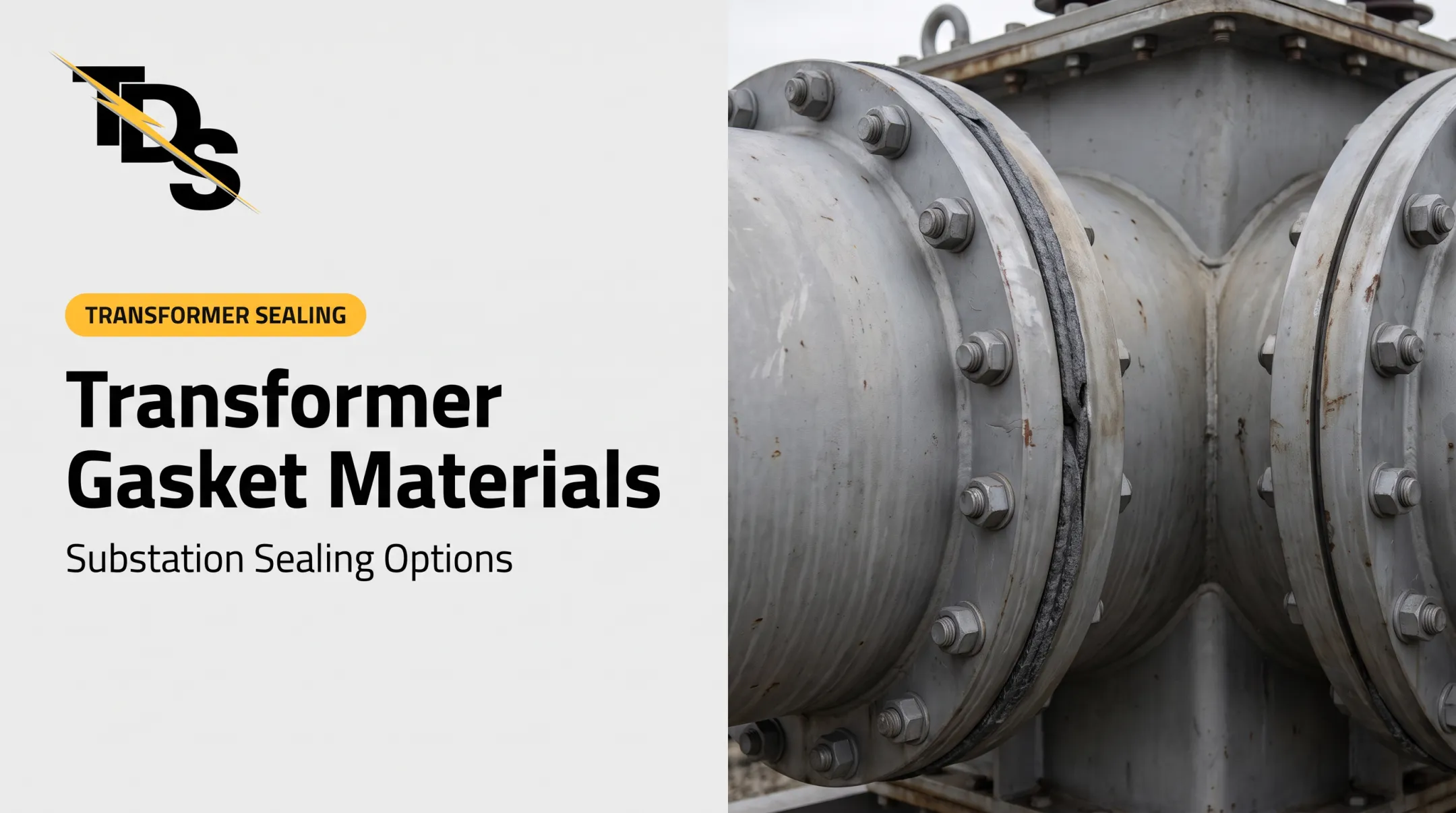
Regasketing is the removal and replacement of failed gasket material at joints such as tank flanges, handholes, radiators, bushing turrets, inspection covers, and drain fittings. Prolec distinguishes repairing selected leaks from complete regasketing of all openings with oil reprocessing.
Leak repair is the broader term. It can include gasket replacement, cured-in-place sealing, fitting repair, flange correction, or valve work, depending on the confirmed source.
Either path starts with the same problem: oil where it should not be. Oil loss lowers the operating level. Failed seals also let moisture and oxygen in, which accelerates insulation aging and reduces dielectric strength. Leaks above the oil in nitrogen-blanketed units can cause nitrogen loss and alarms.
Finding the true source takes more than spotting the lowest drip. Oil travels along surfaces from higher fittings, flanges, or adjacent compartments. Good practice:
- Clean the entire area
- Trace the oil path upward
- Review operating conditions
- Inspect nearby components
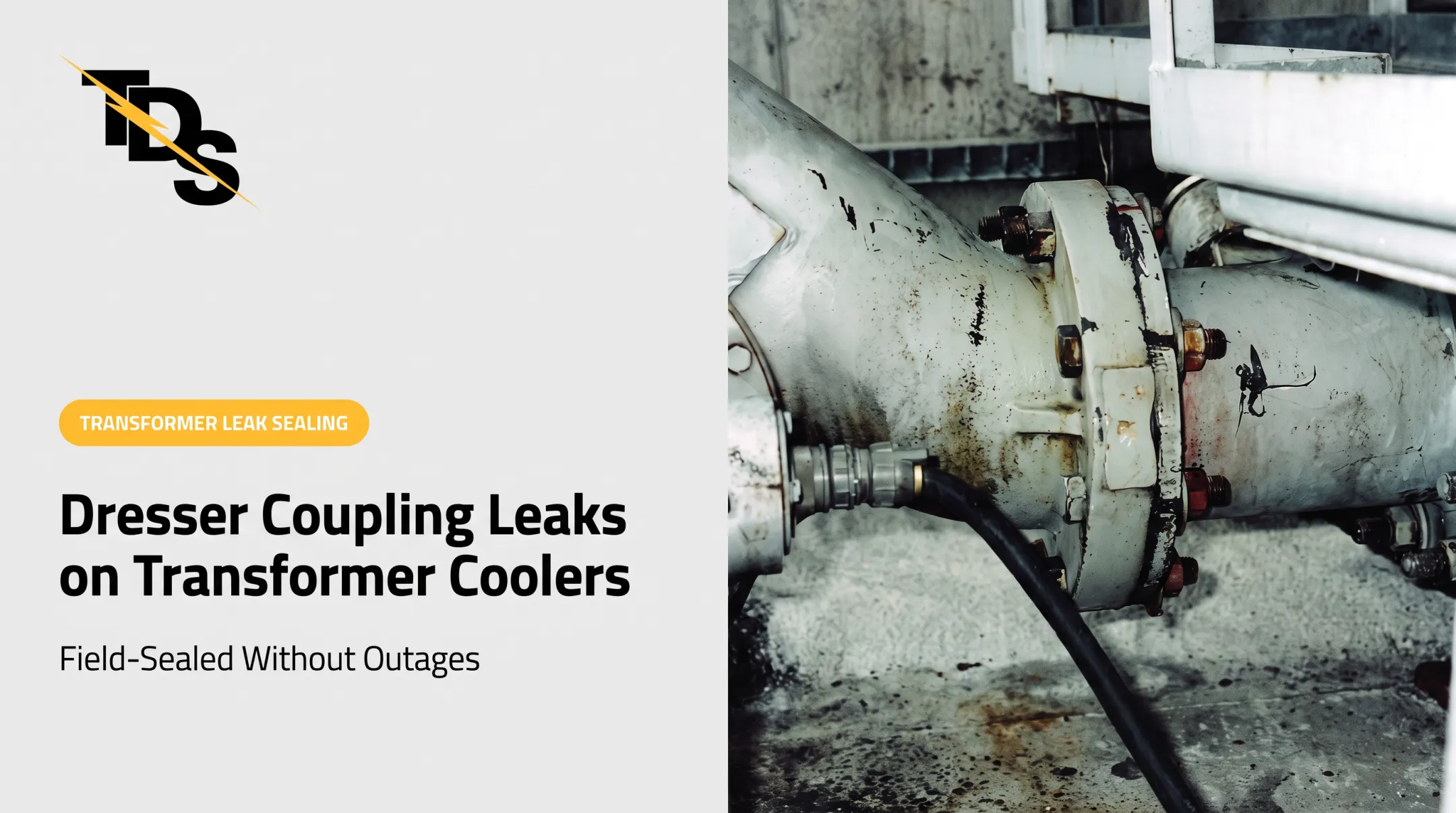
TDS technicians clean the flange and spray TDS Oil Leak Detector, which darkens where oil reaches it. On one 8-bolt connecting flange, it darkened at the split line between flanges, identifying the gasket. On a flapper valve, it showed leaks from both the flange gasket and the stem packing.

The right method then depends on:
- Leak location and joint condition
- Flange integrity and fluid type
- Access and whether the unit can come out of service
Why Transformer Gaskets Fail and When to Act
Common causes
According to Bureau of Reclamation guidance, gaskets take a "set," hardening and losing resilience with age and temperature extremes. Other causes:
- Improper or uneven bolt torque, which can bow flanges and covers
- Wrong gasket material or size
- Poor surface preparation, including rust, oil, or moisture on mating faces
- Corrosion or distortion of the flange
- Gasket material incompatible with the insulating fluid
Extra tightening rarely fixes failed flapper or butterfly-valve gaskets or worn stem packing.
Warning signs by urgency
- Old staining, dry: Monitor and document.
- Damp weeping: Schedule repair.
- Active dripping: Plan prompt repair and containment.
- Falling oil level: Treat as urgent.
- Leaks near bushings or the LTC compartment: Treat as urgent, with safety review.
No universal leak-rate threshold exists. Escalation should follow the manufacturer's guidance, oil level, leak location, and site safety rules. Eaton's instructions say a tank leak should be repaired immediately, and fluid below nominal level calls for leak inspection.
Low-Pressure Leak Sealing vs. Traditional Regasketing
The traditional route
Conventional repair typically follows this sequence:
- De-energize, isolate, and ground the unit
- Drain oil below the joint, or drain the tank
- Remove the old gasket
- Clean and inspect mating surfaces
- Install compatible material and torque in a cross pattern
- Process or replace oil as needed
- Complete return-to-service checks

For a 4-bolt flapper-valve failure, TDS notes the radiator bank is normally drained and removed. The main tank is often drained as well, and the transformer stays out of service.
The low-pressure alternative
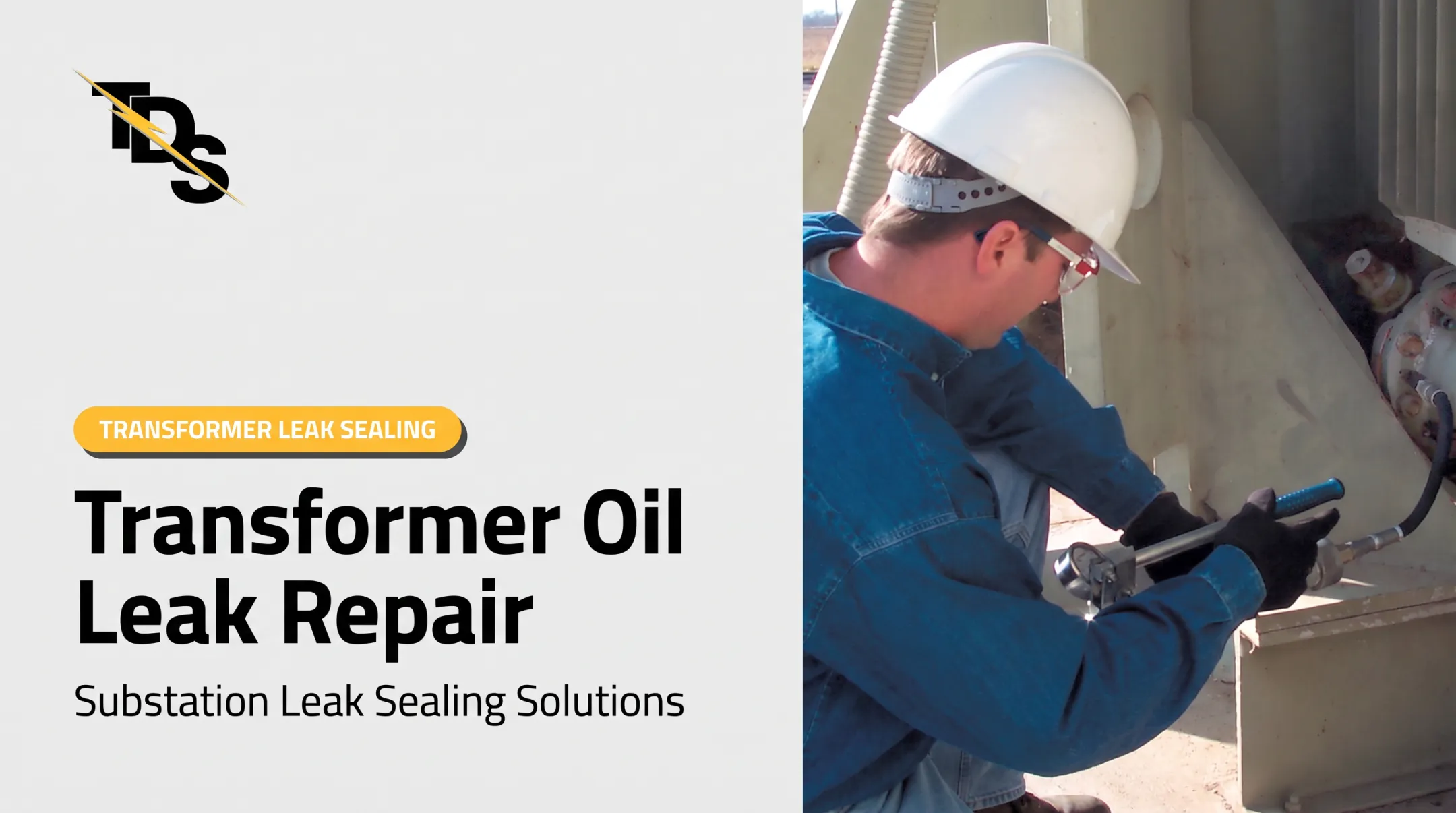
TDS uses a cured-in-place sequence:
- Drill and tap the flange
- Inject a rubber-based sealant at low pressure
- Install pipe plugs after curing
The compound cures in place as replacement gasket material. TDS states it matches OEM gasket properties and life expectancy, is environmentally responsible, and does not react with transformer oil.
Energized work depends on access and leak location:
- Many repairs can proceed energized when top-side access near energized components is not required
- Bottom-connection leaks can often be sealed while energized
- Upper leaks may require de-energizing and grounding
TDS reports a 4-bolt flange usually takes about 2 hours and an 8-bolt flange about 3 hours. Timing is assessed case by case and is not guaranteed for every unit.
Treat in-service claims as vendor-supplied. No independent study establishes universal energized suitability or success rates.
Decision framework
| Situation | Better fit |
|---|---|
| Localized gasket-path leak, sound joint | Targeted sealing |
| Damaged or distorted flange | Traditional regasketing |
| Widespread gasket failure | Traditional regasketing |
| Inaccessible leak path | Traditional or outage work |
| Internal equipment concerns | Broader outage work |
| Unsafe energized conditions | De-energized repair |
Targeted repair can mean less disassembly, less oil handling, and repair of only the leaking component. It can't restore degraded insulation or internal condition. If a unit faces replacement or overhaul, containment until that work is done may be the sensible plan.
What a Professional Repair Process Includes
Survey and planning
Collect the site data first:
- Transformer nameplate data and fluid type
- Leak history, oil level, and test results
- Photos and maintenance records
- Outage or energized-work constraints
TDS surveys are free and list the facility, exact equipment, leak location, repair method, and price. Before work, TDS meets customer engineering and maintenance staff to review procedures and warranty follow-up.
Safety and environmental plan
- Work authorization and clearances, with OSHA 1910.269 governing utility work and 1910.147 applying where its servicing conditions are met
- Grounding and approach controls set by the employer
- Spill containment under EPA SPCC rules, which apply at more than 1,320 gallons aboveground capacity
- Proper handling of any PCB-contaminated oil
Traditional regasketing steps
- Remove all old gasket material
- Inspect and correct mating surfaces
- Select fluid-compatible material (natural ester fluids need compatible gaskets)
- Align carefully and tighten in a diagonal pattern with a torque wrench
- Record torque values
Low-pressure sealing steps
- Confirm the exact leak source
- Verify compound compatibility with the fluid
- Prepare the surface and inject the sealant
- Allow full cure and leave adjacent components undisturbed
Post-repair validation
- Check for renewed seepage, oil level, and nearby fittings
- Run applicable electrical or diagnostic tests
- Photograph the repair and record materials and locations
- Set a follow-up inspection

TDS daily work logs accompany the invoice and tie back to the survey. TDS backs its leak-seal repairs with a four-year warranty.
How to Plan, Validate, and Prevent Repeat Leaks
When traditional access is required, regasketing, bushing work, LTC work, and oil processing are often combined in one outage. Oil processing isn't automatically needed for a targeted repair. Oil condition, moisture exposure, and scope decide whether processing belongs in the outage plan.
A local patch can divert oil elsewhere along a gasket, so perimeter coverage matters when you define repair scope.
Questions to ask a contractor
- How will the leak source be confirmed?
- Can the repair be completed in service?
- What fluid compatibility information do you need?
- What environmental controls are included?
- What testing, documentation, warranty, and follow-up are provided?
Get an assessment
Transmission & Distribution Services offers free equipment surveys that identify the facility, equipment, leak location, proposed repair method, and price. Customers don't pay for sample repair work if TDS can't fix the leak. Request a survey rather than assuming every leak can be sealed without an outage.
Frequently Asked Questions
What is transformer overhauling?
It's a broad scope of inspection, maintenance, repair, or refurbishment that may include oil processing, regasketing, bushings, tap changers, testing, and internal work. A localized leak repair is much narrower.
How often should a transformer be serviced?
Follow the manufacturer's instructions, your utility maintenance program, inspection findings, oil tests, and equipment criticality. Eaton calls for annual leak and fluid-level checks on covered units, and NETA favors equipment-specific programs.
How often should transformer oil be replaced?
Not on an arbitrary schedule. Testing decides whether oil is processed, reclaimed, or replaced because of oxidation, contamination, PCB concerns, or failure to meet specifications.
Can a transformer leak be repaired without taking it out of service?
Some localized leaks can be sealed with a low-pressure method while energized, when conditions allow. Traditional regasketing generally requires de-energizing, isolation, oil drain-down, and controlled access.
What should be checked after transformer leak repair?
Check for renewed seepage, oil level, nearby fittings, fluid condition, and applicable electrical tests. Confirm cleanup, document the repair, and schedule a follow-up inspection.