
Introduction
A weeping flange on a transformer, circuit breaker, or GIS enclosure is rarely just a housekeeping problem. It can mean lost oil or SF6 containment, environmental exposure, reliability risk, and an unplanned outage.
The stakes are real. The IPCC's AR6 assessment gives SF6 a 100-year warming potential of 25,200 times CO2. Leaking oil can also let moisture into the unit as it cools.
This guide covers industrial and electrical-power equipment, not residential plumbing flanges. It walks through causes, diagnosis, repair options, safety limits, and when low-pressure sealing may avoid traditional disassembly.
Key Takeaways
- Confirm the exact leak source and failure mode before choosing a repair.
- Poor compression, damaged flange faces, vibration, and thermal cycling cause repeat leaks.
- Only qualified personnel should work on pressurized, oil-filled, SF6-filled, or energized apparatus.
- Low-pressure sealing can cut downtime in suitable cases, but not every leak qualifies.
What Is Flange Leak Sealing, and Why Do Flanges Leak?
Flange leak sealing stops oil or SF6 loss at bolted flange joints on transformers, circuit breakers, and related substation apparatus. The goal is to restore the joint seal, often without a full teardown and regasket.
How the flange seal works
A flange joint maintains a pressure and fluid boundary through several parts working together: two flange faces, a gasket or sealing compound, fasteners, and the equipment enclosure. Bolts supply compression. The gasket conforms to surface irregularities. The material must also tolerate the medium it contains, whether transformer oil or SF6.
Common leak paths
Leaks at a flange are not always flange-gasket failures. Possible sources include:
- Degraded gaskets
- Loose or unevenly loaded fasteners
- Scratched or corroded flange faces
- Misalignment
- Fittings, plugs, and welds
- Enclosure joints
- Cracks in the apparatus body
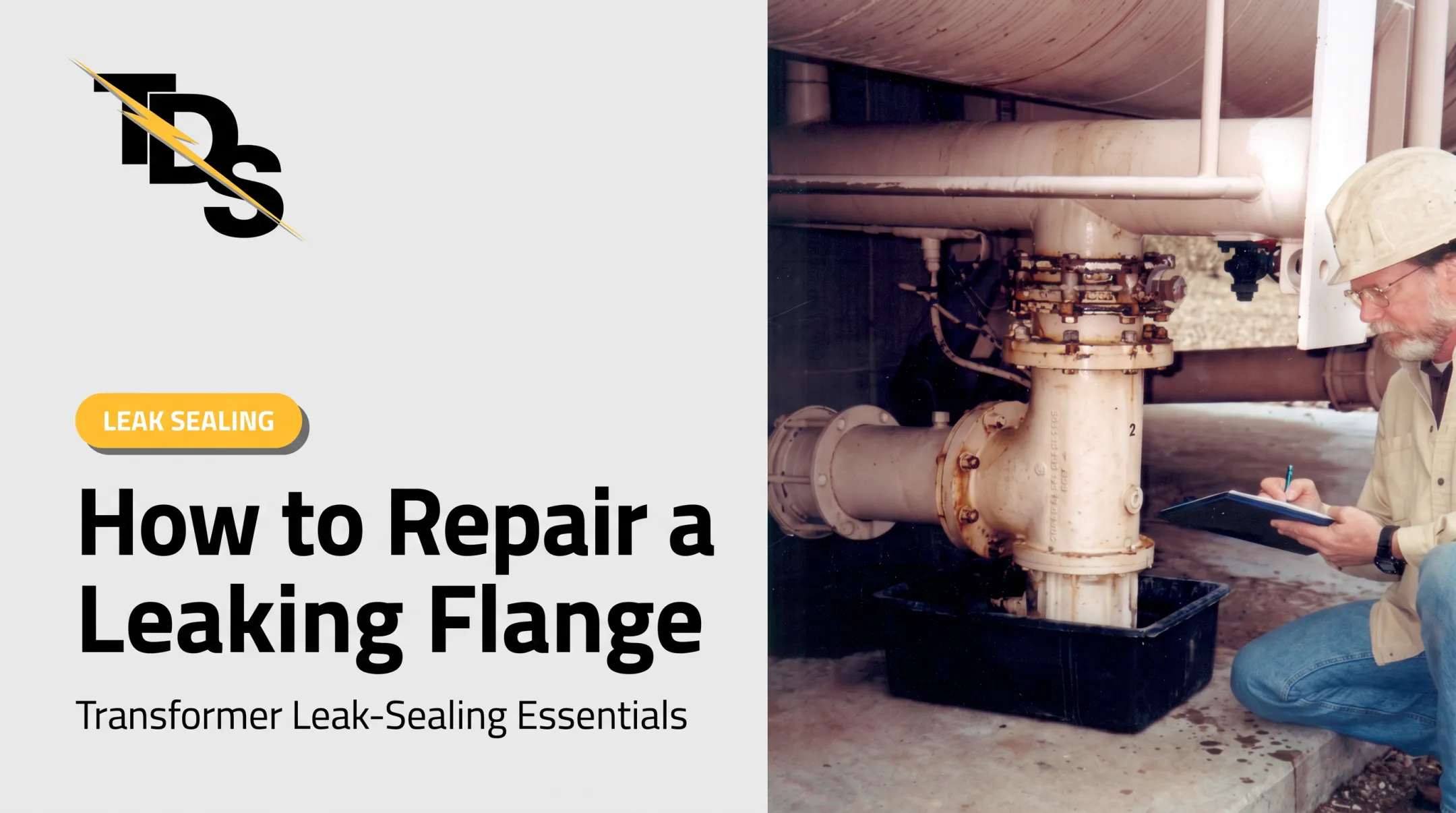
Diagnosis matters because oil on a bolt may be coming from somewhere else. On a 4-bolt flapper valve, for example, visual observation may not distinguish a failed flange gasket from a failed stem packing, or both.
Conditions that accelerate leakage
Garlock's technical manual notes that undercompression promotes leakage, while overcompression can crush or degrade a gasket. Other drivers include:
- Gasket creep and bolt relaxation that reduce clamping force over time
- Nicks, corrosion, or nonparallel flange faces
- Temperature cycling, which is harder on bolted joints than steady temperatures
- Vibration and external piping stress
- Chemical degradation from the service medium
- Incorrect torque, gasket material, or gasket size at installation
Gaskets also simply age out. Original gaskets reach end of life, and defective material or poor installation workmanship can cause early failure.
Why flange leaks matter
Oil loss can admit moisture, harm insulation, and create fire exposure if oil reaches high-voltage elements. Facilities may also face Spill Prevention, Control, and Countermeasure (SPCC) obligations under 40 CFR Part 112, depending on oil capacity and discharge potential.
SF6 loss raises both dielectric and reporting concerns. Gas density must stay within specified levels for insulation performance. Subpart DD of 40 CFR Part 98 covers emissions from electrical transmission and distribution equipment, with applicability set by prescribed calculations. Confirm current deadlines and thresholds with EPA.

Factors that determine a suitable sealing method
Method selection depends on:
- Leak location, medium, pressure, and temperature
- Flange and gasket condition
- Equipment design and accessibility
- Electrical state and owner requirements
- Whether the apparatus can safely stay in service
How to Diagnose and Prepare for Flange Leak Sealing
Safety and work authorization come first
Before any inspection or repair, personnel must identify:
- The contained medium and its pressure
- Electrical hazards and stored energy
- Site permits and clearance or lockout requirements
- Owner-approved work procedures
Do not retorque bolts, apply sealant, open an enclosure, disturb SF6 equipment, or work near energized apparatus unless the task is specifically permitted and assigned to qualified personnel. OSHA 1910.269 limits work on or near exposed energized parts to qualified employees. An oil or gas leak does not change electrical work authorization.
Confirm the leak source
Use a controlled process:
- Clean the area
- Examine it visually
- Apply an owner-approved detection method
For oil, a leak detector spray that darkens at the flange split line can point to a failing 8-bolt flange gasket. For SF6, detection options include infrared imaging, ultrasonic tools, halogen meters, and soap solution.
The goal is to separate a flange leak from leakage at a bushing, valve, weld, fitting, drain, or adjacent enclosure. Fix only what is actually leaking.
Record conditions and inspect the joint
Document:
- Equipment type and flange location
- Oil or SF6 service, operating pressure, and temperature
- Visible leak characteristics
- Equipment status, accessibility, and outage limits
- Previous repairs
Then inspect the joint for:
- Gasket compression marks, extrusion, hardening, cracking, or swelling
- Flange-face pitting, bolt condition, and alignment
- Signs of vibration or external loading
A failed gasket points to a failure mechanism; it is not automatically the only cause. Photograph where permitted and pull maintenance records.
Use a professional equipment survey
A useful survey should capture:
- Apparatus and confirmed leak location
- Proposed method and safety constraints
- Outage or in-service needs
- Scope, price basis, and verification plan
Transmission & Distribution Services (TDS) offers free equipment surveys that identify the facility, equipment, leak location, repair price, and repair method. Not every leak is guaranteed to be repairable.
Flange Leak Sealing Methods: Kits, Gaskets, and Low-Pressure Repair
Traditional regasketing
The conventional route: make the equipment safe, open the joint, remove the old gasket, prepare the faces, install a compatible replacement, load fasteners in a controlled manner, and verify. Eaton's transformer manual, for example, calls for new gaskets and clean, smooth sealing surfaces, and prohibits opening or servicing connected, ungrounded, or energized units.

Disassembly may be unavoidable when you have:
- Distorted or badly damaged flange faces
- Structural defects
- Inaccessible internal sealing surfaces
- Incompatible materials
- A need to inspect internal components
Flange repair kits
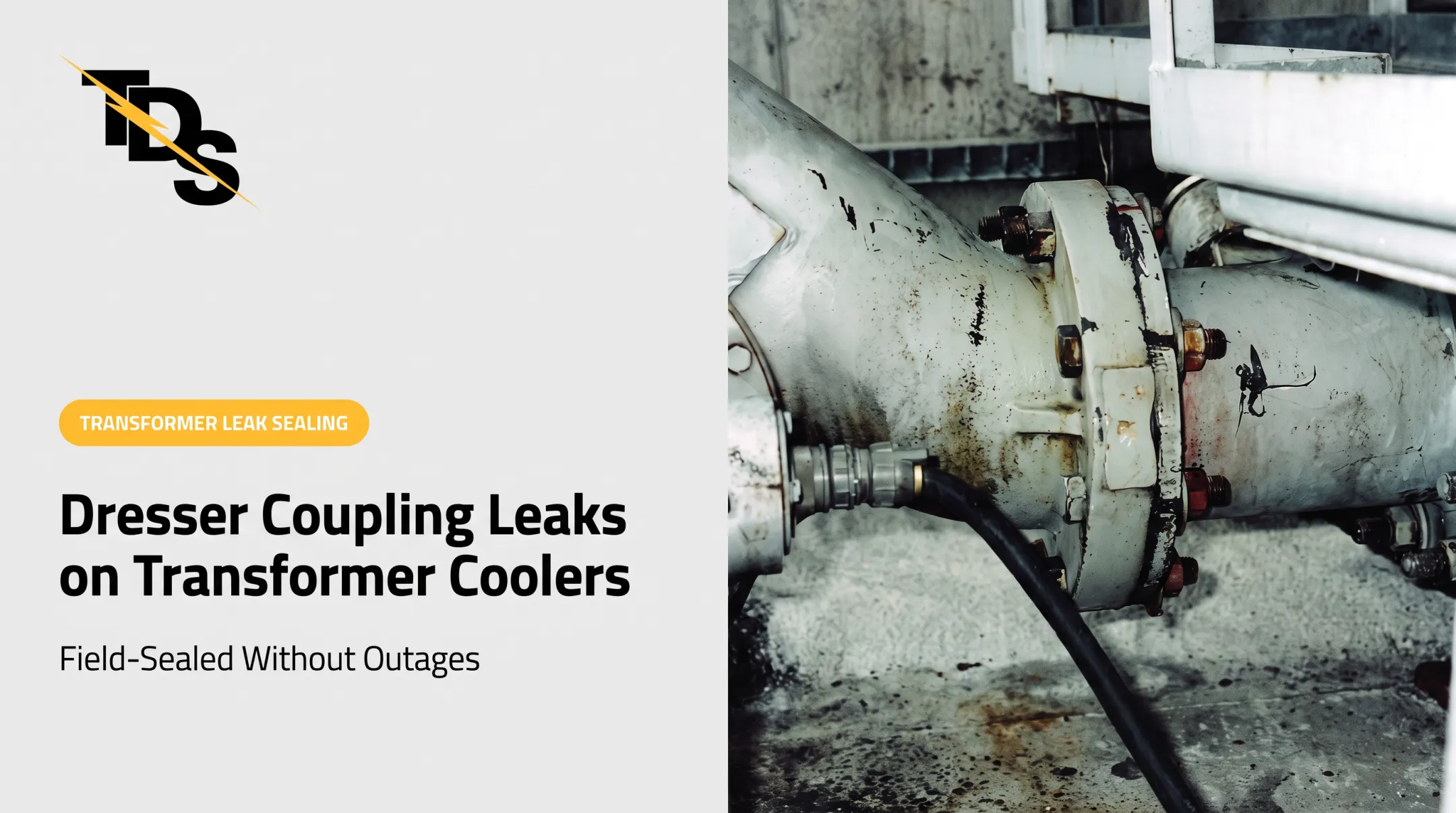
Kits can work when the failure is limited to a correctly identified gasket or fastener and the kit is rated for the actual equipment, medium, pressure, temperature, and flange configuration. They cannot fix misalignment, major flange damage, leaking welds, wrong bolt loading, or unsuitable gasket material.
External sealants and temporary containment
Engineered leak-sealing compounds are not the same as improvised caulks, tapes, or epoxies. Verify compatibility with transformer oil, SF6, metals, insulation, temperature, and pressure. A stopgap is not a permanent repair unless the owner, manufacturer, and qualified technical authority approve the method and verification plan.
Low-pressure and cured-in-place sealing
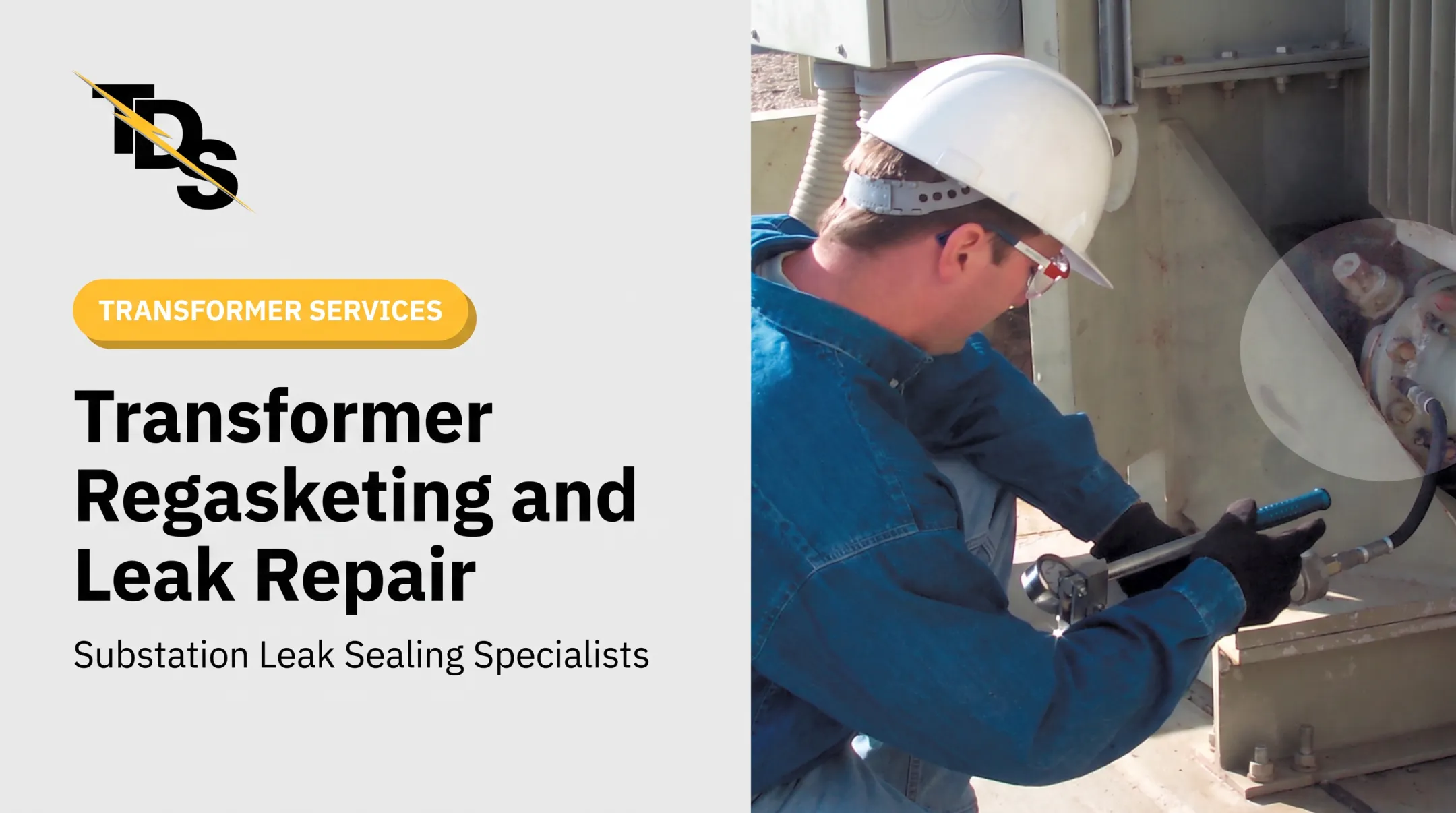
A qualified specialist can apply a compatible sealant at low pressure to seal the leaking interface, taking over the sealing function of the OEM gasket without teardown. TDS technicians work exclusively in substations on oil-filled and SF6-filled transformers, circuit breakers, and GIS. Its proprietary rubber-based compound is oil resistant and compatible with transformer oil and SF6.
Typical TDS examples:
- 4-bolt flange: usually about 2 hours, with no oil draining
- 8-bolt flange: usually about 3 hours; the method drills and taps the gasket groove, installs injection valves, and pumps sealant in
- SF6 porcelain-to-flange: a two-piece clamp, sealant cure of about 20 minutes at 70°F, roughly 4 hours total
TDS may perform suitable repairs with apparatus energized when conditions allow. Bottom-connection flange leaks are the typical candidates, while upper leaks near high-side, low-side, or neutral bushings may require de-energizing and grounding. This is never a general authorization for energized work. It requires site approval, risk assessment, qualified technicians, and equipment-specific procedures.
Historical utility cases show the range. A 69-kV breaker case used a custom enclosure and sealant injection and needed a one-day outage, versus five days described for conventional regasketing. That is one documented comparison, not a universal benchmark.
Comparing methods
| Method | Suited to | Disassembly | Main limitation |
|---|---|---|---|
| Regasketing | Damaged faces, structural issues | Yes | Longer outage, oil handling |
| Repair kit | Correctly diagnosed gasket or fastener failure | Usually | Must be rated for the joint |
| External sealant | Minor leaks, temporary containment | No | Needs compatibility and approval |
| Low-pressure cured-in-place | Low-pressure oil or SF6 flange leaks | No | Not for every leak or electrical condition |
The lowest-downtime option is not automatically the right one. Containment integrity and personnel safety must control the decision.
When Can a Flange Leak Be Sealed Without Disassembly?
Conditions that may support it
- A low-pressure leak with a manageable leak rate
- An accessible sealing interface
- Sound flange and enclosure structure
- Known media and a compatible sealant
- Acceptable electrical condition
- Approval under the asset owner's procedures
The contractor should confirm method, materials, cure requirements, operating limits, and verification before work begins.
Situations that require an outage or conventional repair
- High-pressure or uncontrolled leaks
- Severe corrosion or cracking
- Distorted or compromised flanges
- Unknown leak sources
- Incompatible media
- Unsafe electrical conditions
- Significant SF6 release
- Defects the sealing method cannot reach
Benefits and limitations
Avoiding teardown reduces disassembly, reassembly, downtime, and the risk of disturbing other seals. No method removes the need for a safe work plan or guarantees repairability.
Weigh the expected outage cost against the consequences of leaving the leak unresolved, using your own maintenance and reliability data. The Department of Energy notes that replacing a failed large power transformer could take more than 12 months.
How to Verify the Repair and Prevent Repeat Leaks
Confirm performance
Require a post-repair inspection and a leak-confirmation method suited to the medium and apparatus:

- Visual inspection
- Oil-leak detection
- SF6 detection
- Tightness checks
- Manufacturer-approved monitoring
Do not default to a generic pressure test or a one-size-fits-all energized check. Match the method to equipment design, hazard classification, and owner procedures.
Document the repair
Keep records of:
- Equipment identification and leak location
- Observed failure mode
- Sealant or material used
- Technician and approval details
- Operating state during work
- Inspection results, date, and photographs where permitted
- Follow-up monitoring
TDS offers a four-year leak-seal warranty. Confirm terms, exclusions, and applicability for your specific repair.
Build a leak-management program
- Run routine visual inspections and corrosion checks
- Monitor oil and SF6 leaks, including SF6 gas density
- Review fasteners and flange condition
- Track equipment history and investigate recurring leak locations
Approved detector sprays and cleaners support inspection but do not replace qualified diagnosis. When the same flange leaks repeatedly, run a root-cause review instead of retightening or regasketing again. Check:
- Alignment
- Surface condition
- Vibration
- Thermal cycling
- Equipment defects
Frequently Asked Questions
Do flange repair kits work?
Yes, for correctly diagnosed gasket or fastener problems when properly rated. They cannot correct damaged flange faces, misalignment, structural defects, or leaks outside the kit's scope.
Why would a flange leak?
Common causes include uneven or inadequate compression, over-compression, gasket degradation, damaged faces, corrosion, vibration, thermal cycling, misalignment, external stress, and incompatible gasket materials.
What is the NC method for flange leakage?
An "NC method" for transformer, breaker, or GIS flange leaks is not a recognized industry standard. Ask anyone using the term to define it in writing before you rely on it.
How do you seal a leaking flange?
Identify the medium and hazard, confirm the leak source, assess the joint, select a compatible method, perform the work under approved procedures, and verify the seal afterward.
Can a flange leak be repaired without taking equipment out of service?
Some low-pressure leaks on suitable oil-filled or SF6-filled apparatus may be sealed in service by qualified specialists. It depends on equipment condition, electrical safety, media compatibility, owner approval, and the repair method.