
Many facilities struggle with the same questions in the first hour: who approaches the unit, what gets contained, and what must be reported? Unchecked leaks also leave utilities exposed during EPA inspections.
This guide follows the practical sequence: secure the area, control the source when qualified and safe, prevent migration, arrange cleanup and disposal, document everything, and fix the underlying leak.
Key Takeaways
- Personnel safety and electrical isolation come before spill recovery.
- Oil type, equipment age, and PCB testing decide how waste is handled.
- Containment limits damage now; qualified repair stops recurrence.
- Reporting duties differ by trigger, so verify federal, state, and local rules.
What Causes Transformer Oil Spills and Why Are They Dangerous?
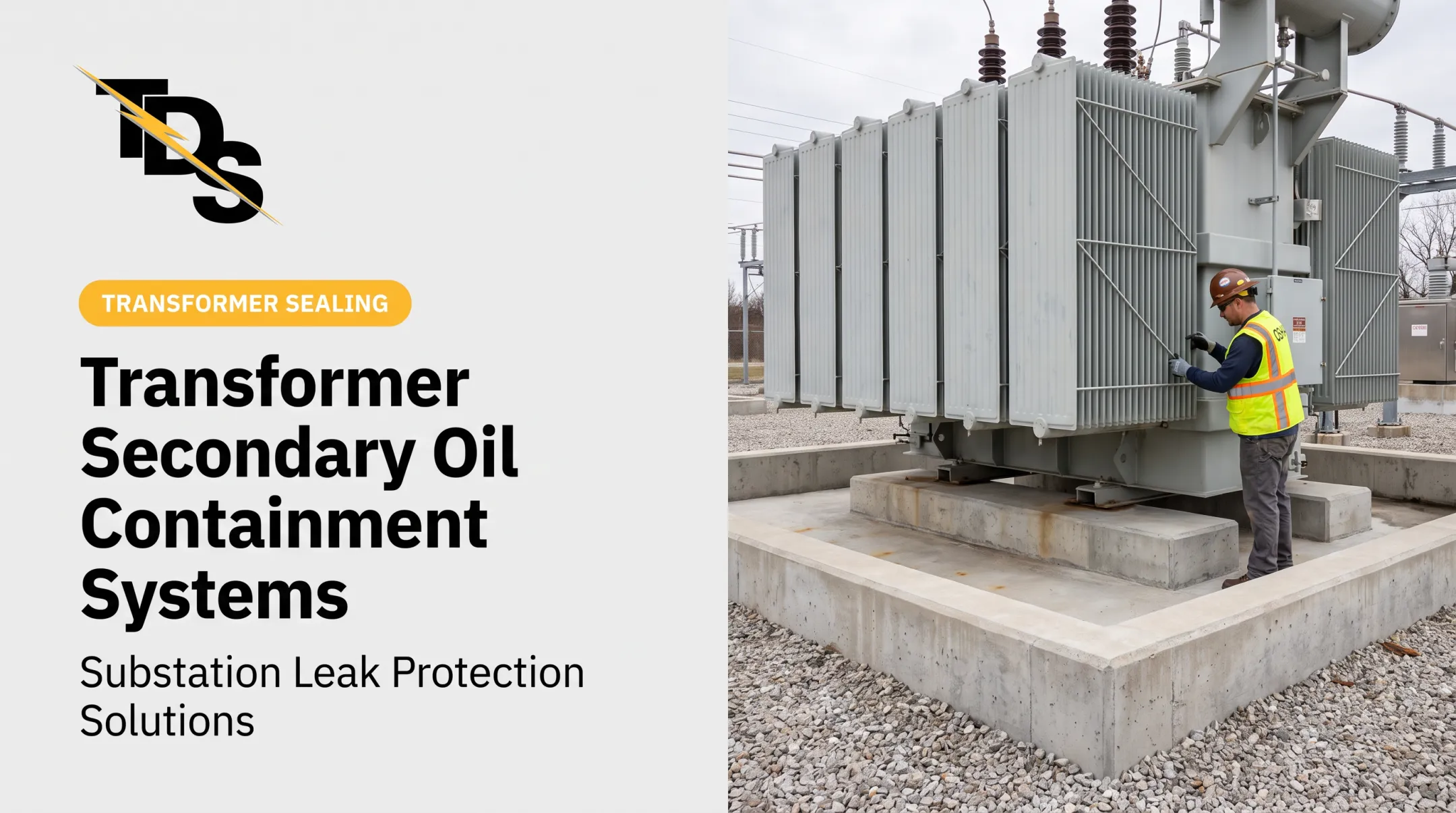
Transformer oil insulates and cools the windings. Normal operation keeps that oil sealed inside the tank, radiators, and bushings. A spill is any unintended release.
Common causes
The US Bureau of Reclamation reports leaks at tank and radiator connections, headers, and individual pipes. No authoritative national study ranks causes by frequency, but field experience points to a familiar list:
- Aging or poorly installed gaskets and seals
- Packing failure on 4-bolt flapper and 8-bolt butterfly valve stems
- Corroded tanks or radiators and faulty welds
- Loose fittings, damaged drain valves, and bushing flange leaks
- Vibration, thermal cycling, overfilling, and accidental impact
Consequences
- Lower oil level, reducing cooling and insulation performance
- Possible equipment damage and unplanned downtime
- Fire escalation concerns, since typical mineral oil flash points sit near 147°C (297°F)
- Slip and contact hazards around the pad
Silicone and ester fluids have higher typical flash points, so confirm the actual fluid in each unit.
How oil migrates
Oil moves through gravel, soil, drains, and storm sewers, especially in rain or on a slope. A New York transformer-site record described residual oil 2 to 3 feet below grade, with drains as a likely migration route.
That is one site, not a universal result. Gravel around equipment is not proof of impermeable containment.
Older units can add another hazard as oil moves off the pad. EPA notes PCBs from transformer releases can persist, bioaccumulate, and cause adverse health effects.
Quick severity check
Treat the incident as serious if any of these apply:
- The source is still actively leaking
- The transformer is energized
- Oil has reached soil, drains, or water
- The oil is unknown or from older equipment
- People or critical equipment are threatened
How to Respond to a Transformer Oil Spill Immediately
Work through these steps in order:
- Stop nonessential work and move people away from the spill and the unit.
- Identify electrical and fire hazards before anyone gets closer.
- Notify the control room and the site safety or environmental lead.
- Activate the facility spill response plan.
- Contain the oil once the area is safe.
Leave isolation to qualified people
Only qualified personnel should decide whether the transformer can be de-energized, whether the source can be isolated, and whether temporary control is possible without creating an arc-flash, shock, fire, or equipment hazard. OSHA's electrical safety guide explains that shock boundaries and arc-flash boundaries are distinct and should not be treated as interchangeable.
OSHA also distinguishes an incidental release that employees can control immediately from an emergency response, which requires trained responders.

Stop migration
Use these tools, as the site allows:
- Oil-only (oleophilic, hydrophobic) absorbents
- Temporary berms, booms, and catch trays
- Drain covers and plugs
- Existing secondary containment
Never hose oil toward a drain or waterway. Washing it away spreads the problem and can create a reportable discharge.
Record as you go
- Time discovered and equipment identification
- Apparent source and estimated extent
- Weather and nearby drains or water
- Containment actions taken
- Photographs and personnel notified
When to escalate
Call emergency responders, a spill contractor, environmental staff, or regulators when any of these apply:
- Fire or tank rupture
- Rapid oil loss
- Oil entering water
- Injuries
- Unknown oil classification
- Anything beyond your site's capability
PPE and gear
Baseline PPE includes:
- Chemical-resistant gloves
- Eye protection
- Protective clothing
- Slip-resistant footwear
Add spill materials, labeled waste containers, and site electrical safety controls. The oil's SDS and the electrical hazard assessment drive final selection.
How to Clean Up and Dispose of Transformer Oil and Contaminated Materials
Cleanup starts only after the area is safe and the source is controlled or isolated. Then identify what was touched: transformer surfaces, containment systems, concrete, gravel, soil, drains, standing water, and vegetation.
Recover and treat
Recover free oil with compatible pumps, vacuum equipment, or absorbents. Put recovered oil and used materials in sealed, labeled containers that cannot leak.
- Hard surfaces: absorb, then use controlled washing or vacuum recovery, never letting rinse water reach drains
- Gravel and soil: remove impacted material, with excavation where needed
- Water: contain and recover, using booms and sorbents
EPA notes many industrial facilities need NPDES stormwater permit coverage, so check authorization before discharging any rinse water.
Characterize before you classify
Test the oil when its type is unknown, the equipment is older, records are incomplete, or PCBs are possible.
Under 40 CFR Part 761, mineral-oil equipment manufactured before July 2, 1979 with unknown concentration is presumed PCB-contaminated. The same presumption applies to equipment with an unknown manufacture date. Test results and applicable rules set the waste classification. Appearance never does.

Disposal and records
Use properly licensed waste handlers and facilities. Keep:
- Manifests and shipping papers
- Container labels and waste profiles
- Disposal receipts
- Quantities of oil, absorbents, soil, water, and PPE
Do not infer a DOT hazard class from the phrase "transformer oil" alone.
Reporting and regulations
Verify current requirements under EPA SPCC, TSCA/PCB, RCRA, DOT, and state, local, and stormwater rules. There is no single reporting threshold. A sheen on covered waters can trigger National Response Center notice. SPCC facility reporting uses separate volume tests. Your environmental lead or counsel should confirm which rules apply.
Verify the result
- Visual inspection and sheen checks
- Sampling where required
- Clean drains and containment systems
- A documented root-cause review
How to Prevent Future Transformer Oil Spills
Inspect on a schedule
Build a recurring program covering:
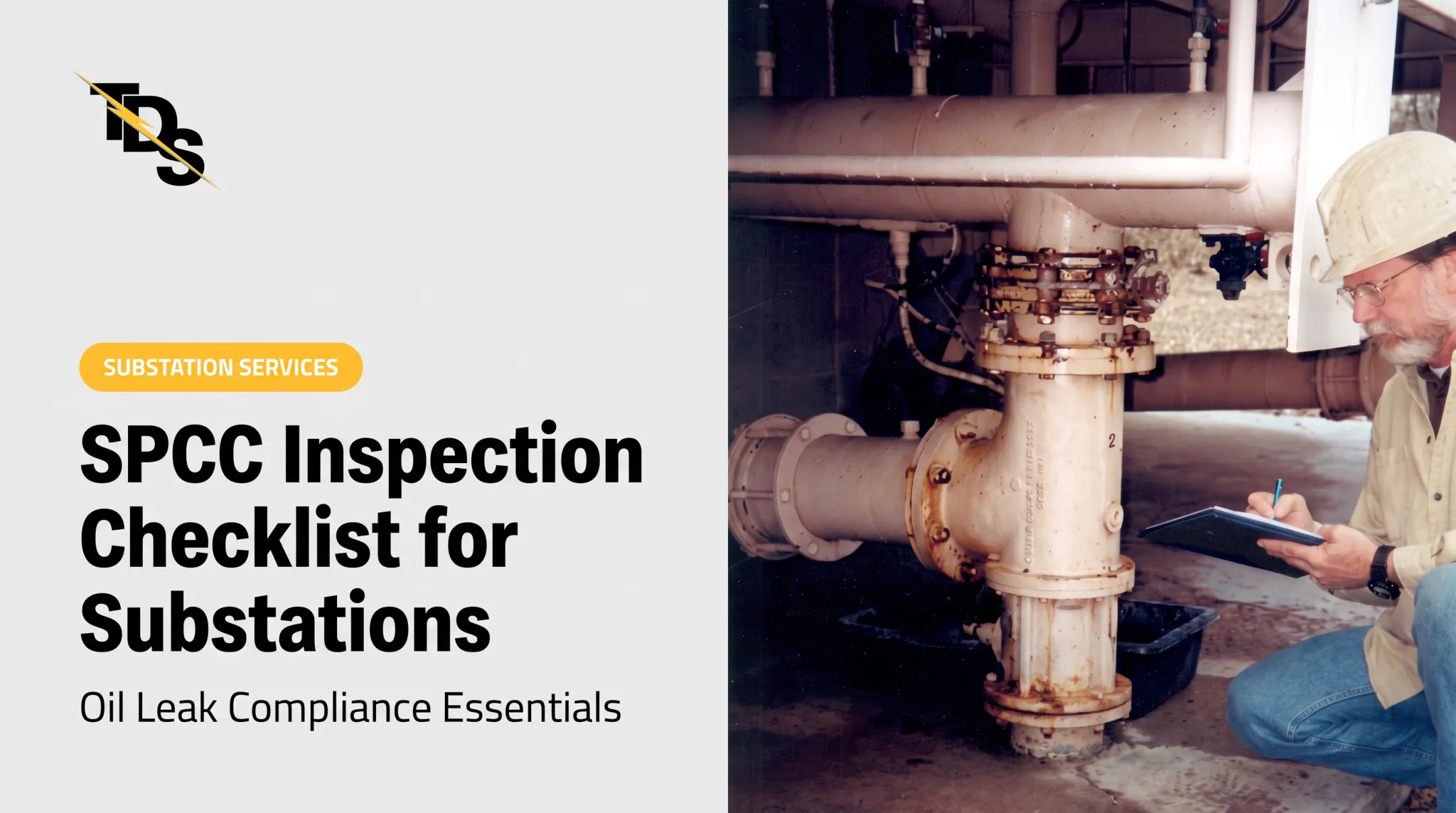
- Gaskets, flanges, radiators, bushings, and drain valves
- Welds, corrosion, and oil levels
- Conservators, breathers, and pressure devices
- Staining, dust accumulation, and fresh sheen
TDS sells an oil leak detector spray that darkens where oil emerges, helping crews pinpoint failed gaskets, packing, pinholes, or small weld cracks. Its free substation surveys also document and photograph each leak, which gives management a basis for an action plan.
Match containment to the site
Match each control to your substation layout and SPCC plan:
- Secondary containment and liners
- Controlled drainage and drain isolation
- Oil-water separation where appropriate
- Stocked spill kits
IEEE 980 offers guidance on substation oil containment, though it excludes PCB handling.
Keep a response plan alive
Keep the plan current with:
- Trained personnel (SPCC requires annual briefings for oil-handling staff)
- Clearly marked equipment and inspection records
- Emergency contacts and contractor arrangements
- Periodic drills or tabletop exercises
When Is Professional Transformer Leak Repair Appropriate?
A slow, contained external leak is a different problem from a rupture, active environmental release, severe damage, or suspected internal failure. The latter may call for emergency response, an outage, repair, or replacement rather than sealing. A bad leak may require draining the tank.
Where TDS fits
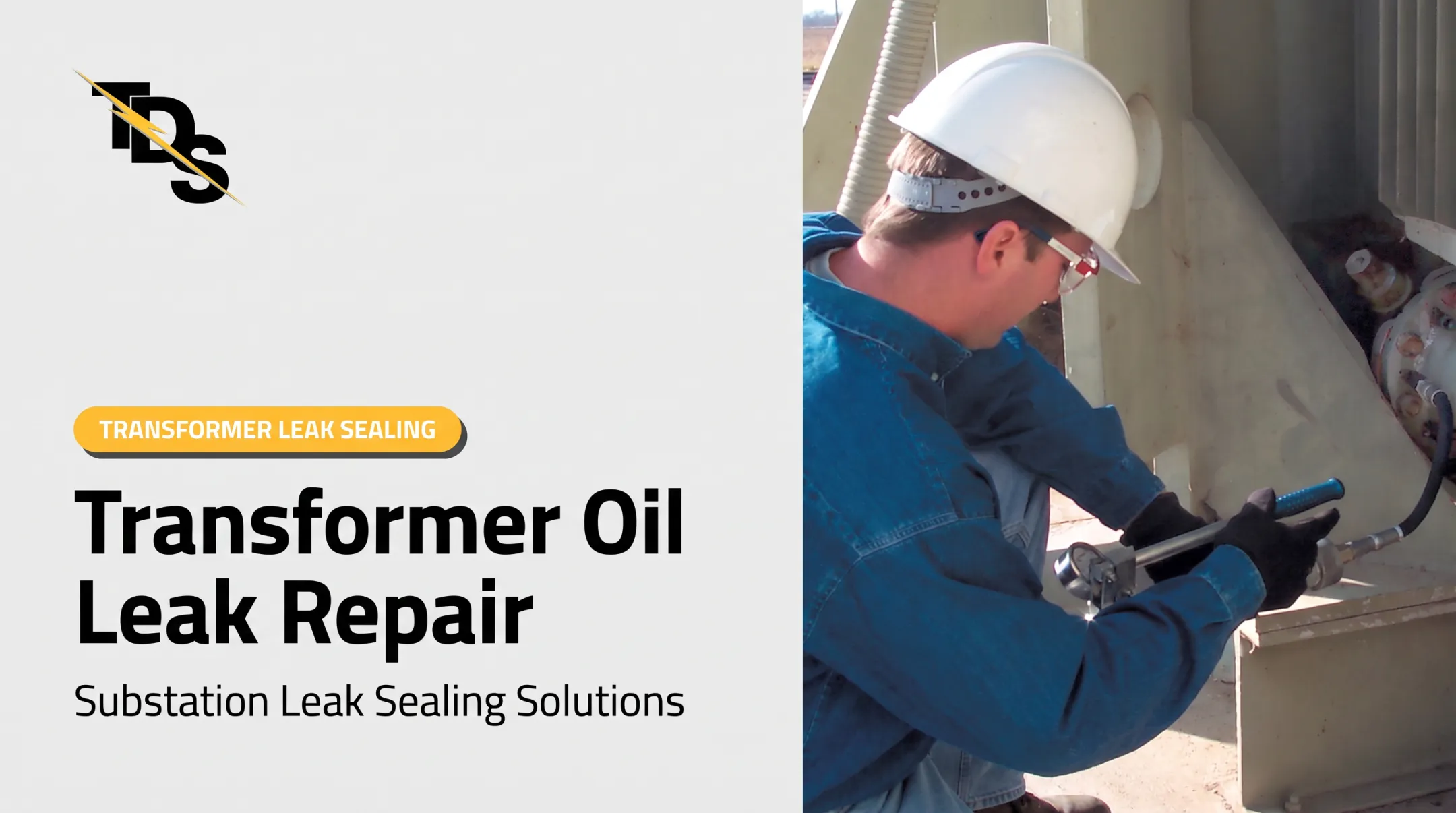
For leaks that are stable and have been made safe, Transmission & Distribution Services specializes in substation leak sealing. Its low-pressure, cured-in-place method replaces OEM gasket material without traditional teardown when equipment and leak conditions suit it.
TDS offers a free equipment survey that identifies the facility and equipment, confirms the leak location, recommends a repair method, and gives pricing. Energized repairs are considered only when conditions, utility procedures, and qualified personnel allow. TDS says many repairs are possible without removing equipment from service when crews do not need to work close to energized components on top of the apparatus.

Key service details:
- Technicians work exclusively in substations and are OSHA certified
- The sealant is compatible with transformer oil
- Leak-seal repairs carry a four-year warranty
Sealing does not replace containment, cleanup, testing, or regulatory reporting. It removes the cause so you stop generating new spills.
Conclusion
Good spill management combines several essentials:
- Safe response
- Fast containment
- Properly classified disposal
- Documented compliance
- Regular inspection
- Permanent correction of the leak source
Skip any piece and the problem returns.
If your team has a persistent oil leak that has been safely assessed and contained, request a transformer equipment survey from Transmission & Distribution Services. Call 775-586-8300 or email pictures and a description to kfitzgerald@TDSgroup.biz. This is not an emergency spill hotline; for active spills, follow your site plan and contact emergency services.
Frequently Asked Questions
What happens when a transformer leaks oil?
The unit can lose cooling and insulation performance, and oil can migrate into soil and drains. Fire and outage risks rise. Secure the area, contain the oil, assess the cause, and repair the leak.
Is transformer oil hazardous?
It depends on the formulation, exposure route, equipment age, and possible PCB contamination. One Shell insulating oil SDS notes repeated skin contact may cause irritation. Check the product SDS and consult qualified environmental personnel.
Is it safe to live near a transformer?
Proximity alone does not determine safety. Visible oil, smoke, fire, damaged equipment, unusual odors, or open access to a restricted area mean you should keep away and contact the utility or emergency services.
What should I do if I see transformer oil on the ground?
Don't touch it or approach energized equipment. Keep others away, block drains only if that is safe, and report the location to the utility or site operator.
Can a leaking transformer be repaired without shutting it down?
Some external leaks can be sealed without traditional disassembly or an outage. That happens only after a qualified assessment confirms energized work is safe and permitted by the utility's procedures.