
This guide covers switchgear, control panels, circuit breakers, transformers, GIS, relay cabinets, and substation enclosures. Cleaning must be done by qualified personnel under approved procedures.
Here's what follows: why equipment gets contaminated, what to do before you start, which methods fit which situations, how to pick a cleaner, and how to confirm the equipment is ready for service.
Key Takeaways
- Treat cleaning as controlled maintenance: qualified workers, OEM instructions, safe-work procedures, and PPE.
- Match the method to the contaminant, materials, location, downtime, and drying time.
- A nonconductive or fast-evaporating cleaner never makes energized cleaning safe by itself.
- Document the work, and treat oil or SF6 residue as a possible leak.
Why Regular Electrical Equipment Cleaning Matters
Contamination damages electrical equipment in several ways:
- Dust and grease trap moisture and other contaminants
- Buildup reduces heat dissipation
- Salt, moisture, and oxidation promote corrosion
- Residue interferes with moving parts and compromises insulating surfaces
An ABB ADVAC manual warns that dirt and dust on insulation can form a dielectric path to ground. A 2017 CIRED paper names condensation and pollution as two main factors in accelerated medium-voltage switchgear degradation.
Keep the numbers in perspective. HSB's claims table lists loose connections at 30.3%, moisture at 17.4%, and dust, dirt, and oil accumulation at 2.2%. Those are insurer claim categories, not cleaning-efficacy figures. They do show that moisture and connection problems matter alongside surface dirt.
Where contamination shows up
- Clogged ventilation in enclosures
- Unreliable relays and contactors
- Dirty breaker mechanisms
- Contaminated insulators
- Residue around transformer and GIS components
Know the maintenance boundary
Routine external cleaning is a different job from work on internal, sealed, oil-filled, or gas-filled apparatus. Follow the OEM's maintenance boundaries. Don't open equipment or disturb insulating systems without authorization.
What Must You Do Before Cleaning Electrical Equipment?
Plan the work and confirm authorization
Start with a job-specific risk assessment, qualified electrical personnel, and site authorization. Review OSHA requirements, NFPA 70E and 70B guidance, and the manufacturer's cleaning instructions. Consult the full NFPA 70E and 70B editions for task-level requirements.
Then identify:
- The equipment, voltage hazards, and stored energy
- Arc-flash boundaries
- Contamination type and access limits
- The outage window needed
- Adjacent apparatus that needs protection or isolation
Establish electrical and chemical controls
OSHA 29 CFR 1910.333 generally requires exposed live parts to be de-energized before work, unless doing so creates added hazards or is infeasible. Disconnecting means must be locked or tagged.
A qualified person must test for absence of voltage, including induced voltage and backfeed. Discharge stored energy and apply grounding as your site procedure requires.
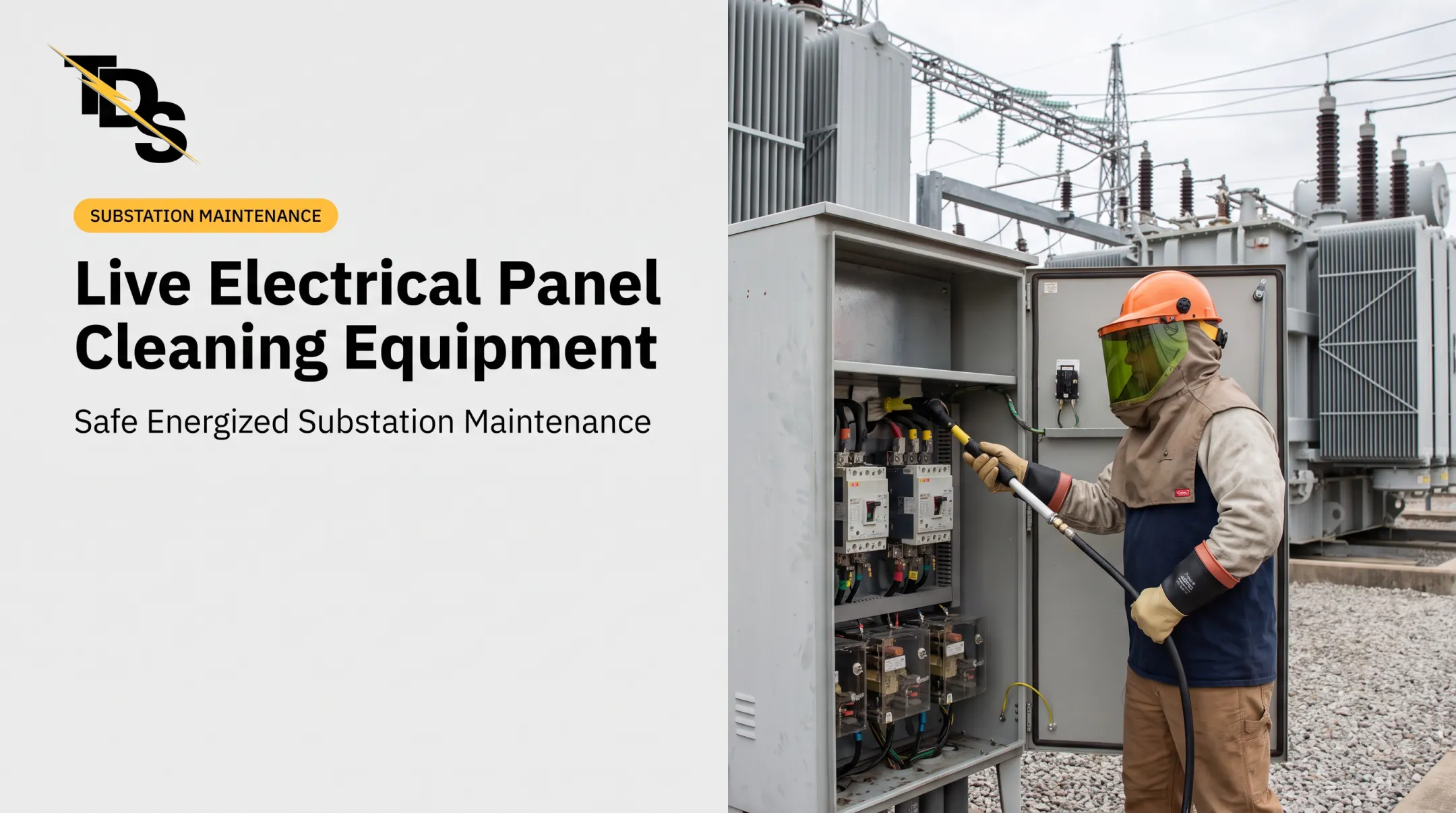
OSHA also restricts conductive cleaning materials and liquids near exposed energized parts unless procedures prevent contact.
Review the product SDS before opening a container. Check hazards, handling and incompatibilities, exposure controls and PPE, flash point, and evaporation rate.
For example, one common aerosol contact cleaner's SDS lists an extremely flammable aerosol with a flash point near 15.8°F and says not to apply while energized. Never mix chemicals or swap in household cleaners without documented approval.

Prepare the equipment and work area
- Let hot surfaces cool.
- Remove loose debris with an approved dry method.
- Control dust and ventilation.
- Shield nearby equipment from overspray and displaced contamination.
- Screen older installations for degraded insulation, asbestos-containing materials, or signs of overheating
- Stop and call a specialist if you find any of those conditions
Electrical Equipment Cleaning Methods
The right method depends on the contaminant, the equipment's materials, where the contamination sits, your return-to-service window, and the OEM procedure. No single technique suits every transformer, breaker, switchgear lineup, or control panel.
Dry wiping, brushing, and vacuuming
Use clean, lint-free cloths, soft nonmetallic brushes, and approved vacuums for loose dust and light contamination. Eaton's MVS-ND switchgear manual and Siemens' NXAIR instructions both call for lint-free cloths, and Siemens specifies a vacuum. Oily, dirty, or metallic rags leave residue or add contamination.
Use nonmetallic vacuum attachments where appropriate. Don't force debris into vents, insulation recesses, terminals, or bearings.
Compressed air and liquid cleaning
Treat compressed air as a controlled method, not a default. OSHA 1910.242 allows it for cleaning only below 30 psi with effective chip guarding and PPE. That is a general safeguard, not an OEM-approved setting for switchgear internals.
When you use compressed air:
- Use dry air only
- Wear eye and respiratory protection
- Keep contaminants off adjacent equipment
For oil, grease, or heavy residue, use only a manufacturer-approved electrical cleaner, applied in a controlled way. Eaton's manual, for example, specifies water or isopropyl alcohol for certain cases and flags material risks:
- Some chemicals irreversibly damage Noryl
- Abrasive or chemical cleaners can strip bus-joint plating and cause overheating
Equipment manuals differ. Siemens permits a mild household cleaner for specified NXAIR cases, so follow the exact manual for your gear.
Specialty methods
Dry ice blasting is sometimes used on industrial equipment. Cold Jet describes it as nonconductive and moisture-free, but that's a vendor claim, not an OEM approval. Its SDS warns that CO2 can displace oxygen, collect in low areas, and cause rapid suffocation.
If you use this method:
- Rely on trained personnel only
- Confirm equipment compatibility and OEM approval
- Contain debris, ventilate the area, and protect workers

How to Choose and Apply an Electrical Equipment Cleaner
Selection criteria
- Dielectric or nonconductive properties where required
- Low residue
- Suitable evaporation rate and flash point
- Documented performance on your contaminant
- Compatibility with plastics, rubber seals, gaskets, wire insulation, varnishes, paint, labels, and coatings
ASTM D877 measures breakdown voltage of insulating liquids. It does not qualify a cleaning product or prove compatibility with solid insulation or elastomers. Read the SDS and technical data, and run a controlled spot test where permitted.
Application
Apply conservatively with a lint-free cloth, swab, or controlled spray, and only where the manufacturer allows it. Don't flood enclosures, push liquid into openings, or use atomized products without explicit approval.
As one example, Eaton specifies wiping with a dampened lint-free cloth, wiping dry, then waiting at least 4 hours at room temperature before testing or energizing. That interval applies to that equipment only, not as a universal rule.
Transformer exteriors
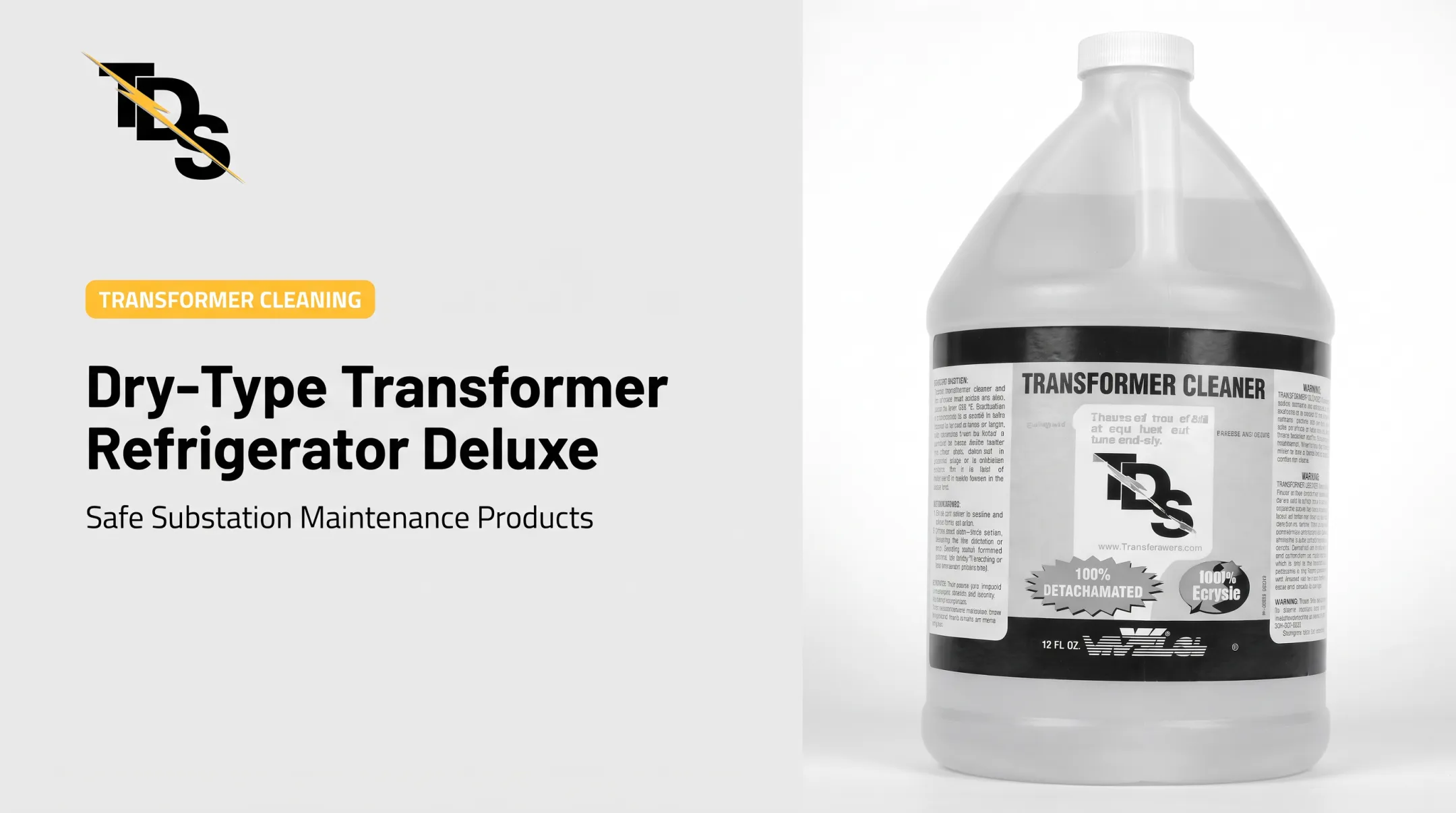
For exterior oil stains and dirt on transformers and breakers, TDS offers pressure washing with TDS Transformer Cleaner. The same product is sold to in-house maintenance crews in cases of six 1-gallon containers.
It is 100% biodegradable and water soluble. Dilution depends on soil level:
- Full strength for heavy soil
- 5:1 for medium soil
- 10:1 for light soil
Follow the product instructions, SDS, equipment manufacturer requirements, and site safety procedures first.
Application controls
- Isolate ignition sources
- Wear required PPE and keep ventilation on
- Prevent runoff into soil or drains
- Manage contaminated wipes and solvent waste
- Allow complete drying before inspection and re-energization
After-Cleaning Inspection and Ongoing Maintenance
Inspect and test
Check for these issues before returning equipment to service:
- Remaining residue
- Damaged insulation or loose hardware
- Corrosion and overheating indicators
- Moisture and newly exposed leaks
Where applicable, have qualified personnel run insulation resistance or other prescribed tests. Eaton's manual calls for megger readings before and after cleaning for trending. NETA MTS-2023 covers inspections and tests for switchgear, transformers, and breakers.
Return equipment through the approved energization procedure. Watch for abnormal noise, heat, odor, or nuisance tripping, and stop if it doesn't perform as expected.
Keep records
Log the following:
- Equipment ID and contamination found
- Cleaning method, product, and drying period
- Personnel and date
- Photos and test results
- Waste handling and follow-up actions
Set future intervals from OEM guidance, inspection findings, and the site environment.

When cleaning exposes a leak
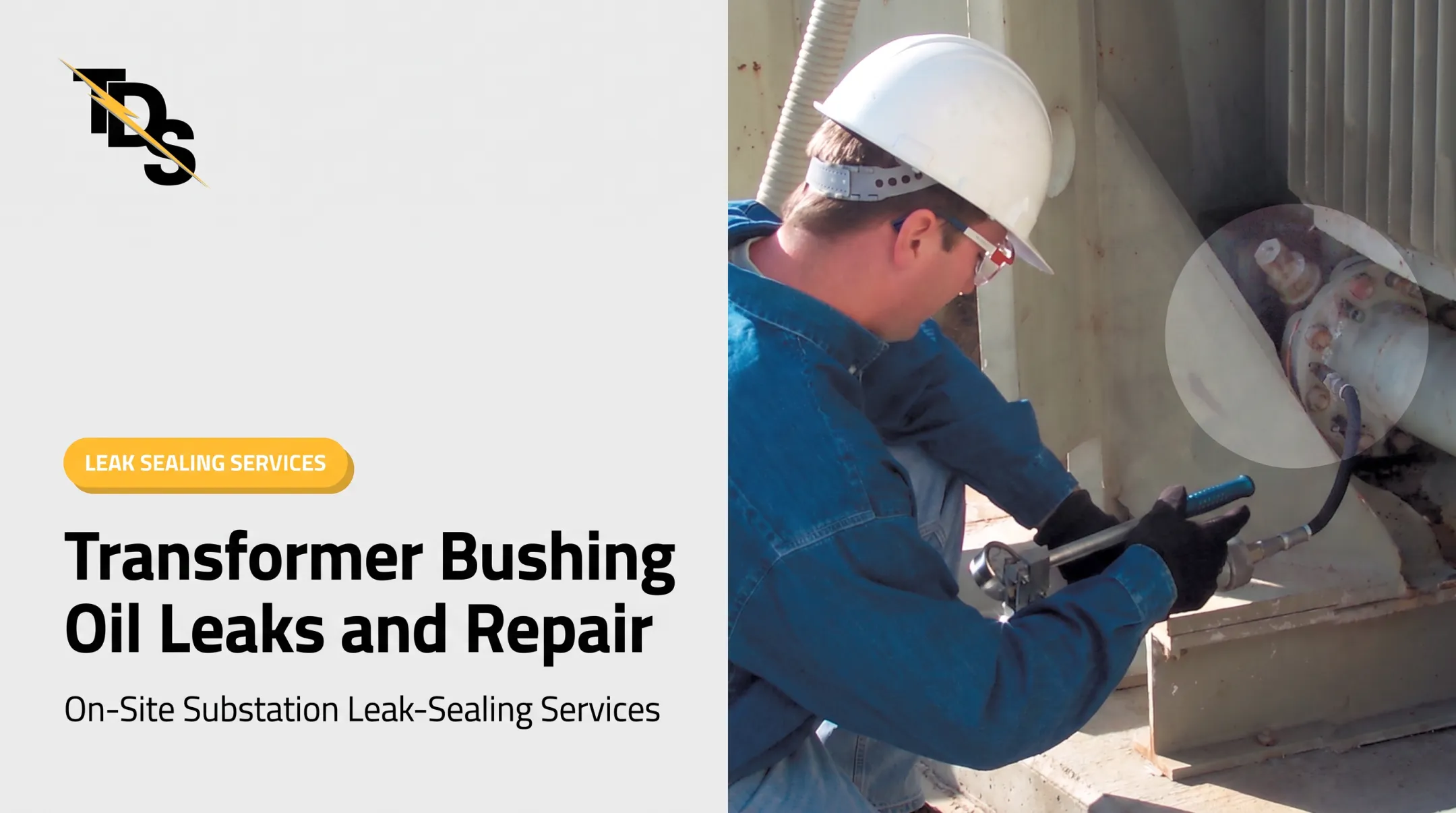
Cleaning oil or SF6 residue does not fix the source. If cleaning reveals an active transformer, breaker, or GIS leak, TDS provides low-pressure leak sealing, free equipment surveys, and repairs designed to reduce disassembly and downtime. Many repairs can be completed while equipment stays in service when conditions allow.
Frequently Asked Questions
What must you do before cleaning electrical equipment?
Use qualified personnel, de-energize and lock out where possible, and verify zero energy. Review OEM instructions and the SDS, then set up PPE, ventilation, and drying time.
Can you clean electrical equipment while it is energized?
De-energization is the preferred control. A nonconductive product doesn't make energized cleaning safe. Only approved procedures and qualified personnel can decide whether energized work is permitted.
What cleaning methods are safest for electrical equipment?
Dry lint-free wiping, soft brushing, and approved vacuuming are the usual starting points. Controlled solvent use and specialty methods depend on the equipment, contaminant, OEM instructions, and work controls.
What type of cleaner is safe for electrical components?
It must be approved for the equipment and its materials. Check dielectric properties, residue, evaporation, flammability controls, and SDS documentation.
How long should electrical equipment dry before re-energizing?
Follow the SDS, OEM instructions, site procedure, and required testing, not a fixed time. Qualified personnel must verify the equipment is fully dry.
How often should electrical equipment be cleaned?
It depends on the environment, contamination rate, equipment condition, inspection findings, risk level, and OEM maintenance intervals.