
Introduction
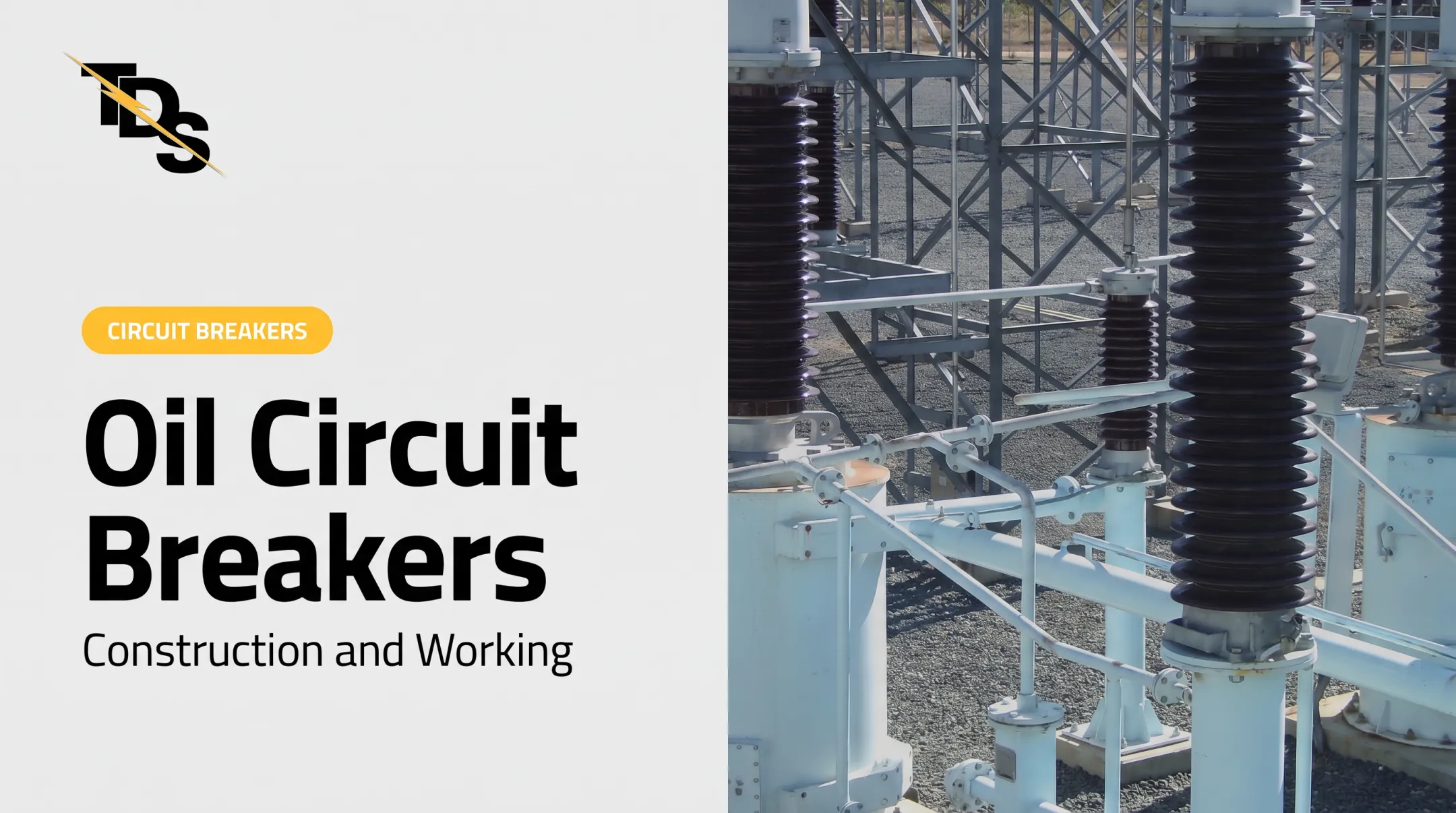
Oil circuit breakers (OCBs) still sit in legacy substations, generating plants, and industrial facilities. A Westinghouse 345 kV oil-filled breaker is typical of what many utilities still operate. Insulating oil, contacts, and the operating mechanism have to work together every time the breaker interrupts a fault.
Neglect shows up as:
- Slow or failed interruption
- Contact damage and degraded insulation
- Oil leaks, fire, or environmental hazards
- Unplanned outages
FM Global's loss-prevention guidance says most switchgear and breaker losses involve deficient maintenance, operating conditions, environment, or human factors. Most are preventable.
This guide covers why maintenance matters, the types of maintenance and tests, warning signs, scheduling, and documentation.
Key Takeaways
- Visual inspection alone is not enough; check mechanism, contacts, insulation, and oil separately.
- Timing, contact resistance, insulation, and oil tests each answer a different question.
- Intervals follow the OEM manual, site duty, fault history, and test trends.
- Only qualified personnel using approved procedures should isolate, ground, sample, test, or repair.
Why Maintenance of Oil Circuit Breakers Is Important
An OCB has two jobs: carry load current day after day, and interrupt fault current on demand. Preventive maintenance protects the second job, which is the one nobody sees until it matters.
How Condition Affects Protection
In dead-tank breakers, oil extinguishes the arc and insulates live parts from the tank. In live-tank, minimum-oil designs, oil mainly extinguishes the arc. Either way, these problems degrade performance:
- Contaminated or wet oil weakens dielectric recovery after arc interruption
- Worn contacts raise resistance and heat
- Mechanism friction slows opening or throws phases out of sync
- Degraded insulation raises the chance of internal flashover
The Bureau of Reclamation's FIST 3-16 guidance warns that improperly maintained oil breakers may fail to operate or fail catastrophically, rupturing the tank. It also notes that timing outside manufacturer specifications can prevent fault clearing or damage contacts and linkages.
Safety, Environmental, and Compliance Considerations
Oil is combustible, arcs release serious energy, and leaks reach soil and water. Relevant requirements include:
- OSHA 29 CFR 1910.269 and 1910.333 for de-energizing, grounding, and qualified-person work practices
- NFPA 70E for workplace electrical safety and NFPA 70B for equipment maintenance
- ANSI/NETA MTS for maintenance testing
- EPA SPCC rules (40 CFR Part 112) for facilities with oil above the stated capacity thresholds
- TSCA PCB rules (40 CFR 761) for legacy oil, since mineral-oil equipment of unknown PCB content made before July 2, 1979 must be assumed PCB-contaminated
Confirm current editions with the issuing bodies before building a program around them. Unchecked leaks can also leave utilities exposed during EPA inspections, which look at whether leaks are documented and an action plan exists.
Planned Work Versus Reactive Failure
Testing, oil processing, contact work, or a leak repair is planned, scheduled, and bounded. Reactive failure brings emergency outage coordination, possible damage to adjacent equipment, and replacement. An EPRI survey of more than 30 transmission companies ranked breaker condition as the second-highest replacement criterion. Trending results catch localized problems before they become overhauls.

Types of Maintenance and Testing for Oil Circuit Breakers
A complete program combines inspection, electrical testing, oil analysis, condition-based decisions, corrective repair, and occasional overhaul. Scope depends on breaker design, voltage class, manufacturer, and service history.
Routine / Preventive Maintenance
Routine checks cover:
- Tank, bushings, porcelain, terminals, and grounds
- Oil level, external seals, and leaks
- Operation counter, trip and close circuits, and interlocks
- Corrosion, loose fasteners, and signs of overheating or arcing
Cleaning, lubrication, exercising, and housekeeping should follow the OEM manual. Some observations fit into scheduled rounds from a safe distance. Anything touching internal or energized parts requires de-energization and specialized personnel.
Corrective / Reactive Maintenance
Triggers include failed timing, elevated contact resistance, poor oil results, damaged contacts, mechanism trouble, low oil, abnormal insulation readings, or an external leak. Returning a breaker to service repeatedly without finding the root cause just postpones a bigger failure. Per Reclamation, it should return to service only when results meet O&M requirements.
Predictive / Condition-Based Maintenance
Timing and motion tests measure opening and closing time, three-phase simultaneity, coil behavior, and travel data. Manufacturer limits and historical baselines govern interpretation.
Contact resistance reveals contact wear. Rising metal content in the oil can point the same way.
Insulation resistance and power factor assess bushings and internal insulation. Reclamation recommends hot-collar power-factor tests on bushings, and cites 1 megohm only as a fallback when the OEM gives no minimum.
Oil analysis typically includes:
- Dielectric breakdown strength (ASTM D1816 explicitly covers oil circuit breakers)
- Water content, acidity, and color
- Metals, particulates, and dissolved gases, interpreted as trends in an arcing device
No single result clears the breaker. Good timing says nothing about wet oil.
Major / Overhaul Maintenance
Consider an overhaul after severe contact erosion, repeated abnormal results, heavy fault-interruption duty, mechanism wear, deteriorated insulation, contaminated oil, or recurring defects in an aging unit. Typical scope:
- Controlled disassembly and internal inspection
- Contact and seal replacement
- Mechanism service
- Oil processing or replacement
- Reassembly, functional testing, and electrical retesting
- Complete as-left documentation

How to Check If an Oil Circuit Breaker Needs Maintenance
Symptoms are prompts, not verdicts. Qualified inspection and testing must confirm actual condition.
Performance or Protection Changes
- Slow or inconsistent opening and closing
- Incomplete trip or close operations
- Phase timing deviation
- Results drifting from OEM specification or the breaker's baseline
Unusual Behavior or Operation
- Sluggish, noisy, or sticking mechanisms
- Abnormal coil current signatures
- Overheating or repeated control-circuit problems
- Unexpected operation after a fault or switching event
Visible Wear and Irregularities
Look for these signs of wear or damage:
- Seepage or active leaks
- Low oil, or dark or cloudy oil
- Carbon deposits
- Cracked or contaminated bushings
- Corrosion, loose hardware, or arcing evidence
Locate any external leak precisely before choosing a repair.
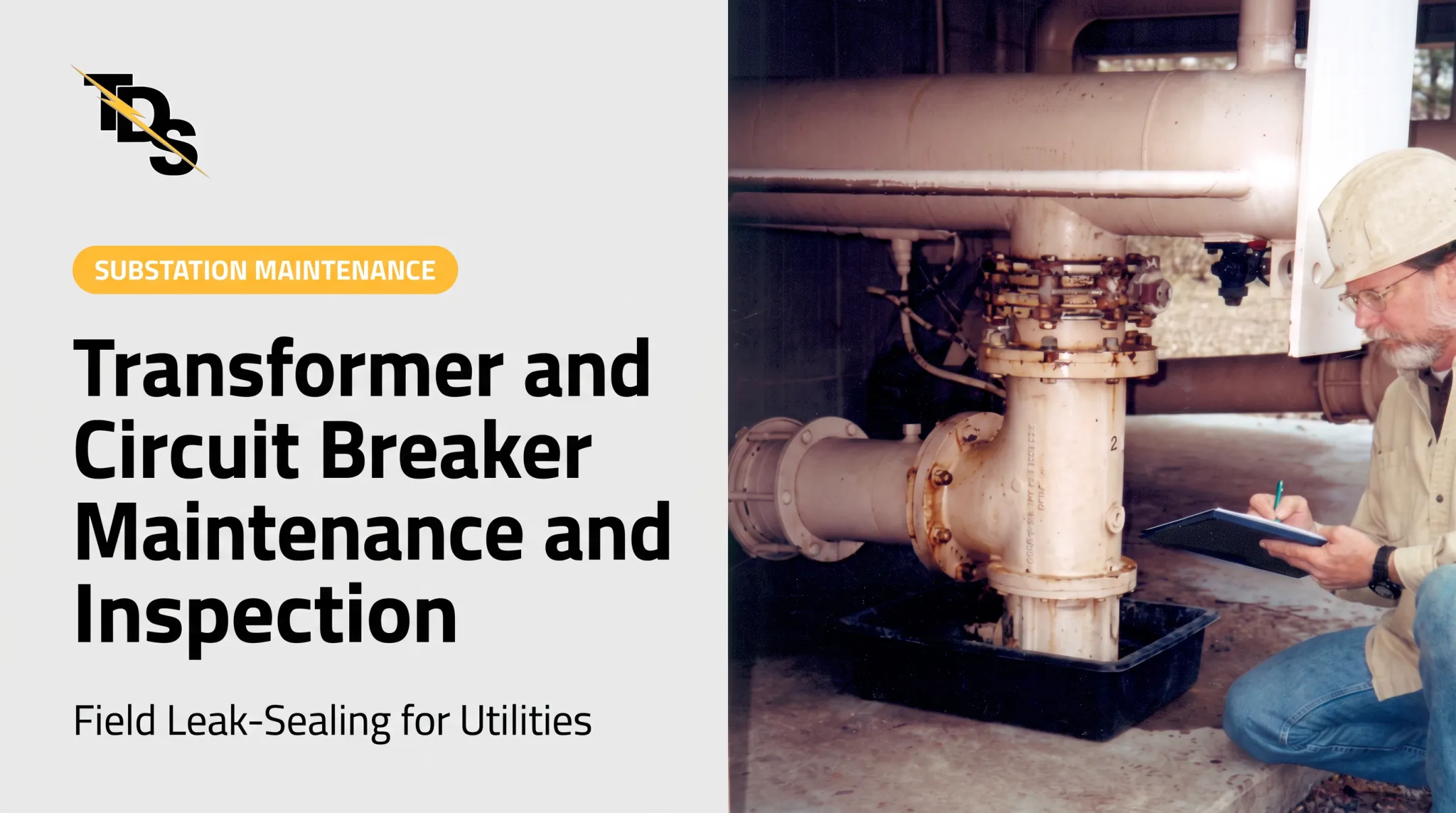
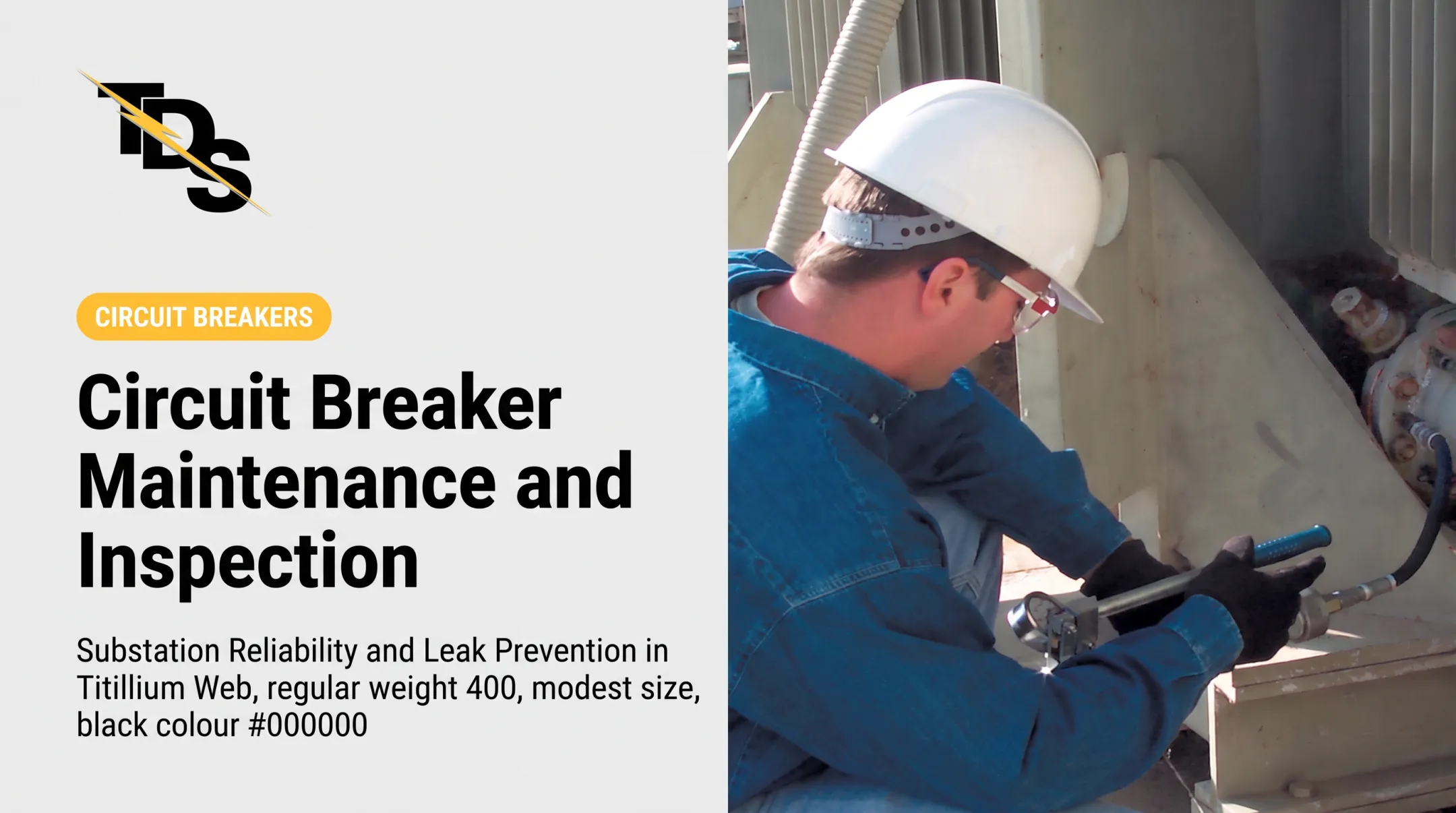
If testing or inspection confirms an external leak, Transmission & Distribution Services (TDS) specializes in low-pressure leak sealing for oil-filled substation apparatus, including OCBs. Its free equipment survey documents and photographs each leak, then lists the repair method, itemized cost, and outage requirements.
Where conditions permit, repairs avoid traditional disassembly. Common OCB repairs include drain-valve leaks sealed with a clamp or drill-and-inject, and bushing base flange leaks.
Oil, Insulation, and Fault-Duty Indicators
These oil and insulation findings can mean processing, replacement, internal cleaning, or further inspection:
- Reduced dielectric strength
- Rising moisture or acidity
- Contamination
- Elevated power factor or falling resistance
Water may also signal a failing gasket or seal. Rising metal content calls for inspection at the next outage.
Recurring Issues or Downtime
Track these in the maintenance history:
- Nuisance trips or failed operations
- Recurring leaks
- Repeated test failures
- Post-fault abnormalities
- Temporary repairs that no longer hold
Reviewed together, they reveal patterns that single events hide.
Oil Circuit Breaker Maintenance Schedule (General Guidelines)
Treat any schedule as a planning framework. Final intervals depend on the OEM manual, applicable guidance, age, voltage class, fault duty, switching frequency, environment, oil condition, and test trends.

Reclamation's FIST 4-1B schedule is a useful reference. It applies to Reclamation, not every U.S. owner. NERC-qualifying facilities use time-based maintenance, while others may adopt condition-based programs.
| Frequency | Typical work |
|---|---|
| Per site round | Visible leaks, oil level indication, odd sounds or smells, position and control indications, obvious damage (from a safe distance) |
| Weekly/periodic | Housekeeping, accessible control components, operating-event review, and tracking of findings and leaks |
| Monthly/quarterly | Condition-based oil sampling and visual checks where the site program calls for them (a program choice, not a mandate) |
| Annual | Oil test, visual inspection, infrared scan (Reclamation's annual items) |
| Every 5 years | Ratings and coordination study review |
| Every 6 years | Timing, motion, insulation resistance, contact resistance, manual operation, control functional test |
Trigger-Based Maintenance
Evaluate promptly after a fault interruption, high-current event, unusual operation, oil leak, abnormal result, extended inactivity, or change in duty, even if the calendar says otherwise.
Duty and Environment
- Low-use breakers can stick or dry out from inactivity.
- High-use units wear faster from operation counts and fault interruptions.
- Moisture, dust, corrosive air, temperature extremes, and outdoor exposure justify shorter intervals.
Documentation
Reclamation requires diagnostics to be documented and compared with OEM requirements and prior results. Record:
- Equipment ID, manufacturer, model, nameplate data, and oil type
- Operating history, operation counter, and fault interruptions
- Test conditions, as-found and as-left readings, and applicable OEM limits
- Repairs, oil processing, technician qualifications, and next actions
Conclusion
Testing and maintenance verify that an OCB can carry current, interrupt faults, hold insulation, and operate safely on demand. A structured, condition-based program balances reliability, outage planning, safety, environmental responsibility, and lifecycle cost. It also tells maintenance teams when to monitor, repair, service oil, overhaul, or replace.
Frequently Asked Questions
What is the purpose of an oil circuit breaker?
It protects an electrical system by opening during overloads or faults. Insulating oil helps isolate live parts and extinguish the arc created when contacts separate.
Which type of oil is used in an oil circuit breaker?
Typically insulating mineral oil or another manufacturer-approved insulating fluid. Confirm the exact specification from the nameplate, OEM documentation, and maintenance records.
What are the signs of a circuit breaker going bad?
Slow or failed operation, abnormal timing, high contact resistance, poor insulation or oil results, overheating, damaged parts, repeated trips, and visible oil leaks.
How often should an oil circuit breaker be tested?
It varies with the OEM schedule, age, fault and switching duty, environment, oil condition, and trends. A fault or abnormal result can require extra testing.
What tests are performed on an oil circuit breaker?
Visual and mechanical inspection, timing, contact resistance, insulation resistance or power factor, oil dielectric and condition analysis, control-circuit checks, and design-specific tests.
Can an oil circuit breaker be repaired without replacement?
Often, yes. Contact, mechanism, oil, gasket, or leak repairs can keep a suitable breaker in service. Qualified personnel should weigh test results, fault duty, parts availability, safety, and lifecycle cost first.