
Introduction
Substation maintenance and testing covers the inspections, servicing, measurements, and repairs that keep transformers, breakers, switchgear, relays, and grounding systems reliable. Skip it, and the costs pile up: avoidable outages, damaged equipment, safety hazards, oil or SF6 releases, and expensive emergency work.
The replacement picture is sobering. Utilities told GAO that a large power transformer can cost up to $10M, and one reported over $400,000 just to haul a unit about 275 miles, per GAO's 2023 report.
This guide covers maintenance types, component testing, warning signs, scheduling, safety, documentation, and when to call a specialist.
Key Takeaways
- A sound program mixes preventive work, condition-based testing, corrective repair, and planned overhauls.
- Trend every test against baseline data, never a single reading.
- Leaks, hot spots, odd noises, repeated trips, and corrosion all call for investigation.
- Intervals depend on OEM guidance, applicable standards, criticality, and operating conditions.
Why Maintenance of a Substation Is Important
Maintenance is a lifecycle activity, not one annual walk-through. Clean connections, healthy insulation, correctly operating breakers, calibrated relays, adequate cooling, and sound grounding all keep power flowing safely.
Asset Life and Replacement Planning
Timely testing finds deterioration before failure and informs repair, retrofit, or replacement decisions. That matters because replacement is slow.
DOE's July 2024 resilience report cites lead times commonly quoted at 36 months, with maximums of 60 months, for large power transformers (100 MVA or greater). Those are historical figures, not quotes for every substation unit.
Safety, Environmental, and Compliance Exposure
Failed protection, weak grounding, and electrical faults put workers at risk. Oil and gas releases bring environmental exposure too:
- Under EPA's SPCC rules (40 CFR Part 112), oil-filled equipment of 55 gallons or more counts toward facility oil capacity.
- SF6 has a 100-year global warming potential of 24,300, per IPCC AR6.
- EPA's GHGRP Subpart DD covers applicable SF6-containing T&D equipment, subject to the rule's own criteria.
- EPA inspections ask whether oil and SF6 leaks are documented and whether an action plan exists. Unchecked leaks can mean significant fines.
No universal outage-cost-per-minute or maintenance ROI figure is well established, so plan around your own outage consequences and replacement lead times.

Types of Maintenance and Testing for a Substation
These approaches complement each other. Testing may happen at commissioning, during routine service, in condition assessments, during planned outages, or while troubleshooting. NFPA 70B, NETA, and NERC PRC-005 use different frameworks, so labels vary between organizations.
Routine / Preventive Maintenance
Preventive work is scheduled inspection and servicing:
- Visual inspections and housekeeping
- Connection checks and oil-level review
- Battery and cooling-system checks
- Thermography and grounding inspections
- Functional checks of alarms and protection
Common tests tie to specific failure modes:
| Test | What it helps identify |
|---|---|
| DGA (IEEE C57.104-2019) | Gases generated by in-service faults in mineral-oil transformers |
| Winding resistance | Open windings and shorted turns |
| Turns ratio | Shorted turns, tap-changer problems, wrong connections |
| Power factor / tan delta | Insulation and bushing deterioration |
| Breaker timing and coil signatures | Mechanism behavior, lubrication, latch operation |
| Static contact resistance | Main-contact continuity |
| Relay functional testing | Correct trip/close paths and scheme operation |
IEEE C57.152-2025 calls for interpreting several test types together and consulting manufacturer criteria. No single result diagnoses a transformer.
Preventive work is enough while results stay stable. Abnormal findings, age, criticality, or worsening trends should trigger predictive analysis, corrective work, or a planned outage. Cost drivers include crew qualifications, outage coordination, lab analysis, and the price of deferring known defects.
Corrective / Reactive Maintenance
Corrective work responds to a defect, alarm, failed test, leak, or trip. Planned corrective work is scheduled; emergency response is not.
Typical repairs include:
- Damaged bushings and overheated connections
- Failed relays and breaker mechanism problems
- Contaminated insulation and battery faults
- Transformer leaks and control-wiring defects
Run-to-failure raises outage, safety, environmental, and replacement risk. Some corrective work is unavoidable after unexpected events, but emergency mobilization, expedited parts, and specialist support all add cost.
Predictive / Condition-Based Maintenance
Predictive maintenance relies on actual condition and trends rather than calendar intervals alone. Common tools include:
- DGA trending
- Infrared thermography
- Partial discharge monitoring
- SF6 condition monitoring
- Acoustic inspection
- Load, temperature, and online sensor data
One abnormal reading is a prompt to retest. A worsening trend across several readings is grounds for escalation. Set criteria by equipment type and manufacturer guidance, not a universal threshold. Monitoring costs money, but so do unnecessary servicing and unplanned failure.
Major / Overhaul Maintenance
Overhauls happen during planned outages and typically cover:
- Internal inspections and cleaning
- Component replacement
- Breaker mechanism overhauls
- Buswork and grounding work
- Controls and protection verification
Major work is warranted by:
- Severe deterioration or repeated failed tests
- Major fault exposure
- End-of-life components
- Retrofit projects or changed system duty
Record factory acceptance, site acceptance, and commissioning results as baselines. NETA's 2026 commissioning article treats those records as future maintenance reference points.
Weigh overhaul, retrofit, and replacement based on condition, compatibility, parts availability, outage constraints, lifecycle cost, and future load.

Costs come from engineering, outage planning, specialized labor, components, testing, disposal, and return-to-service verification.
How to Check If a Substation Needs Maintenance
Only qualified personnel should inspect, test, or access high-voltage equipment. Document suspected defects and escalate them.
Performance or Output Changes
Watch for shifts in voltage regulation, transformer temperature, cooling performance, breaker operation, relay response, or losses. Compare readings against commissioning baselines, prior inspections, alarm history, and manufacturer limits. One isolated change is not a diagnosis.
Unusual Behavior or Operation
These warrant qualified investigation:
- Humming, vibration, clicking, or corona-like noise
- Burning, ozone, or abnormal oil odors
- Delayed breaker operation
- Nuisance trips and unexplained alarms
- Erratic controls or unexpected shutdowns
They may point to mechanical wear, loose connections, insulation deterioration, partial discharge, or overload. Hitachi describes gas-detector relays as distinguishing slow gas evolution (incipient faults) from pressure-wave conditions (major faults). Keep energized observation within approved safe-work boundaries.
Visible Wear, Errors, or Irregularities
Look for:
- Oil leaks and SF6 leakage indications
- Cracked or contaminated bushings
- Corrosion and damaged insulators
- Loose hardware and deteriorated seals
- Water ingress and oil discoloration
- Hot spots and damaged wiring
Documenting a condition, isolating equipment, arranging testing, and authorizing repair are separate steps. Don't touch, clean, tighten, or open equipment without the required procedure and qualifications.
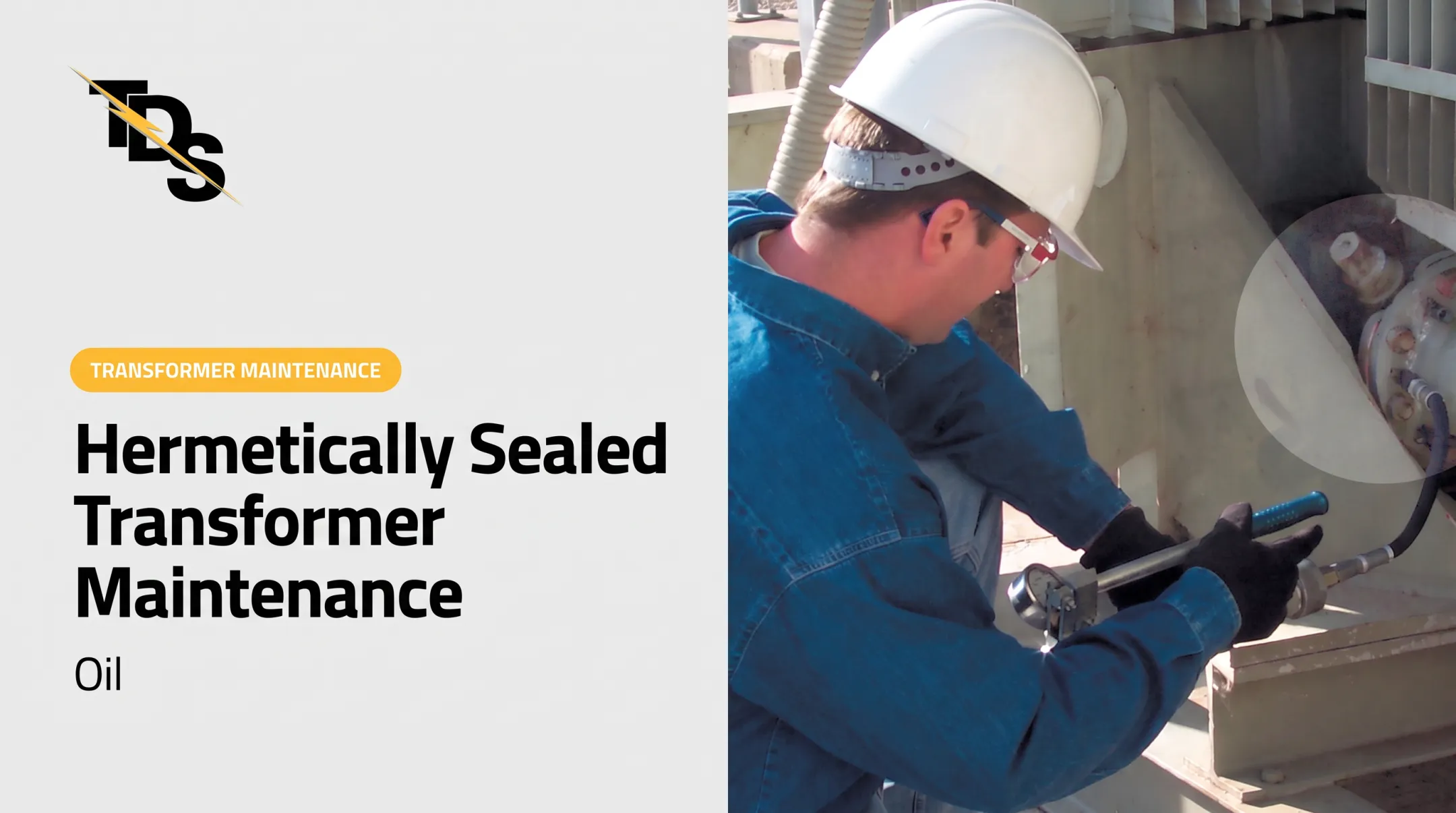
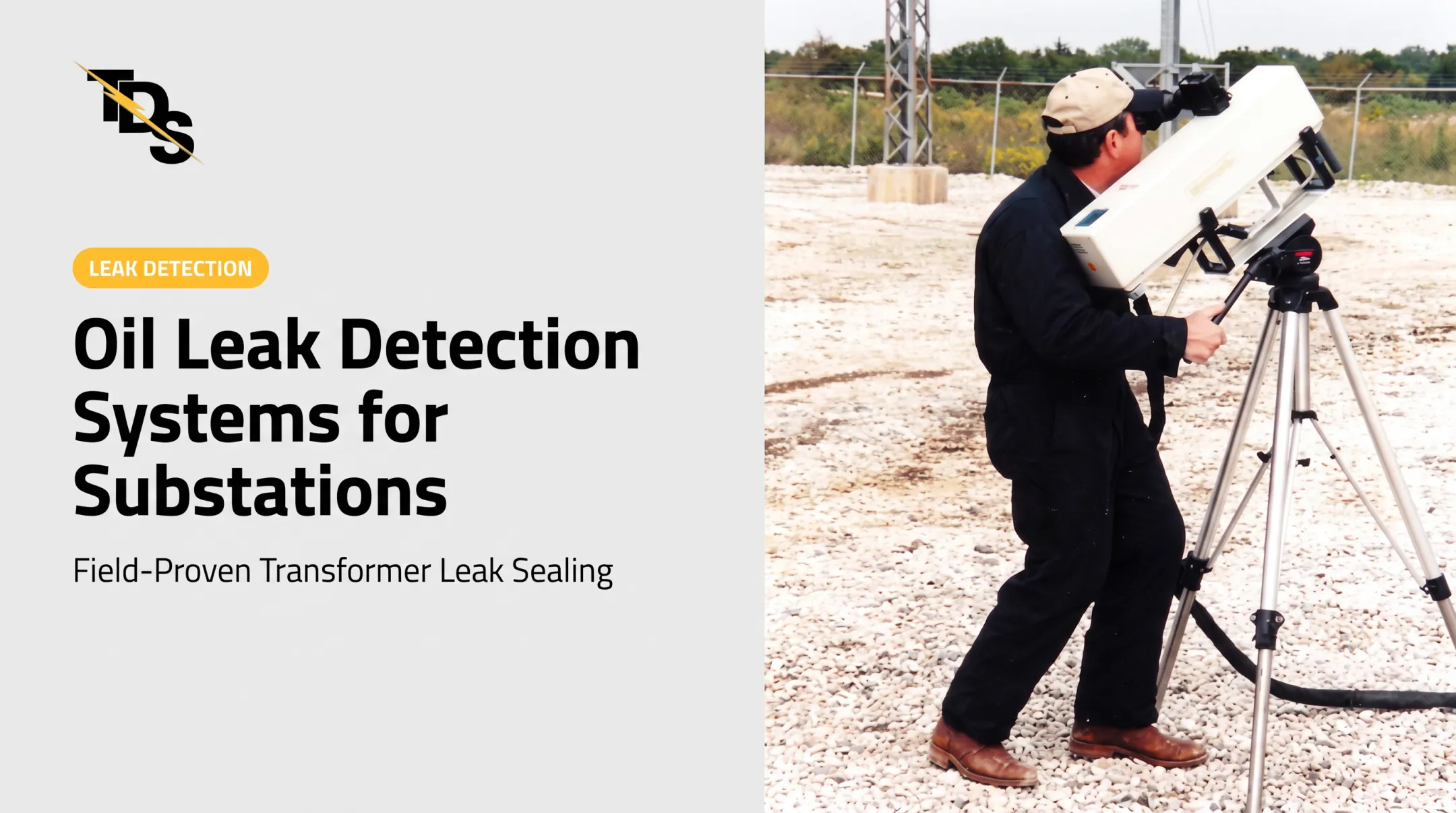
Transmission & Distribution Services (TDS) specializes in low-pressure leak sealing for oil-filled and SF6 gas-filled substation apparatus. Its work complements electrical testing rather than replacing it, and feasibility depends on equipment and site conditions. TDS offers free surveys that photograph each leak and list the repair method, itemized cost, and outage requirements.
Increased Resource Consumption
Rising cooling demand, abnormal auxiliary power use, heavy battery-charger activity, repeated control resets, or declining performance at the same load can signal developing problems. Before blaming a component, check operating data, ambient conditions, loading, calibration, and recent system changes.
Recurring Issues or Downtime
Repeated relay alarms, nuisance trips, failed temporary repairs, recurring leaks, and more frequent forced outages suggest the root cause was never fixed. Work orders, test reports, failure history, and as-found versus as-left records reveal the pattern and help prioritize repair, retrofit, or replacement.
Substation Maintenance Schedule (General Guidelines)
A schedule must fit equipment type, voltage class, age, loading, environment, criticality, and prior results. Verify intervals against current OEM and standards guidance. NFPA 70B-2026 now uses a potential failure-functional failure (P-F) curve method to set maximum intervals, and NETA MTS-2023 Appendix B addresses test frequency.
Maintenance Frequency Framework
| Cadence | Typical activities |
|---|---|
| Daily / per shift | Review alarms, temperatures, load, oil levels, sounds, odors, visible leaks, security |
| Weekly / periodic | Housekeeping, access, battery and charger status, cooling equipment, grounds, drainage, vegetation |
| Monthly / quarterly | Documented visual inspections, thermographic surveys, leak checks, protection reviews, defect follow-up |
| Annual / long-term | Oil and insulation testing, relay and breaker testing, grounding assessments, calibration, condition reviews |
Some intervals are regulatory. NERC PRC-005-6 sets maximums such as 4 calendar months for certain unmonitored vented lead-acid battery checks and 6 calendar years for NiCad bank capacity tests, each with conditions. Those apply only to covered protection-system components.
Adjusting the Schedule to Operating Conditions
High-load, continuous-duty, outdoor, contaminated, humid, corrosive, or mission-critical sites may need shorter intervals. Low operating hours don't remove risk from age, moisture, corrosion, seals, or batteries.
Use condition data and failure history to justify changes, with engineering approval and a documented risk review.
Planning Outages and Specialized Testing
Before an outage or specialized test, coordinate:
- Switching plans, permits, isolation, and grounding
- Lockout, system-operator communication, and contingency coverage
- Test equipment, spares, and return-to-service checks
Non-invasive observation differs from work requiring de-energization. OSHA 1910.269 limits exposed energized work to qualified employees and sets voltage-dependent minimum approach distances.
It also covers utility lockout rather than 1910.147, which excludes installations under exclusive electric-utility control. NFPA 70E addresses shock and arc-flash practices. Follow your utility procedures as well.
Separate from the calendar schedule, test after installation, modification, repair, or a fault: FAT, SAT, commissioning, post-repair, and post-fault.
Recording and Reviewing Results
The NETA Test Report Guide lists the fields worth capturing:
- Asset ID, manufacturer, and model
- Test method and instrument information
- Environmental and loading conditions
- Technician and date
- As-found results, corrective action, and as-left results
- Photographs and follow-up recommendations
Consistent records support trend analysis, audits, budgeting, warranty decisions, replacement prioritization, and better intervals. Doble's 2026 NETA article notes that factory reports and native data make useful comparison baselines, especially when field fluids differ from factory fluids.

Conclusion
Substation maintenance and testing are ongoing reliability, safety, and asset-management duties. The strongest programs combine preventive inspections, condition-based testing, timely corrective work, and planned overhauls.
A documented, risk-based schedule balances uptime, maintenance cost, equipment life, and worker safety. When leaks show up, TDS can survey and seal them, often without dismantling equipment.
Frequently Asked Questions
How do you maintain an electric substation?
Plan work safely, inspect routinely, run equipment-specific tests, and monitor condition. Make corrective repairs promptly, document everything, and follow applicable procedures and standards.
What are the four types of maintenance for an electric substation?
This guide uses preventive, corrective, predictive (condition-based), and major (overhaul) maintenance. Terminology varies between organizations.
What are the 3 P's of electric substation maintenance?
No authoritative NFPA, IEEE, NERC, or NETA source defines a standard "3 P's." Informal usage often means preventive, predictive, and proactive, but treat that as shorthand, not a standard.
How often should substation maintenance and testing be performed?
It depends on the asset, criticality, age, loading, environment, OEM guidance, test history, and standards. Routine inspections happen far more often than comprehensive testing or overhauls.
What tests are performed on a substation transformer?
Common tests include DGA and oil quality, insulation resistance, winding resistance, turns ratio, power factor or tan delta, thermography, and bushing checks. Condition and manufacturer guidance determine the selection.
Can substation maintenance be performed while equipment is energized?
Qualified non-invasive inspections can proceed energized when procedures permit. Hands-on work and many tests require de-energization, isolation, verification, grounding, and qualified personnel.