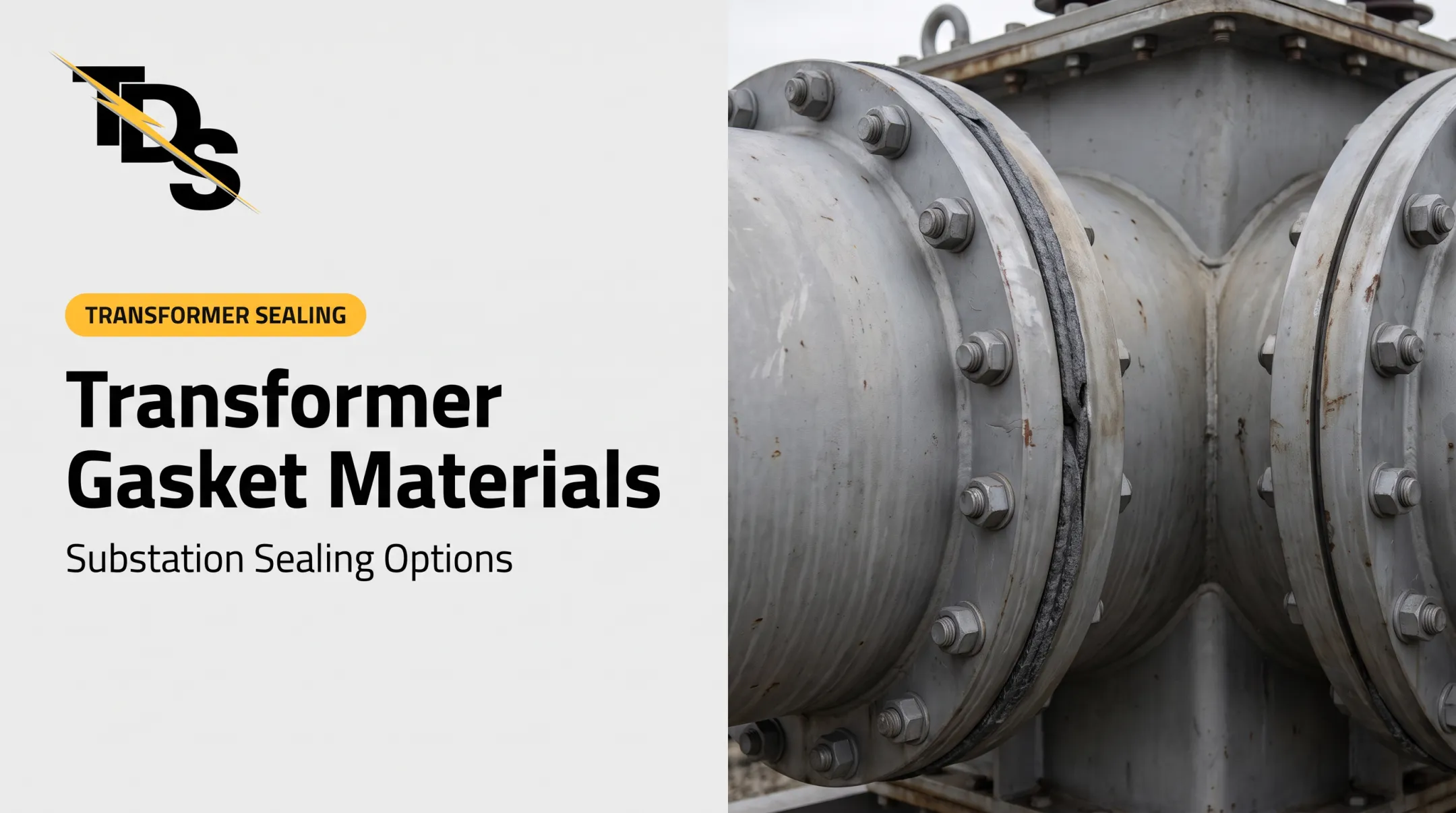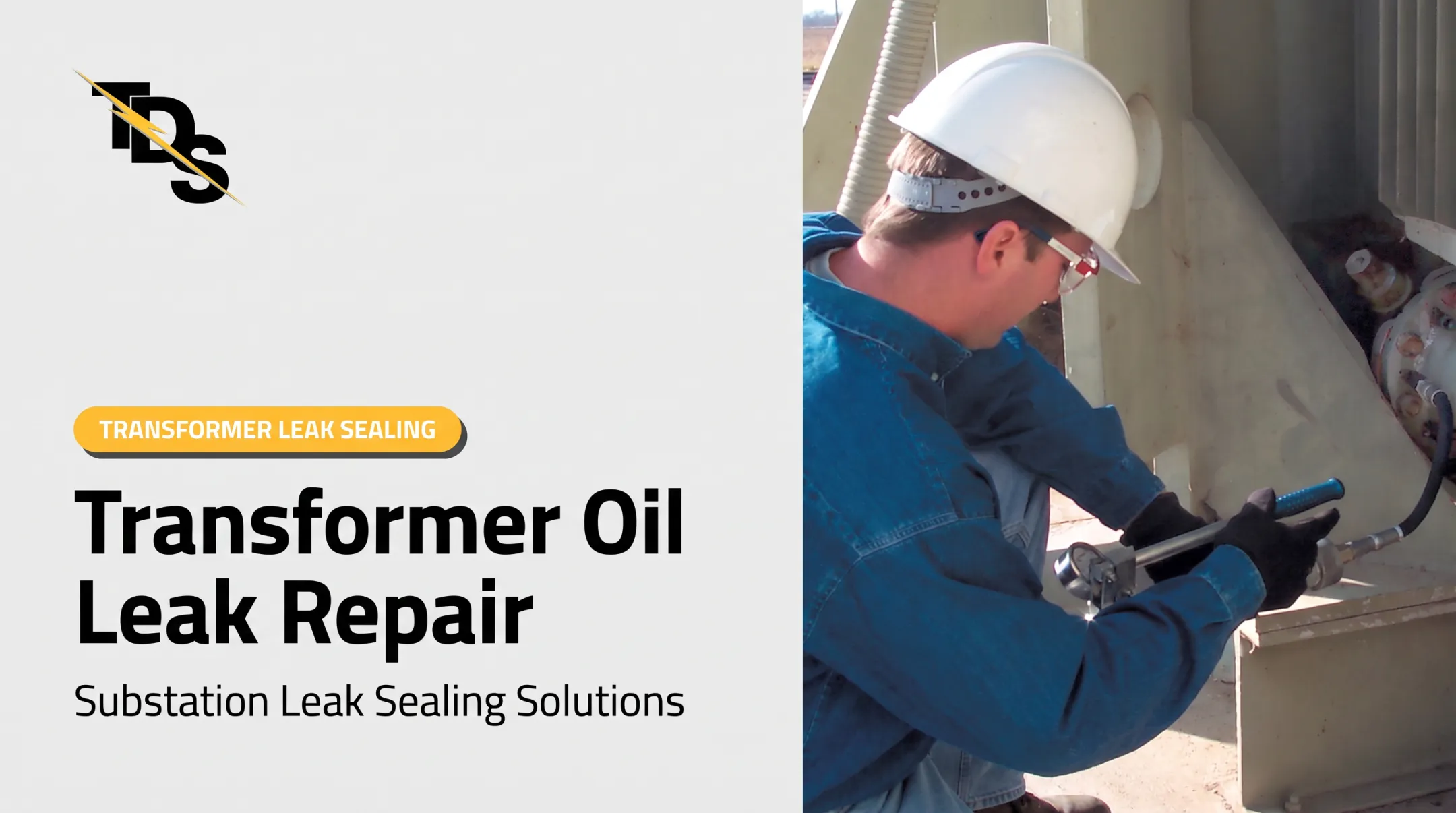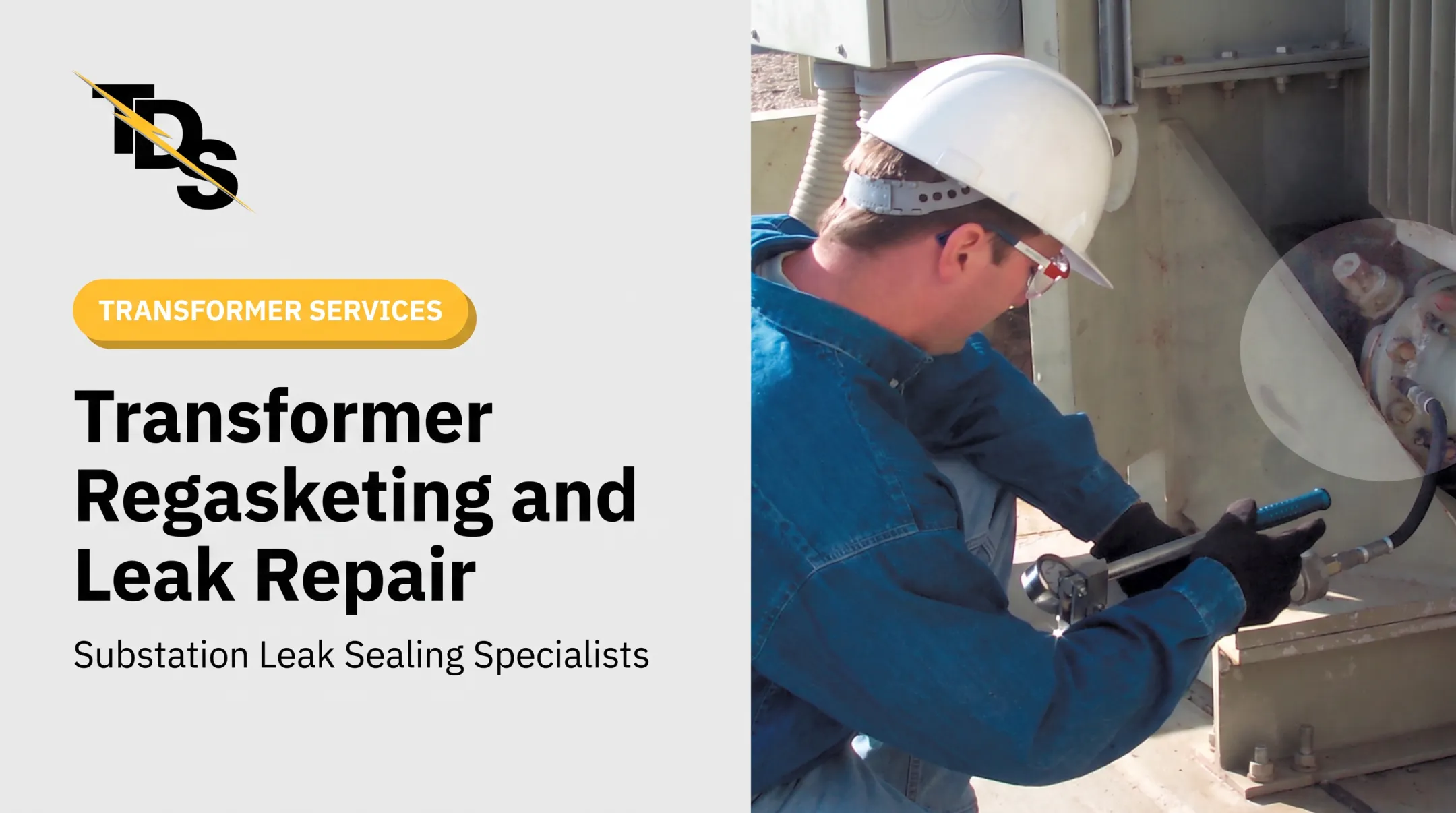

External sealing repairs the leak at the accessible joint, gasket, flange, valve, or fitting without automatically dismantling the apparatus. This article covers when it fits, how it is done, the safety questions, and how to pick a contractor.
The scope here is industrial oil-filled electrical equipment. Automotive engine oil additives are a different thing and don't belong on a transformer.
Key Takeaways
- External sealing can replace teardown when the leak source is confirmed, accessible, and compatible with the method.
- Confirm the real leak path before any repair is planned.
- Never assume energized work is allowed; site procedures and qualified personnel decide.
- Weigh leak severity, equipment condition, environmental risk, downtime, and warranty together.
What External Sealing Means for Oil-Filled Electrical Equipment
What "sealing from the outside" means
A traditional repair de-energizes and grounds the unit, drains oil, and disassembles the joint to replace the gasket. An external, low-pressure repair works on the outside of the leaking component instead.
Transmission & Distribution Services (TDS), for example, injects a rubber-based sealant that cures in place as replacement gasket material. The goal is to stop the leak at its source, not to wipe away residue.
The method has to suit the equipment design, surface condition, oil type, temperature, pressure, and operating environment.
Equipment and leak locations that may require evaluation
Typical candidates include:
- Power and distribution transformers
- Oil circuit breakers
- Bushings
- Radiators and radiator valves
- Flanges, drain valves, and manway covers
- Tap changer compartments
The U.S. Bureau of Reclamation's maintenance guide notes leaks at tank and radiator connections. It also states that a radiator-core leak requires radiator removal. Not every leak is a sealing candidate.
Oil migrates, so the lowest wet spot is often not the source. On one valve assembly, inspection alone could not tell whether the flange gasket, the valve stem, or both had failed. Cleaning and tracing come first.
When external sealing may or may not be suitable
Sealing is a reasonable option when:
- The leak location is confirmed
- Access is adequate
- The joint or seal is repairable
- The equipment is stable
- The sealant is proven compatible with the oil and materials
External sealing is not suitable when:
- Structural tank damage or severe corrosion
- Active, high-volume leakage
- Inaccessible defects or equipment movement
- Pressure or temperature outside the method's limits
- Signs of internal failure
No published standard sets a leak-rate or condition cutoff for external sealing, so OEM requirements and engineering judgment govern. Sealing doesn't replace spill response, and it doesn't rescue a unit that is unsafe or beyond economical repair.

How External Oil Leak Sealing Is Evaluated and Performed
Inspection and leak-source confirmation
A survey starts with the basics: identify the apparatus, review its status and history, and look at the residue. Then clean the area and trace the oil back to a specific component.
TDS cleans the entire flange or valve assembly, then sprays an oil leak detector. Oil darkens the spray at the actual leak point, such as the flange split line or stem packing.
Technicians should document:
- Leak location and equipment condition
- Access limits and oil exposure
- Nearby energized parts
- Any immediate containment needs
Selecting the method and preparing the surface
Surface prep decides whether the repair holds. Clean and dry the area to the sealant manufacturer's and owner's requirements so the material can bond and cure.
Confirm compatibility before application with:
- Transformer oil
- Gasket materials, coatings, and metals
- Insulation systems
- Operating temperature
Compatibility claims are product-specific. One manufacturer's PowerPatch data sheet states mineral-oil compatibility for that product only, so verify the exact sealant you plan to use.
Application of the external seal
This is specialist work, not a DIY job. A qualified technician applies a low-pressure, cured-in-place system to the confirmed leak path. TDS's 4-bolt flapper valve repair, for instance, uses four drilled and tapped injection points and low-pressure hydraulic sealing, with no oil draining.
Throughout the job, the technician:
- Protects adjacent components
- Prevents contamination
- Follows the curing process
- Keeps required clearances from energized parts
In-service and energized-work considerations
Some repairs can proceed while equipment stays in service. TDS reports that bottom-connection leaks can be repaired energized, while upper leaks near bushings may require de-energizing and grounding.
The decision belongs to the owner's work controls, a qualified-person assessment, a job hazard analysis, and electrical safety procedures. OSHA's 1910.269 limits work near exposed energized parts to qualified employees and requires job briefings. No regulator or OEM source grants blanket permission for energized sealing.
Avoiding an outage is a possible benefit, not a promise. The contractor should spell out any switching, isolation, cooling, access, or return-to-service conditions.
Verification and closeout
After the cure period, inspect for continued leakage under normal operating conditions, using the owner's acceptance criteria. Record:
- The original leak and repair location
- Materials used and cure requirements
- Verification results and photographs
- Operating status
- Any follow-up inspection schedule

External Sealing Compared With Traditional Repair Options
Main decision factors
| Option | Access and outage | Main constraint |
|---|---|---|
| External sealing | Often no teardown; outage depends on location | Needs confirmed, accessible, suitable leak |
| Disassembly and regasketing | De-energize, drain, open | More labor and oil handling |
| Containment or monitoring | No repair work | Leak continues |
| Component replacement | Usually outage | Parts and handling |
| Full replacement | Longest outage | Lead time and cost |
Replacement can be slow. The Department of Energy's 2024 transformer report says 36-month lead times were commonly quoted for large power transformers. No reliable universal cost or duration comparison exists among the other options, so get equipment-specific quotes.
Operational and financial advantages
A successful external repair can cut disassembly, oil handling, rigging, and outage time. That matters most to utilities, generating plants, municipal systems, and cooperatives with no spare transformer or a narrow outage window.
One TDS customer testimonial from 2019 called the service "very cost efficient" against a teardown reseal. Treat that as one customer's view, not a guarantee.
Environmental and reliability considerations
Stopping oil loss protects soil and water and eases housekeeping. Follow the facility's spill-prevention plan and reporting procedures. Under EPA rules, a discharge to covered waters that causes a sheen can be reportable regardless of volume, and state rules may add requirements.
The fastest repair isn't automatically the best. It should control the leak without contaminating insulation, bushings, controls, or nearby components.
Limitations and decision triggers
Lean toward conventional repair or replacement when you see:
- Recurring leaks after a prior repair
- Worsening corrosion or damaged metal
- Failed hardware
- Widespread gasket deterioration
- An underlying mechanical or electrical defect
Document the go/no-go decision: why sealing was chosen, what risk remains, what monitoring is required, and when to reassess.
Signs of an Oil Leak and Why Prompt Action Matters
Recognizing a potential leak
Watch for:
- Oil films and darkened or wet gasket lines
- Drips or pooling beneath joints
- Oil on radiator or tank surfaces
- Falling oil level
- Repeated housekeeping problems
Old residue, cleaning activity, or an adjacent component can mislead. Confirm the source before planning repair. The Bureau of Reclamation guidance says leaks should be reported and the oil-level indicator watched closely once one is found.
Assessing urgency
Urgency depends on:
- Leak rate and oil level
- Equipment design and weather
- Proximity to drains or soil
- Fire and electrical hazards
- Effect on insulation
No universal threshold exists. Escalate active or worsening leaks through maintenance, environmental, and emergency procedures instead of improvising a patch.
Safety and environmental response
- Contain the oil and control site access
- Use appropriate PPE and qualified electrical work practices
- Coordinate with the owner's environmental and safety staff
Verify reporting duties against current federal, state, and local rules and the facility's spill-response plan. TDS notes that EPA inspections ask whether a utility documents its oil leaks and has an action plan.
How to Choose an External Leak-Sealing Specialist
Technical and safety qualifications
Look for:
- Demonstrated substation experience
- Technicians qualified for high-voltage environments
- A defined repair method and documented sealant compatibility
- Familiarity with utility work controls
Verify safety credentials, prequalification (ISNetworld, Avetta), insurance, and references. Note that an OSHA Outreach card is only a course-completion card and doesn't establish task qualification. Ask how the contractor coordinates with your switching, testing, environmental, and maintenance teams.

Scope, survey, and proposal quality
A useful proposal should name:
- Equipment and confirmed leak location
- Repair method and surface preparation
- Access and outage assumptions
- Cure and return-to-service conditions
- Exclusions, verification steps, and price
Ask for a pre-repair survey, and clarify what happens if the leak can't be confirmed or the condition proves unsuitable.
Warranty and where TDS fits
Transmission & Distribution Services works exclusively on substation leak sealing for oil-filled and SF6 gas-filled apparatus. Points worth comparing include:
- OSHA-certified technicians and a low-pressure repair approach
- Free equipment surveys that identify the equipment, leak location, method, and price
- A four-year leak-seal warranty
- No charge for repair work if TDS cannot fix the leak
If you manage a US utility, generating facility, municipal utility, cooperative, or substation contracting scope, request an equipment survey. External sealing is not the answer to every leak, and a good survey will tell you which ones it suits.
Frequently Asked Questions
What is the best way to stop an oil leak?
It depends on the confirmed source, equipment condition, material compatibility, leak severity, and outage needs. For substation equipment, get a professional evaluation first.
Can you seal an oil leak from the outside?
Some accessible gasket, flange, valve, or fitting leaks can be sealed externally with a qualified method. Structural damage, heavy leakage, or inaccessible defects may need a different repair.
Do oil leak sealers actually work to stop oil leaks?
Purpose-designed industrial sealing systems differ from automotive additives. Success depends on correct diagnosis, preparation, compatibility, application, and equipment condition.
Can a transformer oil leak be sealed without taking the transformer out of service?
Some repairs may be done in service when conditions allow. That decision belongs to qualified personnel following the owner's switching, electrical safety, and work-control procedures.
How do you find the source of an oil leak on a transformer?
Inspect, clean the area, and trace oil migration back to likely joints and fittings. A leak detector spray can help confirm it. Document the confirmed source before choosing a repair.