
Introduction
A circuit breaker sits idle for months, then has to open correctly in milliseconds. A glance at the enclosure can't confirm that it will. Its ability to open, close, and interrupt fault current has to be verified through testing, not assumed.
Neglect can lead to failure to trip, damaged equipment, arc-flash exposure, fires, unplanned outages, and expensive repair or replacement.
Historical CIGRE data on high-voltage breakers points to "does not close on command" as the dominant failure mode, with the operating mechanism and control circuits as major origins of failure.
This guide covers maintenance types, inspection and testing, warning signs, safety, scheduling, documentation, and common questions.
Key Takeaways
- Routine testing verifies trip performance, protects people, and cuts unplanned downtime.
- A full program mixes inspection, cleaning, lubrication, electrical testing, condition monitoring, and overhaul.
- Intervals depend on OEM instructions, duty, environment, and condition data.
- Leaks, overheating, failed tests, pressure alarms, and repeated trips need prompt qualified evaluation.
- Records and trends expose deterioration before a fault does.
Why Maintenance of Circuit Breakers Is Important
Protection and reliability
A breaker interrupts overloads and short circuits. If it fails to operate correctly, damage spreads and arc-flash risk rises. The USBR's FIST 3-16 guide warns that timing or speed outside manufacturer specifications can impair fault clearing or lead to catastrophic failure.
Maintenance confirms several things:
- Proper opening and closing
- Trip-unit operation
- Contact condition
- Insulation integrity
- Coordination with relays and other protective devices
Equipment life
Contamination, heat, contact wear, corrosion, mechanical friction, and insulation degradation all accelerate deterioration. Each is cheaper to catch early.
In SF6 breakers, the gas is both the insulating medium and the arc-extinguishing medium during opening. A leak is a reliability problem, not just an environmental one.
Safety and compliance
Maintenance work involves qualified-person requirements, lockout/tagout, stored mechanical energy, manufacturer procedures, and documented testing. Applicable US requirements include OSHA 29 CFR 1910.333 and 1910.269 for electrical work, plus NFPA 70E for hazard analysis and PPE. Sites should also consult the current NFPA 70B edition (the 2026 edition is active) for program structure.
Utilities face a record-keeping angle too. EPA inspections ask whether oil and SF6 leaks are documented and whether an action plan is in effect.
Cost of planned versus reactive work
The DOE's O&M Best Practices Guide estimates 12%-18% savings for preventive over reactive maintenance, and 8%-12% for predictive over preventive. Those are broad program figures, not breaker-specific failure costs. Reactive work adds outage response, emergency labor, collateral damage, and premature replacement.

Types of Maintenance for Circuit Breakers
Think of maintenance in layers. Routine work sets the baseline, corrective work fixes known defects, predictive work spots deterioration, and major maintenance restores or replaces worn parts.
Routine / Preventive Maintenance
Preventive work happens on a schedule:
- Visual and mechanical checks
- Enclosure and connection inspection
- Cleaning
- Lubrication where specified
- Mechanism exercise
- Status-indicator checks
- Review of alarms and pressure indicators
It works best when it follows the OEM manual and a documented checklist tailored to voltage class, interruption technology, environment, and duty.
The tradeoff is planned labor and outage coordination against the cost of an avoidable failure. Industry cost-of-failure data supports the planned side.
Corrective / Reactive Maintenance
Common triggers include:
- Failed trip or close operation
- Abnormal timing
- Overheating
- Excessive contact resistance
- Insulation-test deterioration
- Repeated nuisance trips
- Mechanical binding
- Oil or SF6 leakage
Relying on reactive work alone hides deterioration and invites emergency outages, unsafe troubleshooting, parts delays, and damage to switchgear.
A temporary fix is not a verified repair. A verified repair includes retesting, documentation, and authorization to return the breaker to service.
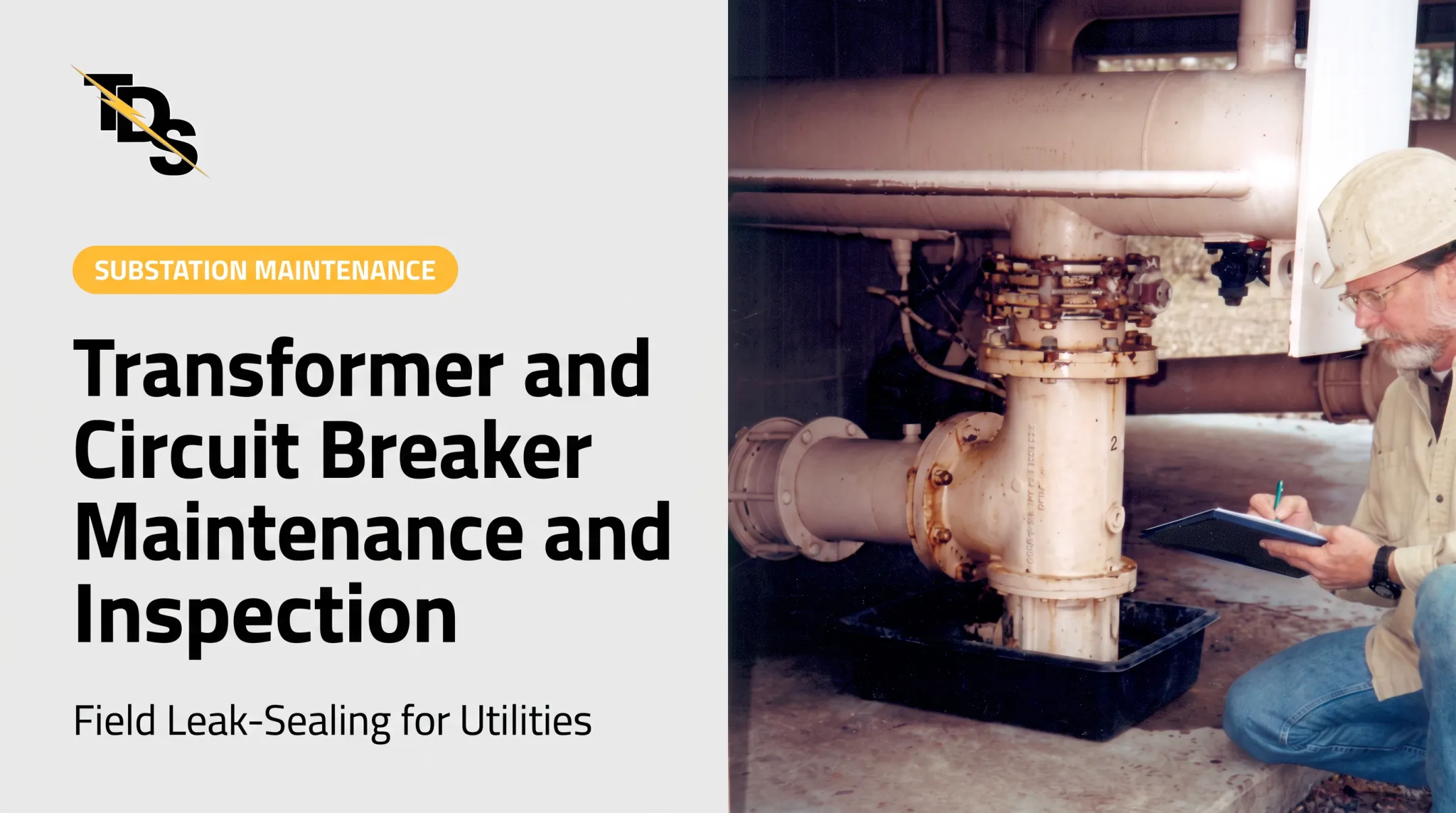
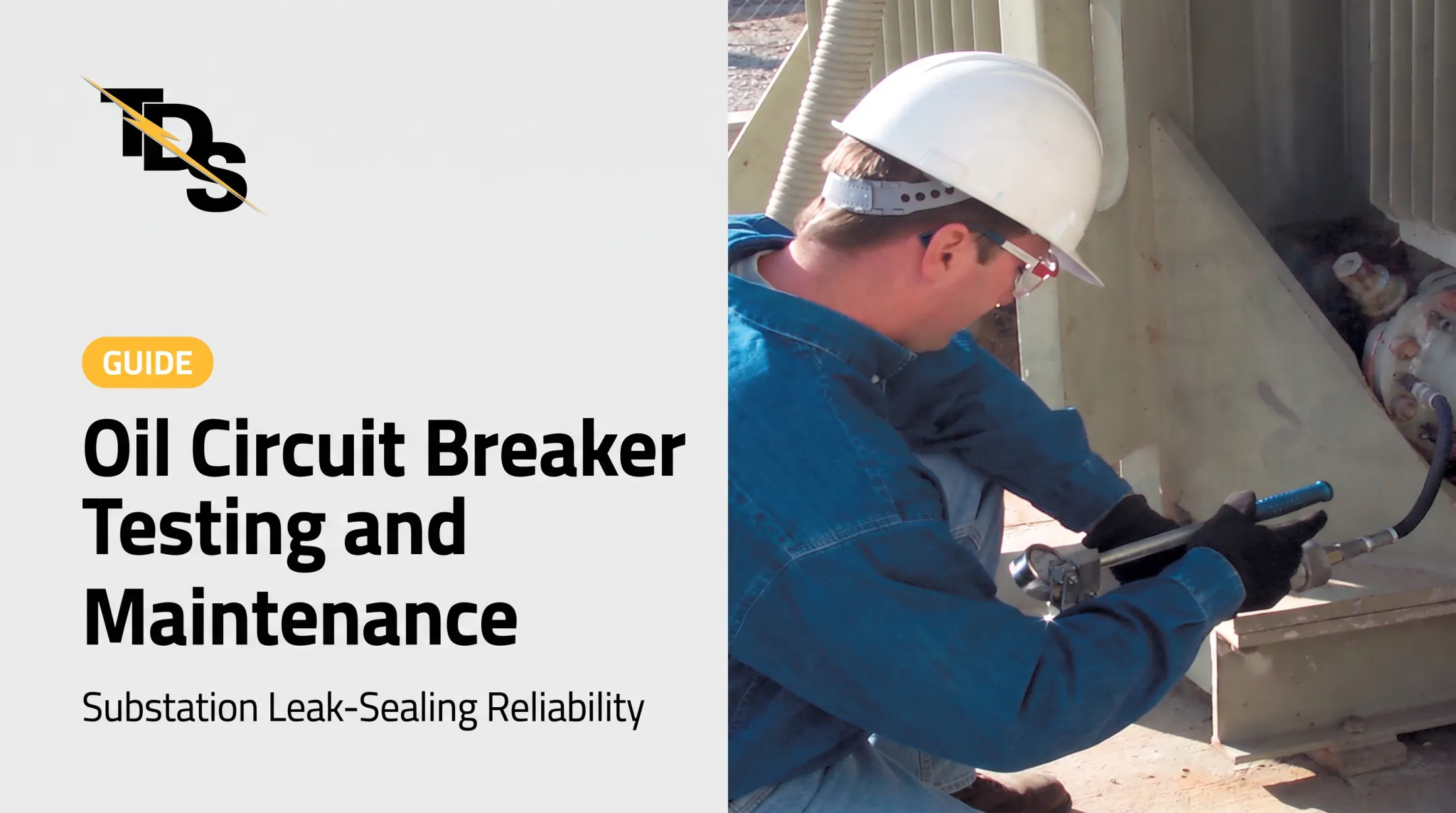
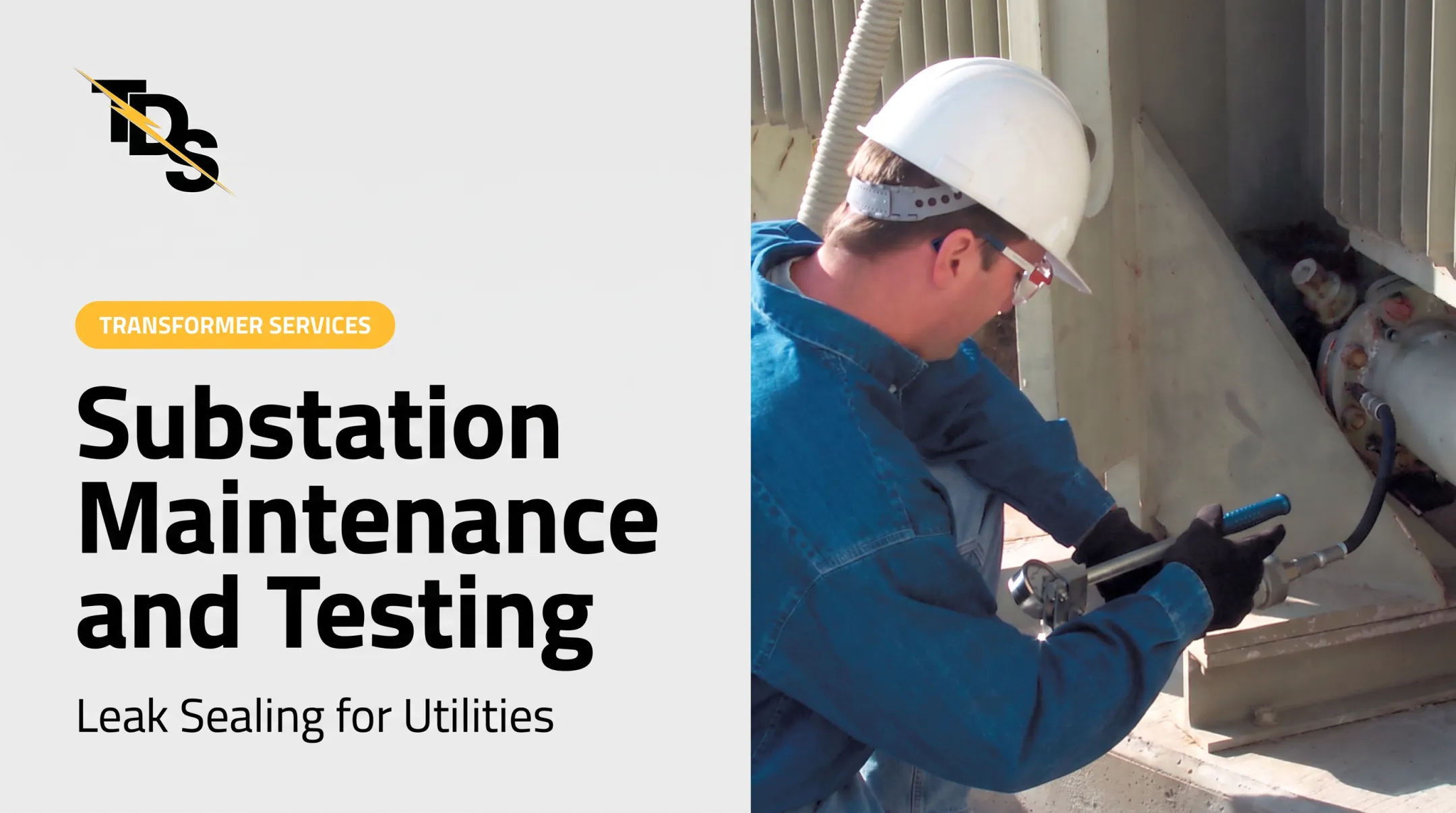
Leaks deserve special mention. Conventional repair means taking an oil or SF6 breaker out of service and disassembling it. Some equipment stays unrepaired because it is too valuable to remove or crews are busy elsewhere. Transmission & Distribution Services (TDS) offers low-pressure leak sealing as an alternative, using drill-and-inject methods, clamps, and custom enclosures on oil and SF6 breakers.
Predictive / Condition-Based Maintenance
Teams can trend:
- Insulation and contact resistance
- Timing and travel traces
- Thermal images
- Operation counts
- Vibration
- Oil condition
- SF6 pressure or density
Decisions rest on current readings, historical baselines, manufacturer tolerances, operating events, and environment, not age alone.
For thermography, FIST 3-16 treats a 1-3°C difference as a possible deficiency to investigate, 4-15°C as repair as time permits, and 16°C or more as a major deficiency needing immediate repair. These are guide-specific indicators, not universal limits.

Record each measurement with the test equipment, conditions, breaker position, temperature or humidity, and the technician's interpretation.
Major / Overhaul Maintenance
Overhaul may involve:
- Disassembly
- Contact or interrupter inspection
- Mechanism refurbishment
- Replacement of seals and worn parts
- Insulation work
- Oil servicing
- Full electrical and mechanical retesting
Triggers include severe fault interruption, heavy contact erosion, repeated failed tests, advanced corrosion, obsolete parts, mechanism wear, or chronic leakage. As an example, GE's GL-series plan calls for overhaul at 20 years, 3,000 mechanical cycles, or the electric-wear limit. That is model-specific.
When weighing overhaul, replacement, or continued operation, compare safety, reliability, parts availability, outage needs, asset criticality, and cost. Leak-repair options can give asset managers more room to decide whether to refurbish or replace.
How to Check If a Circuit Breaker Needs Maintenance
The signs below are warning indicators, not a substitute for a formal program. Qualified personnel must perform inspection, testing, and repair using required safe-work procedures.
Breakers hold electrical and stored mechanical energy. Before internal work:
- Lock out and tag out per site procedure.
- Verify an electrically safe work condition.
- Discharge or block operating mechanisms.
- Ground as required.
- Wear appropriate PPE.

Performance or Output Changes
Watch for:
- Failure to trip
- Delayed opening or closing
- Failure to reset
- Nuisance tripping
- Control or trip circuit failure
- Protective operation that doesn't match relay or trip-unit expectations
Never judge on one observation. Compare operating times, trip behavior, contact resistance, travel results, and settings against OEM specifications and previous test records.
Unusual Behavior or Operation
Watch for:
- Buzzing or clicking
- Excessive vibration
- Binding or sluggish movement
- Repeated spring charging
- Unexpected alarms
- Odd behavior on a close or trip command
Don't repeatedly operate a suspect breaker to diagnose it. The mechanism may be charged, and the equipment may still be energized.
Visible Wear, Errors, or Irregularities
Findings that need evaluation:
- Cracks and corrosion
- Contamination
- Loose hardware
- Damaged insulation
- Pitted or burned contacts
- Discoloration or melted parts
- Signs of arcing or heat damage
Oil or SF6 leakage, low-pressure or density alarms, residue around seals, and unexplained loss of insulating medium are priority findings.
TDS specializes in low-pressure leak sealing for oil- and SF6-filled substation breakers. Where site conditions and safety procedures allow, it can repair a leaking component without traditional disassembly, often with the equipment energized.
If a leak needs repair, request a specialist survey rather than improvising a seal. TDS surveys are free and document the equipment, leak location, repair method, and price.
Increased Resource Consumption
For breakers, "consumption" shows up as:
- Rising contact resistance
- Abnormal heat at terminals or contacts
- Increased control-circuit activity
- Repeated spring charging
- Oil or SF6 loss
Thermal imaging, contact-resistance testing, pressure or density monitoring, and trending separate a developing defect from normal variation. SF6 matters here because it is costly and an EPA-designated greenhouse gas. On an oil breaker, a common leak point is the drain-valve hex end and threaded pipe nipple.
Recurring Issues or Downtime
Repeated trips, recurring failed tests, temporary repairs that don't hold, repeated pressure alarms, and unplanned outages on the same breaker point to a deeper problem. Remove the breaker from service or escalate it for engineering review. Document the defect, corrective action, retest results, and return-to-service decision.
Circuit Breaker Maintenance Schedule (General Guidelines)
No universal interval exists. Build the plan from:
- OEM instructions, current standards, and site procedures
- Breaker type, voltage class, and operation count
- Fault history, criticality, environment, and condition data
NFPA 70B (2026 edition) and ANSI/NETA MTS-2023 frame the program, but neither publishes a universal interval table. Manufacturer examples show how much intervals differ:
| Breaker | Published interval or trigger |
|---|---|
| Eaton Magnum LV | Arc chute and primary contacts yearly; mechanism every 250 operations or 3 years |
| Schneider MasterPacT MTZ | End-user maintenance yearly; manufacturer maintenance every 2 to 5 years by criticality and conditions |
| Siemens SION vacuum | Maintenance-free to 10,000 cycles in normal service |
| GE GL-series SF6 | Visits once or twice yearly; inspections every 5 years |
All are model-specific. Use your breaker's current manual.
Maintenance Frequency Table
| Frequency | Typical tasks |
|---|---|
| Daily or per use | Safe external checks of position, trip or alarm indication, abnormal noise or heat reports, oil or SF6 pressure indication, visible leakage (not every site does all daily) |
| Weekly or periodic | Housekeeping, alarm and event review, external condition, access, labeling, and barriers |
| Monthly or quarterly | Visual and mechanical inspection, mechanism condition, lubrication, thermal surveys, trend review |
| Annual or long-term | Insulation resistance, contact resistance, timing or travel analysis, trip-unit testing, medium condition, post-repair retests, formal reports |
Interval Adjustments and Documentation
Shorter intervals. High-use breakers, frequent fault interruption, aging equipment, and dusty, humid, corrosive, hot, or contaminated environments call for more frequent inspection or monitoring. Eaton, for example, lists temperatures outside 59–86°F (15–30°C), dirt, and condensation as reasons to inspect more often.
Duty and events. Distinguish continuous, standby, and intermittent operation. Add event triggers: a major fault, abnormal trip, extended storage, environmental incident, modification, or significant test-result change.
Asset register and PM checklist. Record:
- Breaker type, manufacturer, model, serial number
- Voltage and current ratings
- Interruption medium and location
- Operation history
- Inspection findings and test readings
- Repairs and next required action
Documented leak records also help answer EPA inspection questions.
Conclusion
Maintenance verifies protection, controls risk, and preserves system reliability. The best plans balance preventive inspection, condition-based testing, corrective repair, qualified safety practices, and accurate records instead of trusting age or appearance.
Review your breaker inventory and schedule with qualified electrical personnel. When testing turns up mechanical, insulation, oil, or SF6 defects, bring in specialist support. For oil or SF6 leaks, TDS offers a free equipment survey.
Frequently Asked Questions
What is the maintenance mode on a breaker?
Maintenance mode is a breaker or trip-unit setting that changes protective behavior during servicing, such as Eaton's ARMS. Names and functions vary by manufacturer. It is not lockout/tagout, de-energization, or an electrically safe work condition.
What is a PM checklist?
A documented list of inspections, tests, safety steps, acceptance criteria, records, and follow-up actions completed at planned intervals for a specific breaker or asset group.
What is SC and OC test?
The abbreviations vary, but may mean short-circuit and overcurrent testing. One verifies interrupting or short-circuit capability; the other checks overcurrent pickup or trip performance. Follow the OEM or applicable testing standard.
What destroys a circuit breaker?
Overloads, severe fault interruption, arcing, and overheating are common causes. Contact erosion, contamination, moisture, corrosion, mechanical wear, insulation deterioration, wrong settings, improper repairs, and oil or SF6 leakage also shorten breaker life.
What is the average lifespan of a circuit breaker?
It varies with design, voltage class, medium, duty, environment, and maintenance. USBR's FIST guide gives roughly 20-30 years for vacuum breakers as a guide-level estimate. Rely on OEM guidance, operation history, and test trends, not age alone.