
The answer starts with the real failure mechanism. Then compare a targeted repair against the full cost of teardown, replacement, downtime, temporary power, and environmental response.
DOE's 2014 large power transformer report puts a 75-500 MVA unit at $2 million-$7.5 million at the factory, with transport and installation adding another 25%-30%. This article covers warning signs, leak-sealing services, condition-based decisions, and when life extension is the wrong call.
Key Takeaways
- Age alone shouldn't decide repair versus replacement; condition, criticality, and load history matter.
- Sealing a localized leak early protects oil level, insulation, cooling, and compliance.
- Low-pressure repairs can cut disassembly and downtime when site conditions permit.
- Compare any repair against total lifecycle cost and risk.
Why Transformer Life Extension Can Be a Cost-Effective Alternative to Replacement
Life extension works when the underlying asset is still serviceable. It is not right for every transformer, but where it fits, the savings are real.
Direct and indirect costs to weigh
Direct costs are the ones on the quote:
- Labor and replacement equipment
- Transportation, lifting, and rigging
- Oil handling, disassembly, and reassembly
- Testing and installation
Indirect costs often dominate:
- Planned or emergency outages
- Lost generation or production
- Temporary power
- Emergency procurement
- Environmental cleanup
A DOE report cites 2010 average lead times of 5-12 months for domestic producers, and longer when demand is high. Pulling a revenue-producing unit while you wait is expensive.
Fixing only what leaks
Targeted repair preserves value in serviceable equipment. Repairing only the confirmed leaking component is cheaper than dismantling an entire apparatus or replacing gaskets that aren't leaking. Less disassembly means fewer components disturbed and fewer chances for reassembly errors or contamination.
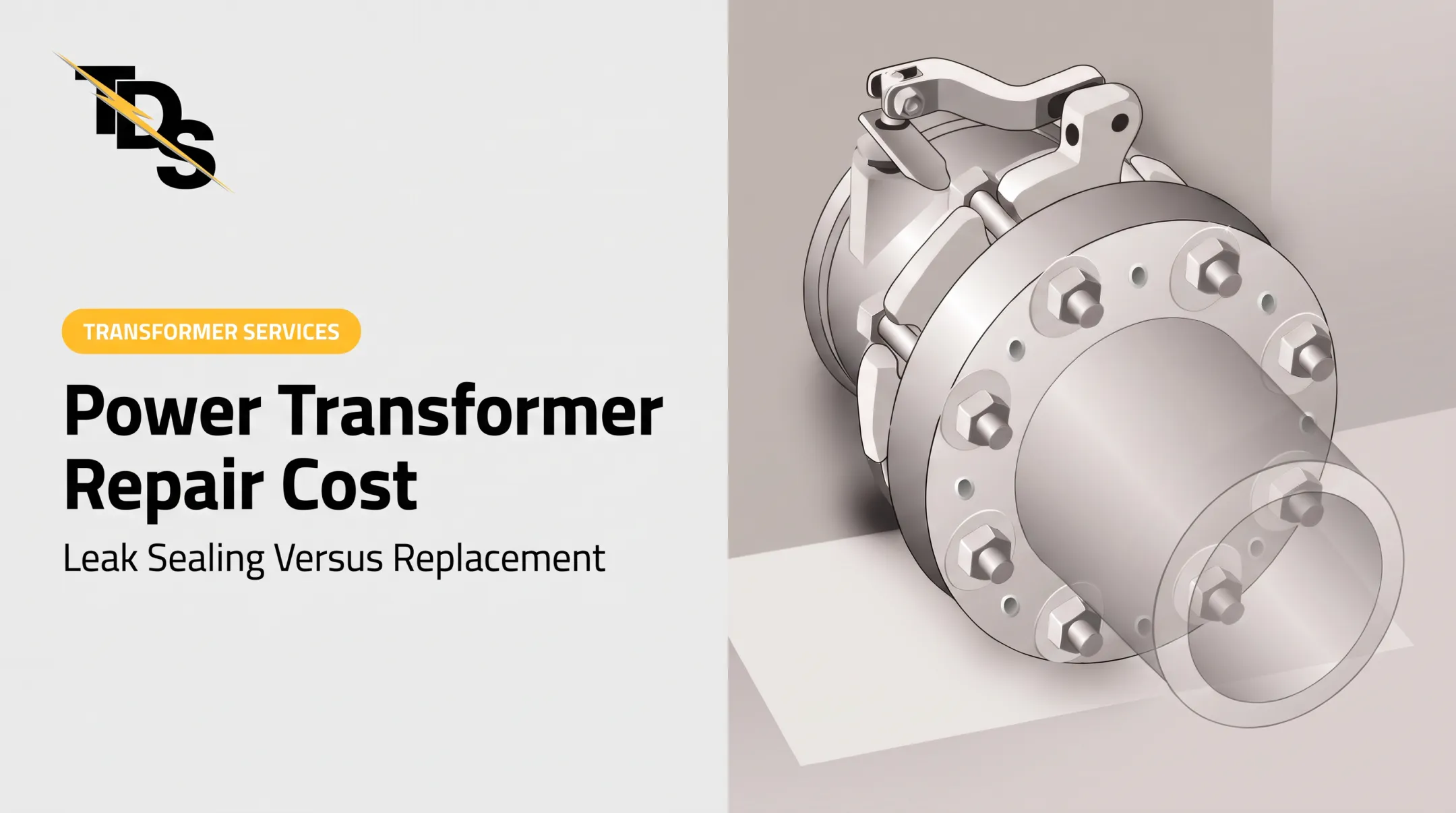
Traditional repair is heavier. A 4-bolt flapper-valve repair normally requires draining and removing the radiator bank, often draining the main tank, and replacing most gaskets, all with the transformer out of service.

Where life extension stops making sense
Replacement or major refurbishment is the better path when you see:
- Severe internal faults or advanced insulation deterioration
- Major winding or tank damage
- Repeated, unresolved failures
- A unit that no longer meets system capacity or voltage requirements
Use condition assessment and lifecycle-cost analysis, not age or one leak, as the deciding criteria.
Warning Signs That a Transformer Needs Life Extension Attention
Common field indicators
Investigate promptly if you see:
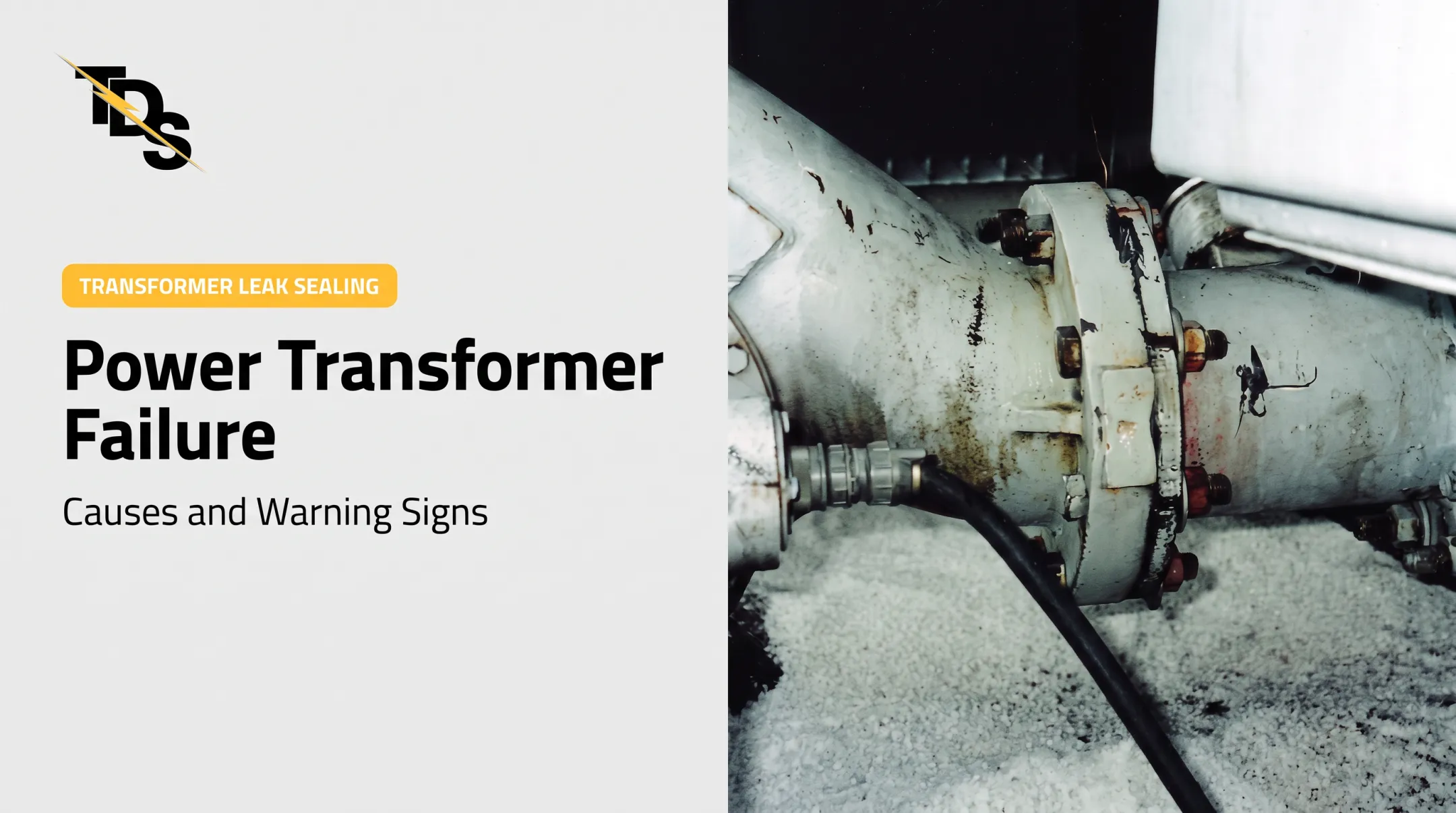
- Oil seepage or active leaks, and falling oil levels
- Corrosion around flanges or fittings
- Unusual temperatures or abnormal noise
- Repeated alarms or visible deterioration
Common leak points include valve gaskets, bushings, drain plugs, lids, valve stems, temperature probes, liquid level gauges, and no-load tap changers. The Bureau of Reclamation notes in its transformer maintenance manual that an oil leak is usually also an air leak, so a leaking gasket can admit water and air. Low oil with no visible leak may point to an internal problem.
Even a small leak steadily loses oil and increases exposure to moisture, contamination, and insulation stress. It also creates compliance risk. Unchecked leaks leave utilities exposed during EPA inspections.
Diagnostics before choosing a repair
Review the record before committing to life extension work:
- Inspection and maintenance history
- Oil level and oil quality
- Dissolved gas analysis and electrical test results
- Loading history and cooling performance
- Previous fault events
A leak-sealing service addresses a confirmed sealing problem. It doesn't replace a full investigation when test results suggest an internal electrical, thermal, mechanical, or insulation fault.
Transformer Life Extension Services for Oil-Filled Transformers
Equipment survey and leak confirmation
A qualified provider should inspect the facility, confirm the exact leak location, document equipment condition, and state the repair method, site requirements, and price. Old residue and nearby staining often hide the real source.
Transmission & Distribution Services (TDS) surveys list the substation, equipment, leak description, repair method, itemized cost, and outage requirements. TDS fixes only what is leaking.
Low-pressure, cured-in-place leak sealing
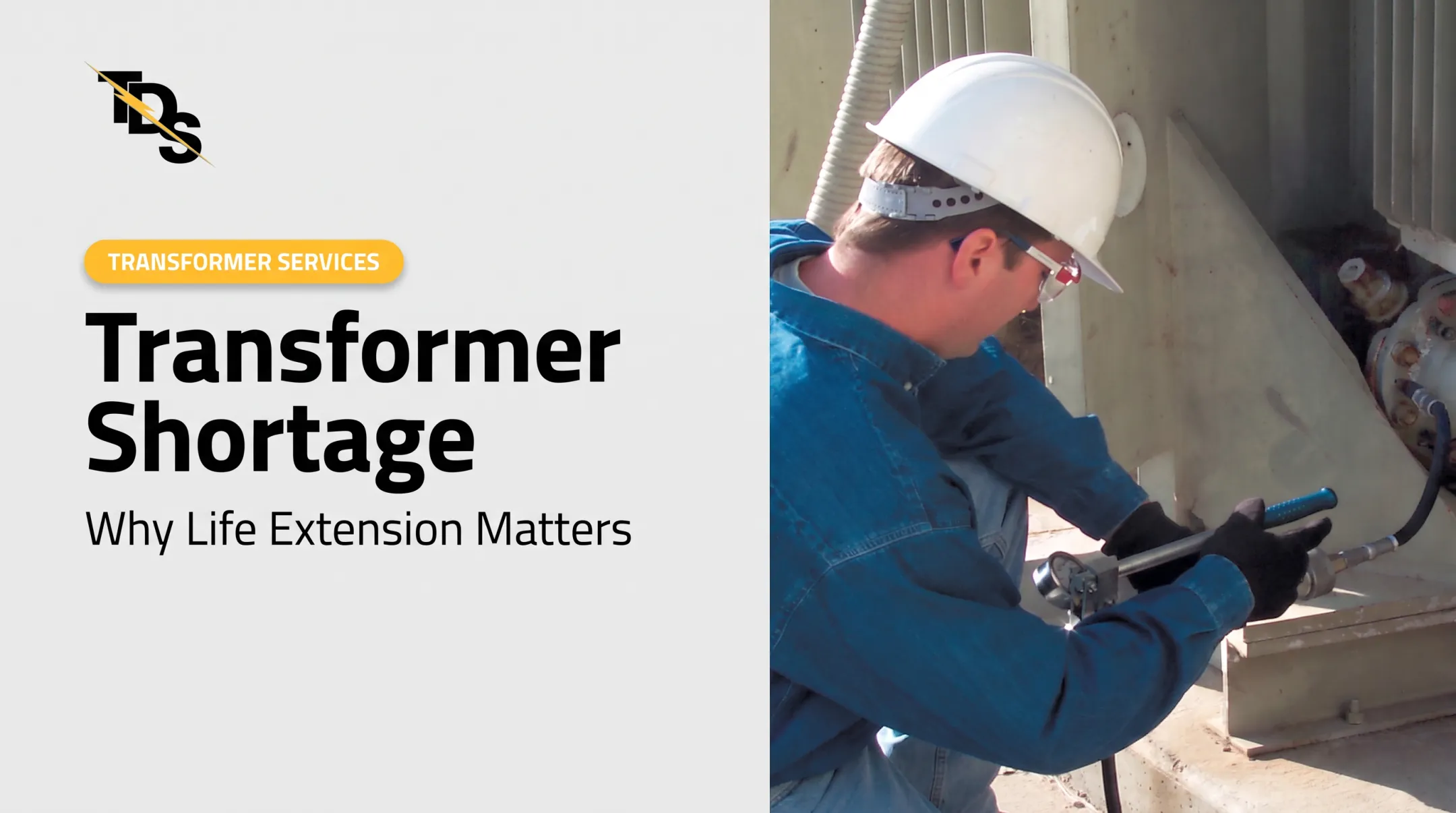
TDS works exclusively on oil-filled and SF6 gas-filled electrical apparatus. Its low-pressure method replaces failed OEM gasket material with a cured-in-place gasket, avoiding traditional disassembly. On a 4-bolt flapper valve, for example, technicians use four tapped holes and inject sealant without draining oil.

TDS describes its proprietary sealant as environmentally friendly and non-reactive with transformer oil. Confirm compatibility with the oil or SF6 gas in your specific equipment, and ask for the reference lists and sealant tests TDS provides.
Downtime, energized work, and environmental considerations
TDS reports that a 4-bolt flange can usually be repaired in about two hours, and an 8-bolt flange in about three, while energized and without draining oil. Bottom-connection leaks can often be repaired energized.
Upper leaks may require de-energizing and grounding, depending on proximity to bushings and other live components.
Energized work needs a site-specific review of safety, access, equipment, and owner procedures under rules such as OSHA 1910.269. No provider can promise outage-free repair everywhere. Where it is possible, sealing preserves insulating fluid, limits oil loss, and avoids outage and temporary-power costs.
Service assurance
- Free equipment survey with leak documentation and itemized repair costs
- No-risk sample work: you don't pay if TDS can't fix the leak
- Four-year leak-seal warranty on its original repair work
- OSHA-certified technicians
The warranty covers the leak-seal repair, not unrelated transformer failures. Confirm current commercial and warranty terms before signing.
How to Decide Between Life Extension, Repair, and Replacement
Build a condition and cost baseline
Gather:
- Age, nameplate data, and criticality
- Load profile and future capacity needs
- Leak history and maintenance records
- Oil and electrical test results
- Outage constraints
The same repair can make sense for a critical transformer with sound insulation and be a poor choice for a unit with several serious failure indicators.
Compare realistic options
| Option | Scope | Downtime and risk |
|---|---|---|
| Targeted leak sealing | Confirmed leaking component | Often low; may be energized |
| Traditional regasketing | Drain, disassemble, replace gaskets | Outage required |
| Oil processing, bushing or tap-changer work | Specific subsystem | Varies |
| Major refurbishment | Extensive | Long outage |
| Replacement | Full unit | Long procurement, installation |
Include quoted costs and hidden costs: lost production, temporary generation, environmental response, emergency logistics, and procurement time. EPRI's life-cycle framework notes that outage, repair, and emergency-replacement costs can eventually exceed planned-replacement costs.
Select and document the plan
Get a written scope that covers:
- Leak location and repair method
- Safety conditions and equipment status
- Warranty, exclusions, and testing
- Follow-up inspection
Have engineering and safety teams review it, then record the decision in the transformer's maintenance history for trend analysis.
The decision rule is simple. Use targeted life extension when the asset remains serviceable and the repair meaningfully cuts risk and lifecycle cost. Start replacement planning when repair scope, failure risk, or system requirements make continued operation uneconomical.
Conclusion: Use Targeted Transformer Services to Protect Asset Value
Life extension works best when owners catch localized problems early, confirm the wider asset's condition, and weigh repair economics against the full cost of replacement and downtime.
Utility, generation, and substation maintenance teams can request a free equipment survey from Transmission & Distribution Services. The survey identifies:
- Equipment and leak location
- Proposed repair method
- Price Not every leak is repairable, and the survey will tell you which are.
Frequently Asked Questions
How long does transformer oil last?
It varies with design, heat, moisture, oxidation, contamination, loading, sealing condition, and maintenance. Test the oil regularly and treat or replace it based on condition, not a fixed interval.
What is the most cost-effective way to extend transformer life?
Combine routine condition monitoring, cooling and load management, and oil and insulation assessment. Repair localized leaks promptly, before they grow into reliability or environmental problems.
Can a transformer oil leak be repaired without taking the transformer offline?
Some localized leaks can be, with limited disassembly or while in service. It depends on the equipment, leak location, site hazards, owner procedures, and qualified personnel.
Is transformer life extension cheaper than replacement?
It can be. Compare repair scope, outage costs, temporary power, environmental response, procurement, installation, and the unit's remaining condition and service value.
When should a transformer be replaced instead of repaired?
Replace when you see severe internal or insulation deterioration, major mechanical damage, repeated failures, or unsuitable capacity or voltage. Also consider it when cumulative repair costs and risk approach replacement value.