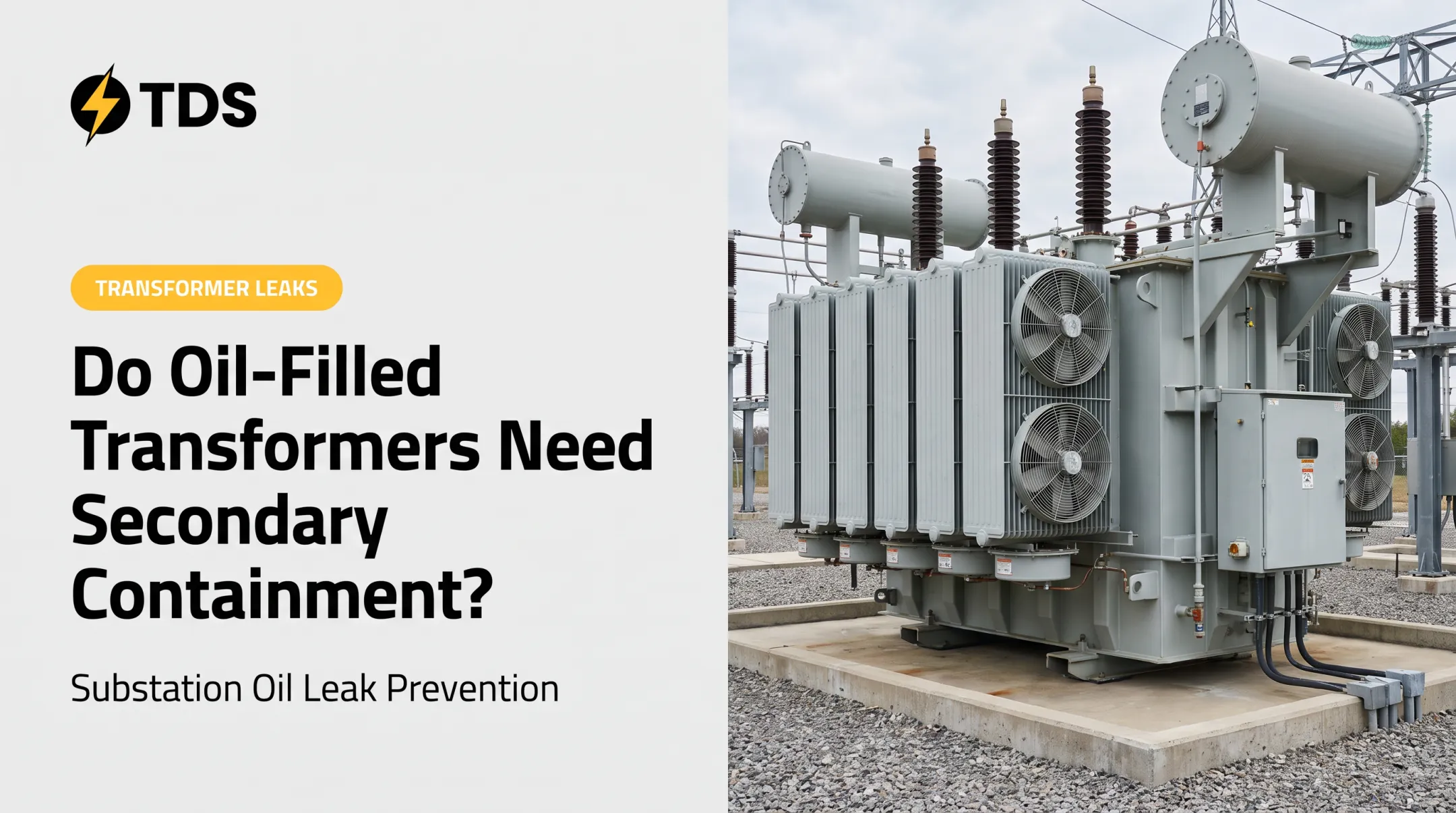

The details depend on how the asset is configured and used. This article walks through 40 CFR Part 112, the facility SPCC Plan, EPA guidance, and where engineering standards such as API 653 and STI SP001 do and don't fit.
Key Takeaways
- Transformer oil counts toward total aboveground oil capacity at 55 gallons or more per unit.
- 112.8(c)(6) tank testing is not automatically required for operating transformers.
- Transformers still need a documented inspection or monitoring program.
- API 653 and STI SP001 cover storage tanks, not in-service transformers.
What Does SPCC Say About Transformers and Oil-Filled Operational Equipment?
The facility-level applicability test
SPCC applies to a non-transportation-related facility that could reasonably be expected to discharge oil in harmful quantities to navigable waters or adjoining shorelines, and that has more than 1,320 U.S. gallons of aboveground oil storage capacity. Only containers of 55 gallons or more count toward that total.
EPA's FAQ confirms that 55-gallon minimum also covers oil-filled operating and electrical equipment, including transformers.
So inventory everything before deciding whether you need a Plan:
- Operating transformers and spare units
- Oil-filled breakers and switches
- Generator and day tanks
- Separate containers of transformer oil
There is no general utility-substation exemption. Section 112.1(d)(5) only excludes containers under 55 gallons.
Classify the transformer first
The regulation defines oil-filled operational equipment as equipment with an oil container where the oil is present solely to support the function of the device. It names transformers, circuit breakers, and electrical switches as examples, and states that such equipment is not a bulk storage container.
Classification depends on function and status:
- In-service transformer performing an electrical function: operational equipment.
- Separate container holding transformer oil for transfer or use: a storage container.
- Spare unit: EPA has not ruled categorically. Apply the function test and the "used to store oil" definition to the facts.
- Drained or idle unit: SPCC has no temporary-closure provision. Permanent closure requires removing liquid and sludge, blanking lines, locking valves, and posting closure signs.

Classification determines which provisions and inspection practices apply, so document your reasoning in the Plan.
When Does SPCC Integrity Testing Apply to Transformers?
Is the asset a bulk storage container?
Section 112.8(c)(6) requires owners to test or inspect each aboveground container for integrity on a regular schedule and after material repairs. The owner determines personnel qualifications, test type, and frequency "in accordance with industry standards." Listed examples include visual inspection, hydrostatic, radiographic, ultrasonic, and acoustic emissions testing.
EPA's Regional Inspector guidance states that oil-filled operational equipment is not a bulk storage container and is therefore not subject to these bulk-container integrity requirements. The rule also never requires every tank to receive visual inspection plus a second method.
A transformer-related asset may fall under 112.8(c)(6) when it is:
- A standalone oil storage tank
- A container holding transformer oil outside the equipment
- A unit whose status has changed, such as a drained transformer kept as storage
The transformer inspection and monitoring approach
Qualified oil-filled operational equipment under 112.7(k) can use an alternative to general secondary containment. Eligibility requires a three-year discharge history with no single discharge over 1,000 gallons and no two discharges each over 42 gallons within any 12 months.
If you skip secondary containment, you must document inspection procedures or a monitoring program to detect equipment failure or discharge. You also need an oil-spill contingency plan and a written commitment of manpower, equipment, and materials, unless a 112.20 response plan applies. The rule sets no universal inspection interval.
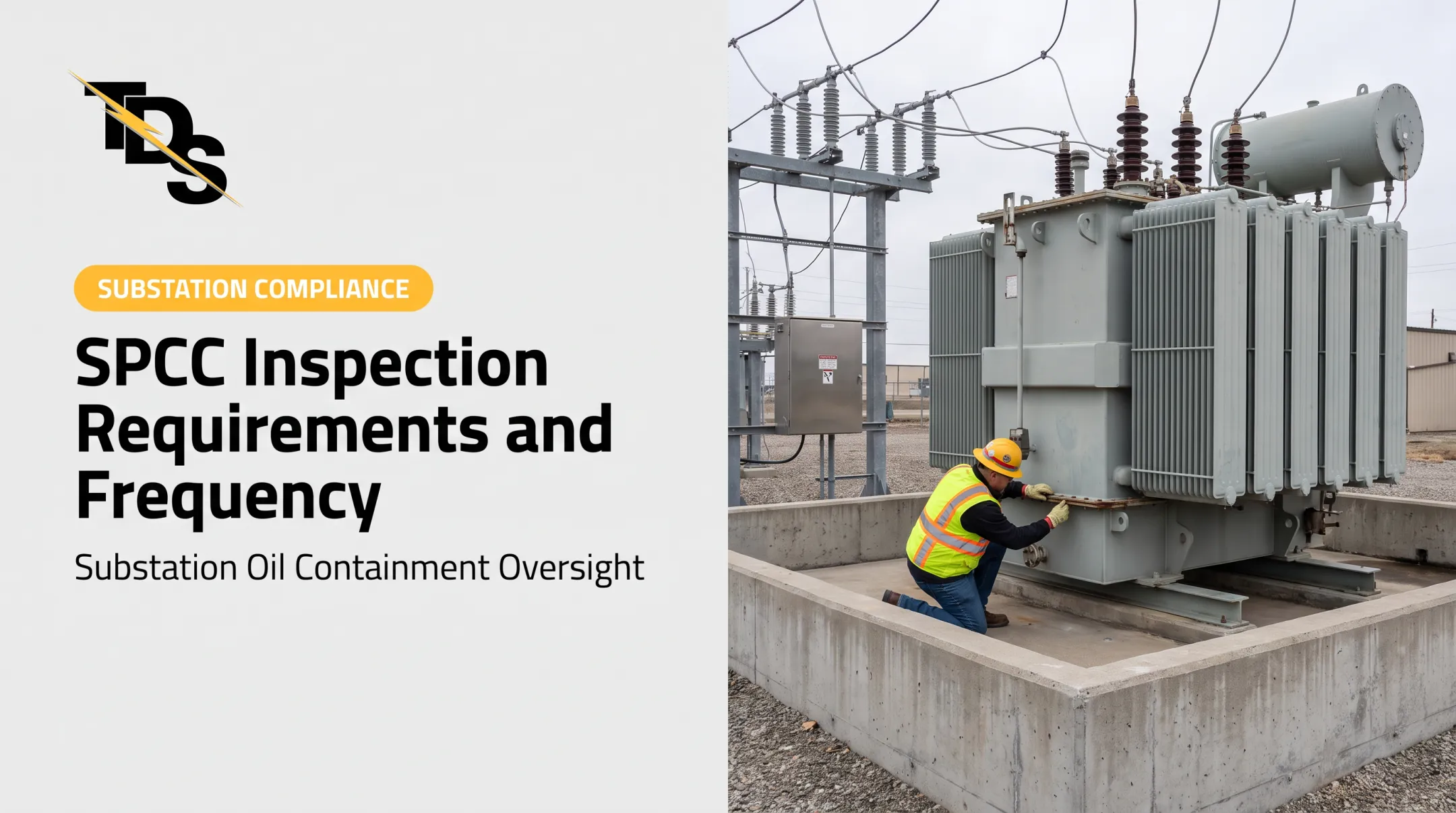
Routine inspection is visual and practical. Check:
- Radiators, headers, and piping
- Bushings and base flanges
- Valves, flanges, and gaskets
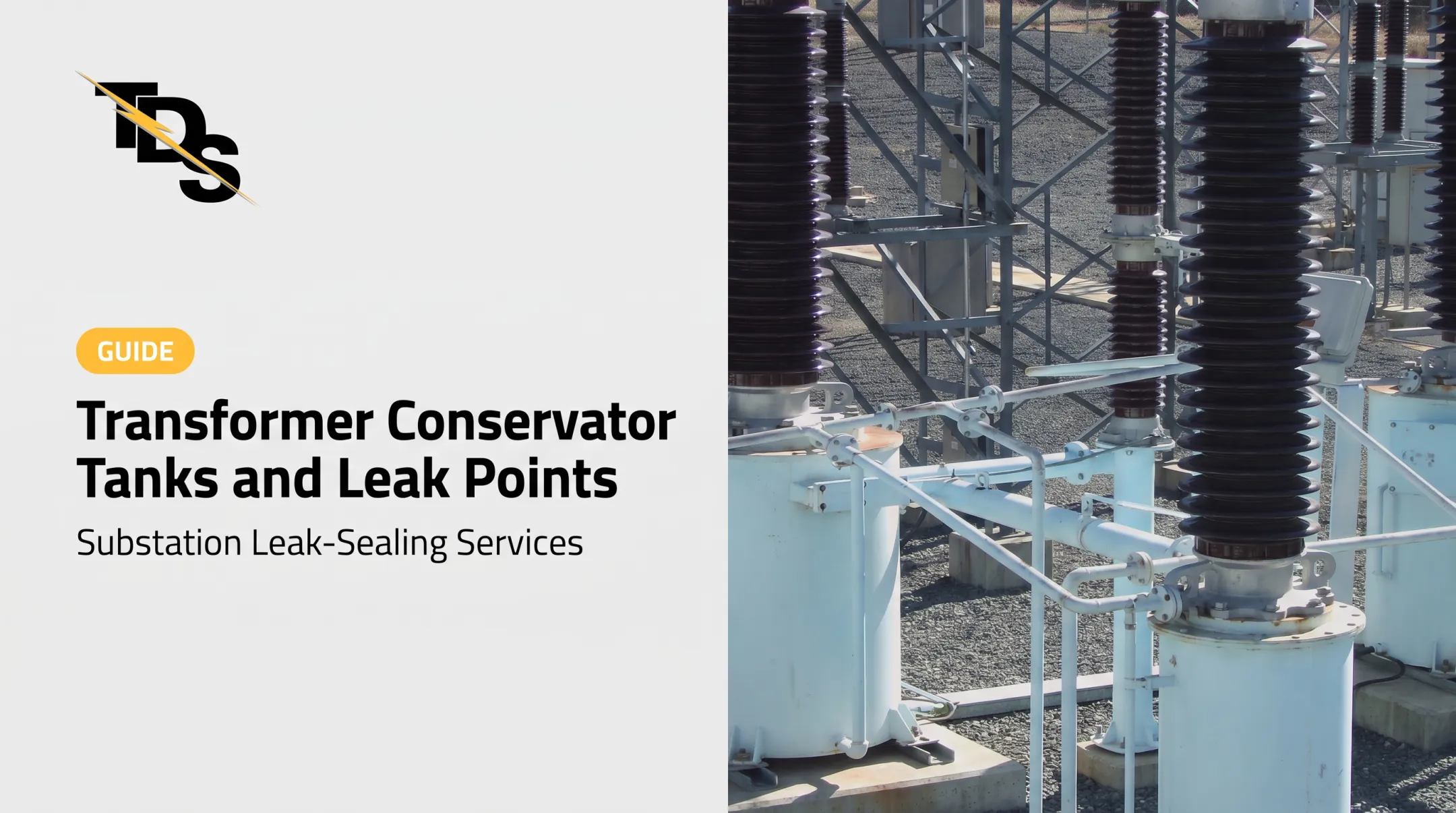
- Conservators, gauges, and welds
- Foundations and containment areas
These routine visual checks differ from nondestructive testing, which is a separate engineering activity.
Don't assume API 653 or STI SP001 applies
API 653 covers steel tanks built to API 650 and its predecessor API 12C. STI SP001 covers shop-fabricated and field-erected tanks plus smaller portable containers. Neither is a transformer standard.
Either may be relevant to an associated oil storage tank on site, such as a bulk oil tank feeding a filling system. For the transformer itself, look to manufacturer instructions, utility practice, and diagnostic guidance such as IEEE C57.152-2025.
Your signed SPCC Plan, the certifying professional engineer's determinations, state rules, insurer requirements, or inspection findings can require more frequent inspections.
How to Build a Transformer Inspection and Monitoring Program
Build the inventory and risk profile
Capture for each transformer:
- Asset ID, location, service role, and operating status
- Oil type and capacity
- Voltage class and installation date
- Containment design and drainage pathway
- Nearby water receptors
- Leak history and prior repairs
Then rank each unit by risk. Factors that raise priority include:
- Age and known corrosion
- Recurring leaks and oil volume
- Weak containment and environmental sensitivity
- Outage consequences if the unit fails
Gasket-bearing joints such as 8-bolt butterfly valve flanges on large units deserve extra attention. Gasket fatigue there often ends in leaks, and repair downtime is expensive.
Set methods and intervals
Separate the activity types and tie each to a documented rationale:
- Routine operator walk-downs
- Formal engineering assessments
- Electrical and oil testing
- Nondestructive examination
- Post-repair verification

Frequency should follow your SPCC Plan, manufacturer recommendations, utility procedures, equipment condition, and credible engineering practice, not an unsupported universal number. The Bureau of Reclamation's FIST 3-30 manual, for example, calls for yearly heat-exchanger inspections. That is manual-specific guidance, not an SPCC mandate.
Visual checks often miss the true source. Leak detection methods, such as the oil leak detector spray and infrared scanning that Transmission & Distribution Services (TDS) uses, can pinpoint the exact leaking component.
Qualifications, safety, and records
Operators can handle routine observations. Electrical testing, nondestructive examination, and engineering evaluations belong with qualified specialists, with documented training and authorization.
Coordinate inspections with energized-equipment restrictions, outage planning, lockout/tagout, and arc-flash controls. Relevant references include OSHA 1910.269 and NFPA 70E for establishing an electrically safe work condition. OSHA 1910.147 excludes only installations under exclusive electric-utility control, so it is not a blanket exemption.
Keep records that cover:
- Dates, personnel, and components examined
- Readings, photographs, and leaks found
- Containment condition, repairs, and spill response
- Follow-up dates and Plan changes
What Should You Do When an Inspection Finds a Transformer Oil Leak?
Triage and prevent a discharge
Sort the finding first:
- Seepage: a slow weep, monitor and schedule repair
- Active leak: oil dripping or running
- Release into secondary containment: contain and recover
- Release that may reach soil, drains, or water: emergency response
Follow your facility's response and reporting procedures. A discharge causing a sheen or violating water-quality standards triggers immediate notification of the National Response Center at 800-424-8802 under 40 CFR Part 110.
Separately, 40 CFR 112.4 requires a report to the EPA Regional Administrator within 60 days after a single discharge over 1,000 gallons, or two discharges over 42 gallons within 12 months.

Immediate controls include:
- Safe isolation where necessary
- Protecting containment with absorbents or temporary measures
- Notifying responsible personnel
- Documenting the initial condition with photographs
Select and verify the repair
The owner or engineer decides whether the leak calls for gasket replacement, component repair, sealing, equipment replacement, or a broader integrity evaluation. Flange, bushing, radiator, valve, and seam leaks each point to different fixes.
After the repair, require:
- Post-repair inspection and leak confirmation
- Updated photographs and repair records
- A review of whether the event requires a Plan amendment or revised inspection frequency
Under 40 CFR 112.5, amend the Plan within six months when a change materially affects discharge potential, then implement it within six months of preparation.
Where TDS fits
TDS provides leak sealing for oil-filled transformers and other substation apparatus. Its low-pressure, cured-in-place gasket method often avoids disassembly and downtime. Many repairs can be done while equipment stays energized when site conditions permit.
Free surveys document and photograph each leak, with a spreadsheet of location, equipment, repair method, cost, and outage needs. TDS technicians are OSHA certified, and repairs carry a four-year warranty.
Those services support repair planning. They do not replace required SPCC inspections, engineering determinations, or regulatory records.
How Should Transformer Inspections Be Documented in the SPCC Program?
Connect field records to the Plan
Section 112.7(e) requires inspections to follow written procedures, with signed records kept with the Plan for three years. Records kept under usual and customary business practice suffice. Your Plan should reflect the transformer inventory, procedures, monitoring methods, containment, response steps, and responsible personnel.
Trigger a Plan review when transformer configuration, oil volume, containment, ownership, operating status, or repair history changes. Section 112.5 also requires a review at least every five years, with a signed statement on whether the Plan will be amended.
Keep an audit-ready record set
An audit-ready file typically includes:
- Current asset inventory
- Inspection forms and photographs
- Oil or electrical test results
- Evaluator qualifications
- Leak and spill reports
- Repair invoices or work orders
- Corrective-action closeouts and next-due dates
Keep records longer if your Plan, state rules, utility procedures, insurer, or company policy requires it.
Look beyond federal SPCC
State and local environmental, fire, and electrical rules, along with utility, manufacturer, and insurer requirements, may add inspections or reporting. California's APSA is one example. Its transformer exclusion for individual units under 10,000 gallons is not a federal exclusion. Larger units face added conditions, including PCB concentration under 50 ppm and routine visual inspection.
When classification, method, or corrective action is uncertain, consult your SPCC certifying professional engineer or qualified environmental and electrical professionals.
Frequently Asked Questions
How much is SPCC?
There is no fixed fee. Costs typically cover plan preparation, certification, inspections, containment upgrades, testing, and repairs. Totals vary with site scope and asset condition.
What are the SPCC tank inspection requirements?
Covered aboveground bulk containers need regular integrity testing or inspection under 112.8(c)(6), and after material repairs. Transformers and other oil-filled operational equipment follow the inspection and monitoring rules in your Plan instead.
Who needs an SPCC plan?
Non-transportation facilities with more than 1,320 gallons of aboveground oil capacity and a reasonable expectation of discharge to navigable waters or shorelines. Transformer oil in units of 55 gallons or more counts toward the total.
What is a 7 point inspection?
It is not a defined federal SPCC term. Identify which utility, insurer, contractor, or state program uses it, then compare its checklist against your SPCC requirements.
What is a 653 tank inspection?
It evaluates the integrity and continued serviceability of storage tanks built to API 650 and similar standards. It is not automatically required for in-service transformers, but may apply to a separate field-erected oil tank at your facility.