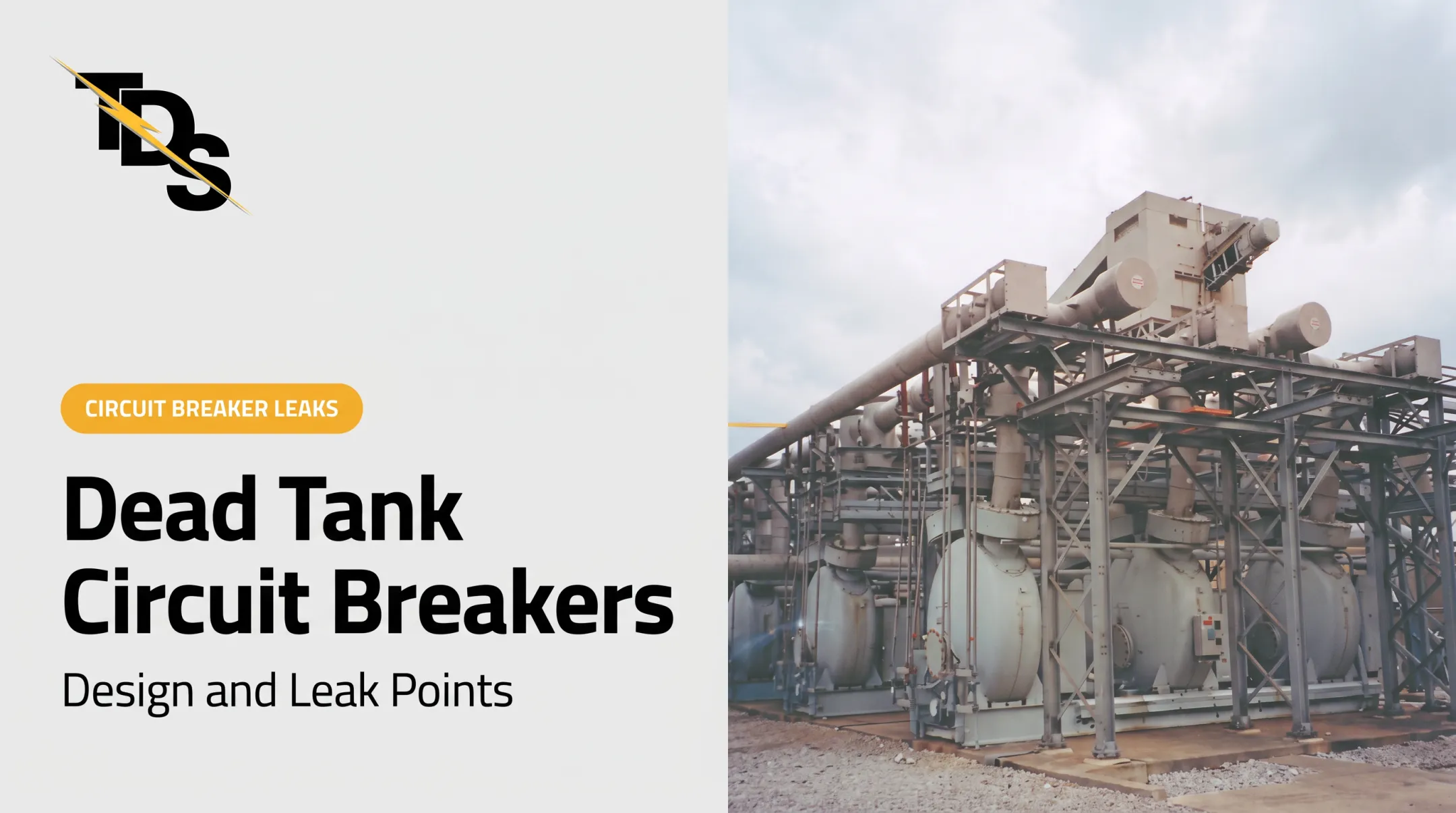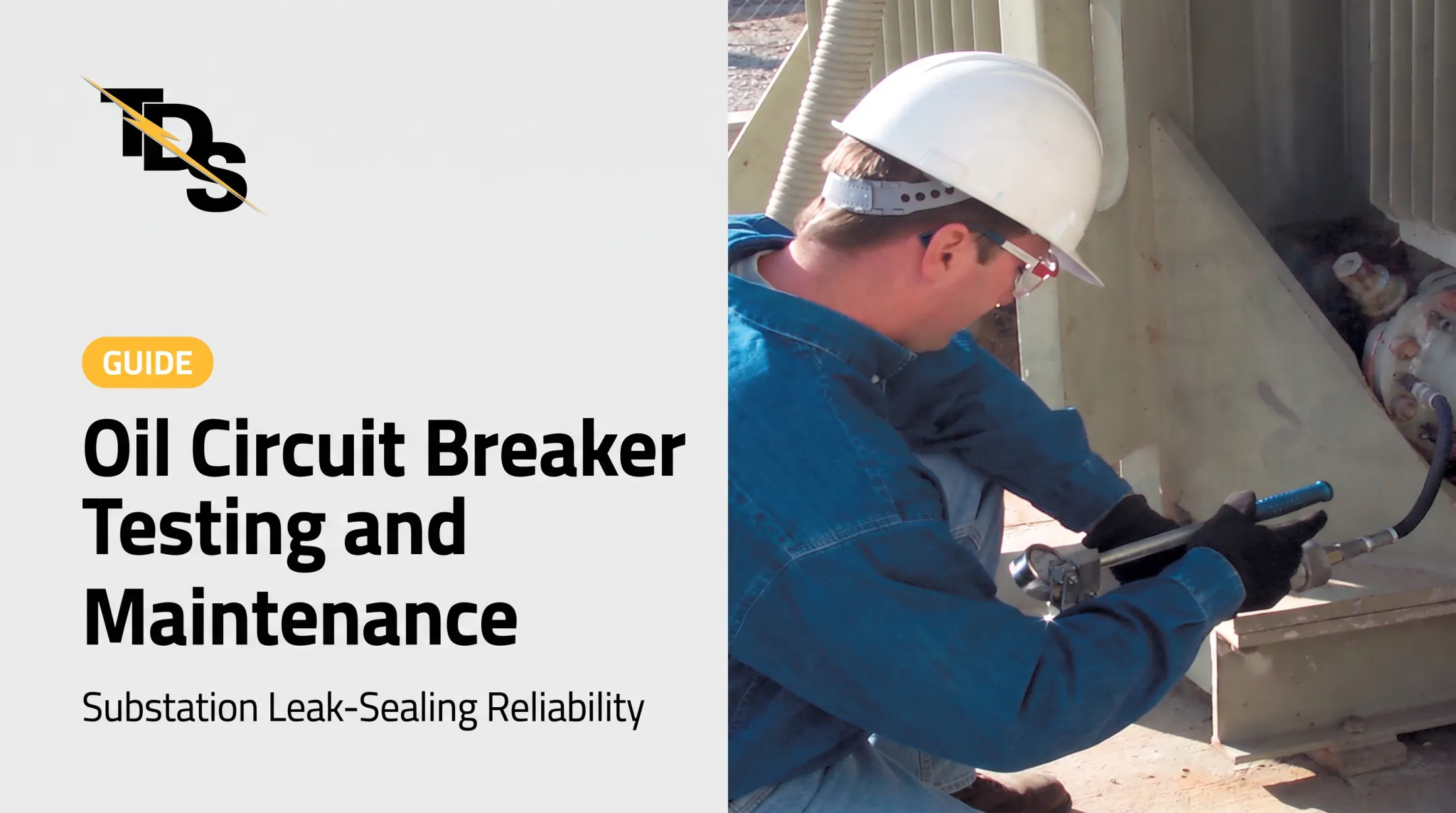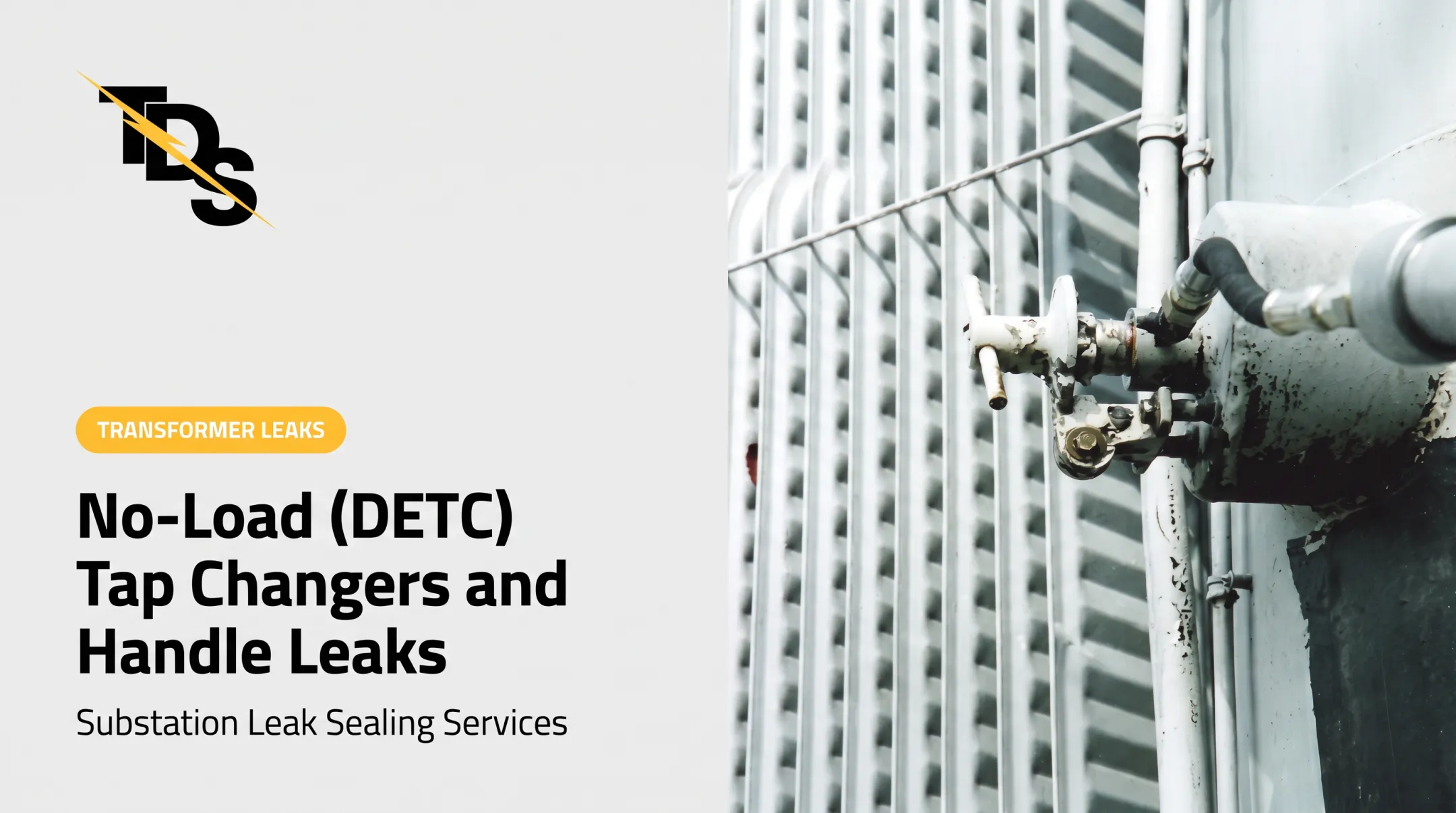

This guide covers oil-filled circuit breakers in substations, generating plants, and industrial power systems. It does not cover hydraulic breakers on excavators. Below: causes, safe diagnostic steps, response, repair options, and prevention.
Key Takeaways
- Treat a leaking oil breaker as an electrical, fire, and environmental concern, and leave it to qualified personnel.
- Leak location, oil level, oil condition, and test results decide the response.
- Confirm the required fluid from the nameplate and OEM documents before adding or replacing oil.
- Localized seal leaks may be repairable; structural damage or failed components point to replacement.
What Causes an Oil-Filled Circuit Breaker to Leak?
Common Leak Points
Start with the places where seals and joints sit. Reclamation's FIST 3-16 guide directs inspectors to check for oil leaks, breaker and bushing oil levels, bushing and insulator gasket leaks, and tank moisture or rust. It does not rank which point leaks most often.
TDS field documentation points to three recurring types:
- Drain-valve leaks, most often at the valve hex end where it meets the threaded pipe nipple
- Bushing leaks at the base-mount flange and the porcelain-to-base mounting flange
- Gasket failure at pipe flanges, which TDS attributes to end of life, defective material, or poor installation
Other candidates include tank seams, inspection covers, O-rings, sampling valves, and operating-shaft seals. Treat these as inspection items, not confirmed causes.
Possible Contributing Factors
Several conditions can degrade seals. None is confirmed until someone inspects the unit:
- Thermal cycling, vibration, and corrosion
- Loose hardware and past fault operations
- Age and temperature extremes that harden gaskets and reduce elasticity
- Wrong gasket type, improper torque, or poor surface preparation
When It Is More Than a Gasket
Cracked porcelain or composite bushings, tank corrosion, or cracked welds are more serious than a replaceable seal. EPRI's breaker failure data lists tank weld and leak entries alongside low oil level due to leaks.
Why Oil Loss Matters
Lost or contaminated oil can reduce insulation margins, weaken arc quenching, and raise overheating or flashover risk. It can also force an unplanned outage. FIST notes that water in breaker oil lowers dielectric strength and may signal a gasket or seal problem. No single industry minimum oil level covers every breaker, so use the OEM limits for that unit.
Is It Really Oil?
Rainwater, cleaning fluid, or transformer oil dripped from nearby equipment can mimic a leak. Photograph the fluid, trace the fresh path to its highest point, and confirm the source before choosing a repair.
How to Diagnose the Source and Severity of the Leak
Only qualified electrical personnel should inspect or test this equipment. Follow the facility switching plan, lockout/tagout, arc-flash controls, grounding requirements, and OEM instructions. OSHA's 1910.269 standard covers power generation, transmission, and distribution work, including job briefings and energy control.
Visual Inspection
Without disturbing energized components:
- Note whether oil is dripping, spraying, pooling, or leaving only residue.
- Trace the highest fresh point.
- Check tank joints, bushings, valves, flanges, seals, and nearby equipment.
- Record whether the leak grows or returns after cleaning.
Leak detector spray, which darkens on contact with oil, can help pinpoint a source.
Document the Condition
Record the following:
- Photos and equipment ID
- Oil level, weather, and operating conditions
- Recent fault operations and maintenance
This record also supports EPA inspections, where regulators check whether a utility documents leaks and has a repair plan.
Condition Testing
| Test | Purpose |
|---|---|
| Dielectric breakdown (ASTM D1816, D877) | Insulating strength of the oil |
| Moisture (ASTM D1533) | Water content |
| Acidity (ASTM D974) | Aging and sludge risk |
| Dissolved gas analysis | Internal fault indicators |
| Insulation and contact resistance, timing | Electrical and mechanical condition |
These are methods, not universal pass/fail values. Use the manufacturer's criteria. Don't apply IEEE C57.104 transformer thresholds to breakers.
Escalation Indicators
Call for engineering review or outage planning if you see:
- Rapid oil loss or a low oil level
- Cracked bushings or exposed insulation
- Signs of arcing or overheating
- Oil entering electrical compartments
- Fire, smoke, or failed test results
- Oil escaping containment
Tightening fittings, topping up oil, wiping residue, or resetting the breaker does not fix the underlying fault. None of these steps substitutes for an approved diagnosis.

Immediate Safety and Environmental Response
Response Sequence
- Notify the control room or asset owner.
- Stop unauthorized work and set a safe boundary.
- Isolate and ground the equipment per the approved procedure.
- Contact qualified electrical and environmental personnel.
Contain the Oil
Use facility-approved spill kits, secondary containment, and absorbents to keep oil from soil, storm drains, waterways, and adjacent equipment. Never expose workers to energized parts while doing so.
Reporting and Waste Rules
Requirements vary by facility, so confirm them with your environmental team.
- EPA treats oil causing a sheen as a harmful quantity, with no fixed volume. Notify the National Response Center immediately after discovery.
- SPCC-regulated facilities have separate reporting thresholds, such as a single discharge over 1,000 gallons.
- Older mineral-oil equipment of unknown PCB content may need to be assumed contaminated under 40 CFR 761.2. Check the specific unit's records or test it; don't assume it is PCB-free.
- State used-oil rules can be stricter than federal ones.
Risk of Continued Operation
Running a leaking breaker can lead to:
- Loss of dielectric performance and ineffective fault interruption
- Tank failure or fire
- Damage to nearby equipment
- Remediation costs and forced outages
- EPA fines for unchecked releases
Repair or Replace: What Are the Options?
Minor vs. Major Repair
A minor external repair means a compatible gasket, O-ring, valve seal, or fitting fix. A major repair involves the tank, bushing, interrupting chamber, or operating mechanism, which are pressure- and insulation-critical.
Deciding Factors
- Leak accessibility and structural condition
- Oil level and lab results
- Electrical test performance
- Breaker age, parts availability, and maintenance history
- Circuit criticality and outage requirements
- Cost and risk of continued service
EPRI frames this as weighing failure risk against rising maintenance, outage, and emergency-replacement costs, which can eventually exceed planned replacement costs.
Low-Pressure Leak Sealing
When a leak is localized and the apparatus is suitable, low-pressure sealing can replace traditional disassembly and regasketing. Conventional repair means de-energizing, grounding, draining oil, and taking the breaker out of service. Choose the method only after confirming the leak source and equipment condition.

Where TDS Fits
Transmission & Distribution Services specializes in low-pressure leak sealing for oil-filled circuit breakers and other substation apparatus. For breakers, its methods include:
- Drill-and-inject procedures for bushing flanges and drain-valve stems
- Clamps for drain-valve hex-end connections
- Cured-in-place gasket material intended to match OEM properties
TDS offers a free equipment survey that lists the location, equipment, leak description, repair method, itemized price, and outage requirements.
These repairs can reduce disassembly and downtime. Work on energized apparatus is possible only when the equipment, site conditions, safety program, and qualified work plan allow it. Not every leak qualifies.
TDS states a four-year leak-seal warranty. Confirm warranty terms, scope, and suitability in the project quotation.
When Replacement Makes More Sense
Replacement is the stronger choice when you face:
- Severe tank or bushing damage
- Failed interruption components
- Repeated leakage
- Unacceptable electrical test results
How to Prevent Circuit Breaker Oil Leaks
Inspect and Test
Set inspection intervals from OEM or utility requirements, not a generic schedule. Focus on:
- Oil level and tank seams
- Flanges, bushings, drain and sampling points
- Operating mechanisms and corrosion
- Containment and fresh residue
Periodic oil sampling and electrical testing can reveal moisture, contamination, aging, or lost dielectric strength before a leak appears.
Keep Records
Log these details so trends show deterioration early:
- Oil type, additions, and filtration
- Repairs, fault operations, and test results
- Photos and recurring leak locations
TDS ties daily work logs to the original survey, which also establishes each repair's warranty.
Control the Causes
- Tighten gasket bolts to manufacturer specifications
- Address corrosion, vibration, and loose hardware
- Use only approved oil and compatible seal materials
- Maintain housekeeping and spill containment
Plan Ahead
For aging breakers, line up repair resources, spare parts, outage windows, and spill response procedures before a leak hits during a critical operating period.

Frequently Asked Questions
How much does it usually cost to replace a circuit breaker?
Cost depends on voltage class, design, oil volume, parts availability, testing, installation, outage coordination, oil disposal, and site safety needs. No reliable generic price exists. Request a free equipment survey or an engineering quotation for the specific unit.
Is it safe to be in a house with an oil leak?
This article addresses industrial breakers, not household equipment. Anyone near a leaking energized electrical device should stay away, avoid touching the oil or equipment, and call a qualified electrician or emergency professional.
Which oil is used in a circuit breaker?
Mineral insulating oil is common, though some units specify synthetic or natural ester fluids. Follow the exact OEM specification. Never mix or add oil without confirming compatibility.
What should you do if an oil circuit breaker is leaking?
Notify the responsible party, keep people away, and follow approved isolation and grounding procedures. Contain the spill safely, document the leak, and arrange qualified electrical and environmental assessment.
Can an oil circuit breaker be repaired instead of replaced?
Localized seal, valve, gasket, or flange leaks may be repairable, including low-pressure sealing. Structural damage, failed bushings, contaminated oil, failed tests, or repeated leakage may require major repair or replacement.