
SF6 raises the stakes. The GHG Protocol's table lists its 100-year global warming potential at 24,300.
Form-in-place (FIP) gasket sealants are liquid or paste materials that cure into a flexible sealing layer at the joint. This article covers how general FIP gasketing works, how it differs from specialized substation leak-sealing repair, and what to verify before choosing either.
Key Takeaways
- FIP sealants cure at the joint, unlike pre-cut compression or foam gaskets.
- Chemistry, surface condition, movement, fluids, and temperature all drive seal performance.
- Electrical apparatus needs documented compatibility review and qualified technicians.
- Low-pressure repair can avoid teardown in suitable cases, but it doesn't replace engineering assessment or OEM procedures.
What Are Form-In-Place Gasket Sealants?
A form-in-place gasket sealant is a liquid or paste applied along a sealing interface. It cures in position and forms a continuous barrier against fluids, gases, dust, or contaminants.
Terms That Get Mixed Up
These terms are not interchangeable:
- Sealant: the material itself.
- Formed-in-place gasket (FIPG): a liquid gasket applied to one surface and cured after the mating surface is joined, per ThreeBond's product guide.
- Cured-in-place gasket (CIPG): applied as a bead and cured before assembly, so the joint seals by surface pressure.
- Cured-in-place repair: sealant placed into or around an already leaking joint, as in field leak sealing.
A conventional compression gasket relies on controlled clamping load. A cured sealant relies more on adhesion, material strength, flexibility, and gap filling.
Common Chemistries
Common catalog categories include:
- Silicone and modified silicone (RTV)
- Anaerobic acrylics
- UV-cured acrylic rubber
- Two-component fluororubber
- Heat- or moisture-curing olefins
Polyurethane foam-in-place gaskets are a separate, foamed product type. These are categories, not blanket recommendations for transformers, breakers, or GIS. Always confirm claims against the manufacturer's technical data sheet.
Production Gasketing vs. Field Leak Sealing
Production gasketing builds a new seal on a clean part before assembly. Field repair on power apparatus works differently: the material is often applied around or within a leaking gasket interface, not used to manufacture a new enclosure gasket.
Equipment in scope here includes oil-filled transformers, oil circuit breakers, SF6 circuit breakers, and GIS. No single sealant suits all of them.
How Do Form-In-Place Gasket Sealants Work?
The Typical Sequence
- Confirm the leak location so the repair targets the right joint.
- Inspect the joint and surrounding materials for damage or contamination.
- Prepare the surface within the limits of the equipment and procedure.
- Apply the sealant in the required bead or repair pattern.
- Let it cure under the conditions the product requires.
- Verify the leak has stopped before returning the asset to normal monitoring.

Cure Methods Differ
There is no universal cure time. Product data sheets show how widely chemistries differ:
- Moisture-cure RTV: Henkel's LOCTITE SI 5980 data sheet lists a tack-free time of 15-45 minutes, with depth of cure depending on temperature and humidity.
- Anaerobic: LOCTITE 518 cures when confined without air between close-fitting metal surfaces, for gaps up to 0.25 mm.
- UV or LED cure: some products list 1-3 second exposures, and only under specified lamp setups.
- Heat-cure and two-part: timing is product-specific.
Cure speed and final performance also shift with:
- Bead thickness and joint geometry
- Humidity, temperature, and air exposure
- Material age and surface contamination
- Any section shielded from the curing mechanism
Surface Preparation
Remove oil, dirt, corrosion products, loose coating, and residue, but only as the equipment and repair procedure allow. Avoid methods that could damage insulation, coatings, bushings, or other sensitive parts.
Bead and Joint Considerations
- Get adequate surface contact so the bead can bond across the joint.
- Control sealant thickness to match the gap and product limits.
- Avoid trapped voids that leave leak paths.
- Allow for flange movement after cure.
- Keep sealant out of operating mechanisms, vents, electrical clearances, and fluid passages.
Energized Work
Application on energized equipment is not an inherent property of FIP sealants. It depends on the equipment, leak location, operating conditions, site safety rules, and the repair provider's qualified procedures.
What Are the Benefits and Limitations?
Benefits
A correctly selected and applied sealant can:
- Conform to irregular surfaces and fill small imperfections.
- Reduce gasket inventory.
- Accommodate some joint movement.
- Form a continuous repair without a separately fabricated gasket.
For utilities, these translate into less disassembly, shorter outages, less oil or gas handling, and repair of only the confirmed leaking interface when that is technically appropriate.
Limitations
- Unsuitable chemistry can swell or degrade in oil, fuel, or solvents (5W30 motor oil test data says nothing about mineral transformer oil).
- Poor adhesion causes repeat leaks.
- Large gaps or high pressure can exceed the sealant's capability.
- Contamination, movement, or incomplete cure compromises the repair.
When Conventional Repair Is Better
EPRI's transformer guide names gasket joints, cemented parts, and welds as oil-leak sources and recommends replacing deteriorated gaskets.
Gasket replacement, teardown, machining, a pressure-rated repair, or an OEM-directed procedure may be the right call when the joint is badly damaged or the leak is extensive. EPRI also notes that extreme leaks may require taking a transformer out of service.
Rely on product data sheets, equipment manuals, and applicable utility or environmental requirements. Avoid broad claims about service life, pressure limits, temperature range, or chemical resistance.
How to Select and Apply a Sealant for Substation Equipment
Document Selection Criteria First
Before choosing a product, record:
- Equipment type and leak medium
- Leak location and accessibility
- Operating pressure and temperature
- Surface materials and joint movement
- Expected service life
- Whether the apparatus stays in service during the work
Compatibility: Oil and SF6 Separately
Require documented compatibility from the sealant manufacturer or repair specialist. Don't infer it from a general silicone or gasket description.
Oil and SF6 need separate compatibility data, and SF6 arc byproducts need their own assessment. ASTM D3487 specifies mineral insulating oil, and IEC 60376 specifies SF6 gas quality, but neither certifies a sealant.
Substrate and Coating Compatibility
Evaluate compatibility with:
- Painted or coated metal
- Elastomers and porcelain
- Composites and insulation systems
- Surfaces that may retain oil or cleaning residue
Application Checklist
- Confirm the leak (cleaning plus a detector spray or thermal imaging can help).
- Obtain work authorization and confirm isolation requirements.
- Establish safe access.
- Clean and prepare the surface.
- Apply the sealant in a controlled way.
- Protect the repair during cure.
- Inspect the repair.
- Verify post-repair leak performance.

Quality Verification
- Check that the bead is continuous and bonded
- Repeat leak detection
- Monitor pressure or gas where applicable
- Document the component repaired and material used
Safety
High-voltage apparatus, SF6 handling, energized work, and restricted substation areas require:
- Qualified personnel
- Approved procedures and PPE
- Compliance with site and regulatory requirements
OSHA's 1910.269 standard covers maintenance of electric power equipment.
How TDS Uses Cured-in-Place Gasket Repairs to Seal Substation Leaks
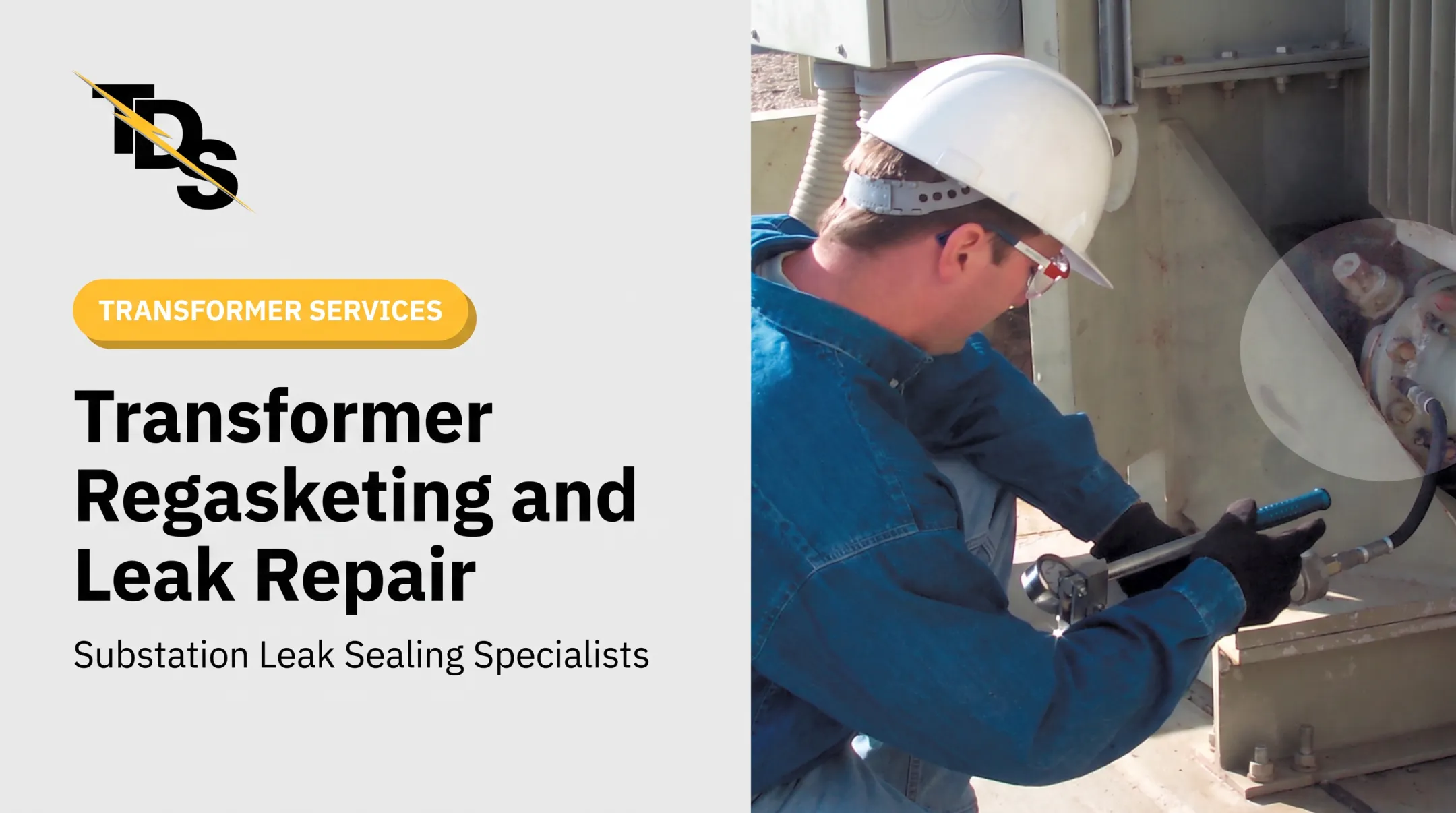
Transmission & Distribution Services (TDS) is a specialized substation leak-sealing company. Its technicians work exclusively in substations, using low-pressure methods on oil-filled and SF6 gas-filled transformers, circuit breakers, and GIS.
What the Repair Looks Like
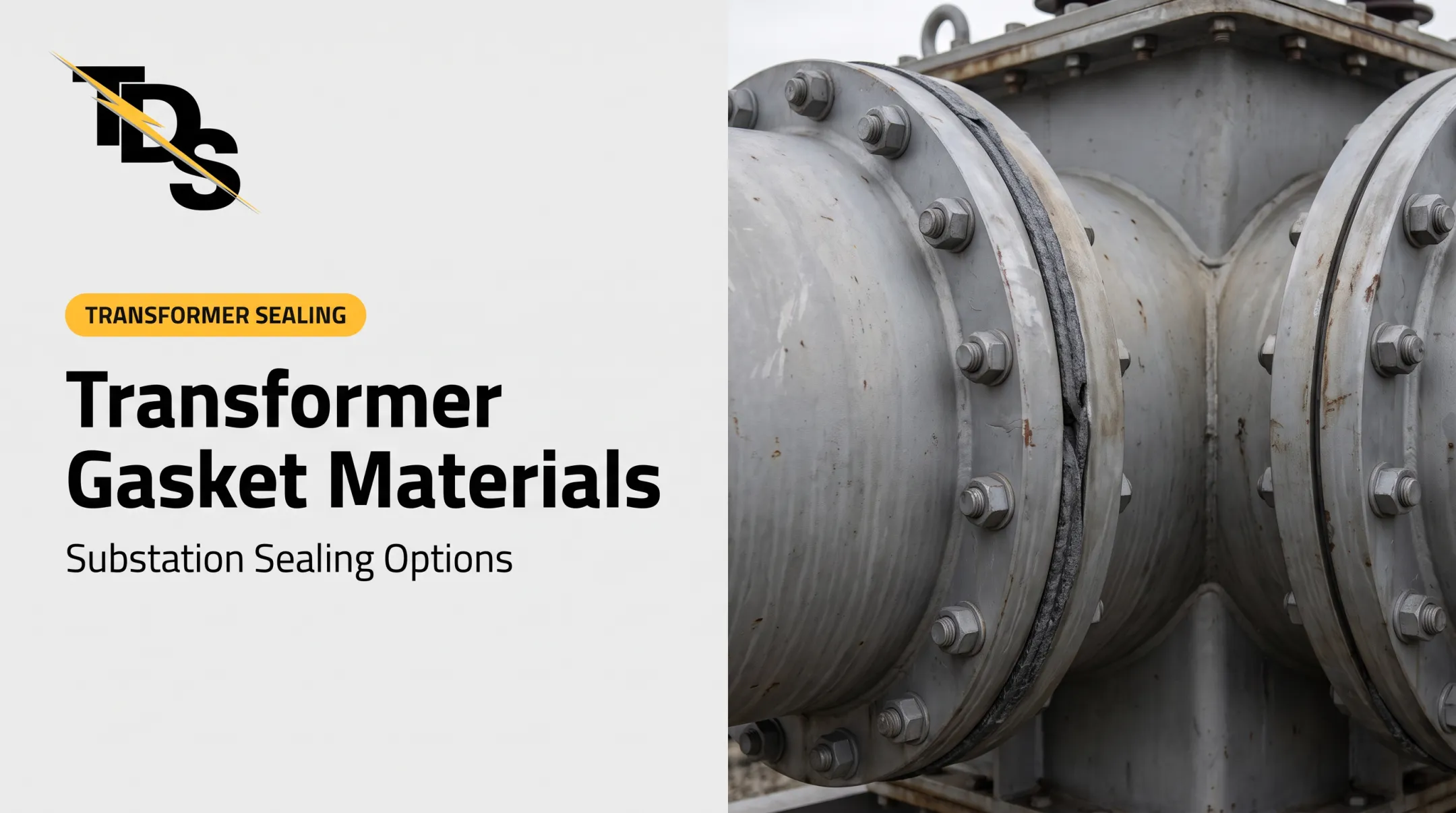
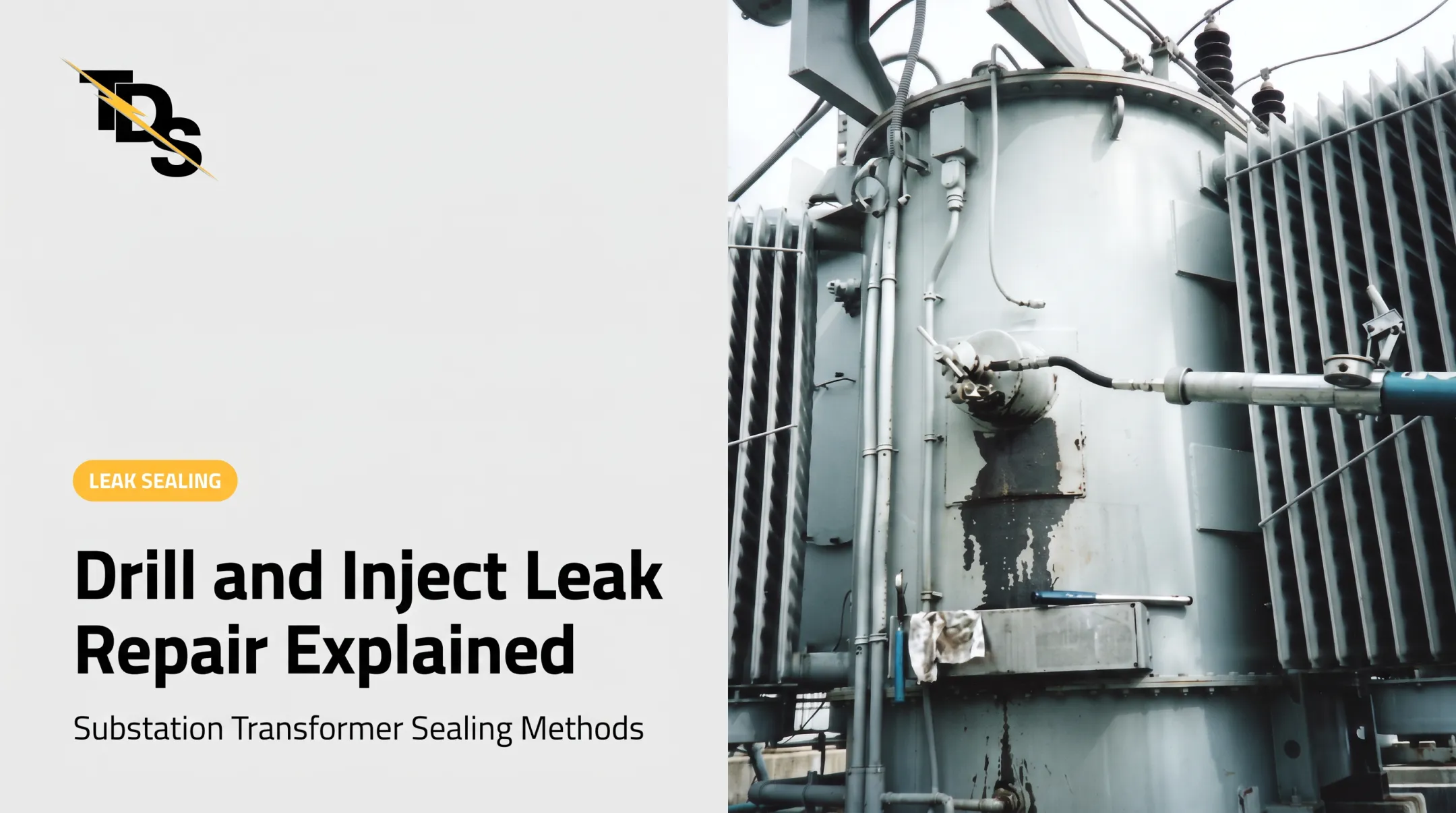
TDS injects its rubber-based Gasket Sealant Compound to replace leaking OEM gasket material with a cured-in-place gasket. In suitable cases, the repair proceeds without traditional teardown. Typical jobs include:
- 4-bolt transformer flange: four drilled and tapped injection points, usually about 2 hours, often without draining oil.
- 8-bolt flange: eight holes so the technician can see sealant tracking in the gasket groove, usually about 3 hours.
- SF6 porcelain-to-flange leak: a custom two-piece clamp encloses the leak before injection, roughly 4 hours.
The sealant typically cures in 20 minutes at 70°F. Suitability depends on the confirmed leak and equipment conditions.
Upper transformer leaks near energized bushings may require de-energizing and grounding. Some repairs, such as CT junction blocks, need an outage.

Third-Party Context
EPRI's SF6 sealing update describes online SF6 repair with compatible injected sealants and clamps. That guidance covers SF6 equipment, not transformer-oil repair.
Next Step: An Equipment Survey
TDS offers free surveys to identify the facility and apparatus, confirm the leak location, and evaluate the repair method and price. Customers pay nothing for repair work if TDS can't fix the leak. TDS also offers a four-year leak-seal warranty; confirm the current term and scope in writing before work begins.
If your utility, generating plant, municipal system, cooperative, or substation maintenance team has a transformer, breaker, or GIS leak, request a technical evaluation to see whether a lower-downtime option fits.
Frequently Asked Questions
What is form-in-place gasket sealant and what is it used for?
Form-in-place gasket sealant is a liquid or paste that cures at the sealing interface into a flexible seal. Industrial production uses it to create new gaskets. On electrical apparatus, specialized sealants typically repair leaking joints.
How long does form-in-place gasket sealant take to cure?
It varies by chemistry, bead thickness, temperature, humidity, surface condition, and cure method. Check the product's technical data sheet or ask the repair specialist.
What is the purpose of a foam gasket?
Foam gaskets cushion and provide low-pressure environmental sealing. They differ from liquid FIP sealants, and foam isn't automatically suitable for transformer oil, SF6, pressure, or high-voltage use.
Can form-in-place gasket sealants replace conventional gaskets?
Sometimes, when the sealant, joint geometry, pressure, fluid exposure, movement, and application method are validated. Not every gasketed joint is a suitable candidate.
Are form-in-place gasket sealants suitable for transformer oil or SF6 equipment?
Only with documented material compatibility, suitable equipment design and leak location, and qualified application procedures. Get a technical assessment before repair.