
Introduction
Live leak pipe repair is the controlled sealing or reinforcement of an active leak without automatically taking the connected system out of service. It only works when the method suits the asset and its operating conditions.
Leaks start in pipe walls, flanges, fittings, gaskets, joints, and specialized electrical apparatus. Corrosion, erosion, vibration, thermal cycling, pressure swings, aging seals, and maintenance gaps are the usual causes.
Safety stakes rise fast when the wrong method is used on an active leak. A Chemical Safety Board (CSB) investigation found that a small leak on 1.5-inch LPG drain piping at a refinery was clamped. The pipe failed catastrophically during sealant injection and ignited a vapor cloud.
This article covers common leak patterns, root-cause diagnosis, the professional repair workflow, fix-versus-replace decisions, safety limits, and prevention.
Key Takeaways
- Common live leaks: through-wall corrosion, pinholes, failed gaskets, damaged flanges, loose joints, and oil or SF6 seal leaks on substation gear.
- Live repair works only when the defect is known, the asset is sound, and the method fits fluid, pressure, temperature, and material.
- Workflow: secure the area, identify the leak, confirm root cause, select a qualified method, apply it, validate it.
- Pressurized, hazardous, or energized systems belong with qualified professionals, not improvised clamps.
What Is Live Leak Pipe Repair?
Live leak pipe repair is an engineered intervention performed while fluid or gas is still escaping and the system may remain pressurized or in service. It is not the same as smearing epoxy over a wet surface.
Depending on the defect, the work may involve:
- Stemming the leak
- Sealing a gasket or joint
- Reinforcing a damaged area
- Replacing a leaking component under an approved isolation plan
ASME PCC-2-2022 covers repair methods for equipment and piping already in service. It treats repairs as temporary or permanent depending on circumstances, and it lists hot tapping and mechanical clamp repair as separate topics. Repair labels are not interchangeable.
The approach applies to process piping and, where the method is suitable, to substation transformers, circuit breakers, and GIS equipment. Transmission & Distribution Services (TDS), for example, seals oil and SF6 leaks on this apparatus, often while it stays energized and in service.
Beyond stopping visible seepage, the work restores leak tightness and protects pressure-boundary integrity, personnel, the environment, and future reliability.
Common Problems With Live Leak Pipe Systems
Most active leaks follow recognizable patterns. But fluid travels along pipework, insulation, supports, and tank walls, so where you see wetness is not proof of where the defect is.
Through-Wall Corrosion, Erosion, or Pinholes
Symptoms: weeping, droplets, spray, mist, staining, pressure loss, or recurring wetness at one point. Rule out condensation, overflow, and old residue before calling it an active leak.
Likely cause: internal or external corrosion, erosion, chemical attack, or abrasion that thins the wall. API RP 571 lists atmospheric corrosion and erosion/erosion-corrosion among its damage mechanisms. Measure wall thickness or use another suitable inspection before choosing a repair.
Failed Gaskets, Flanges, and Joints
Symptoms: seepage at a bolted connection, leakage that shifts with temperature or load, repeat leaks after tightening, and visible gasket extrusion.
Likely cause: gasket aging, incorrect compression, uneven bolt loading, misalignment, vibration, thermal cycling, or damaged mating faces. ASME PCC-1-2022 includes troubleshooting guidance for joints that are not leak-tight. Repeated bolt tightening can make things worse or create a new failure.
Cracks, Fittings, and Mechanical Damage
Symptoms: leaks at elbows, tees, threaded fittings, welds, supports, or instrument connections, especially if the leak changes at startup or under load.
Likely cause: fatigue, vibration, thermal movement, installation stress, impact, or poor fit-up. API RP 571 includes vibration-induced fatigue. A crack often calls for isolation and component replacement, not a surface seal.
Leaks From Substation Apparatus and Enclosure Seals
Symptoms: oil staining, oil level changes, gas pressure loss, or recurring seepage at bushings, covers, or sealing points on transformers, circuit breakers, and GIS.
Don't treat these as ordinary pipe leaks. TDS reports that typical sources are failed gaskets at pipe flanges, bushing flanges, and drain valves, along with valve stem packing on flapper and butterfly valves. Confirm the equipment type, fluid or gas, and owner or manufacturer requirements first.
An EPA breaker study found that about 10% of sampled breakers may leak. Of the reported leak locations, 73% were gas mechanisms and 21% were worn or broken bushings. The data are historical (1998-2005) and are not a current fleet benchmark.

Why Live Leak Pipe Systems Fail
Failures trace back to a handful of stressors:
- Pressure and temperature cycling
- Vibration
- Environmental exposure
- Chemical incompatibility
- Poor installation
- Skipped preventive maintenance
Those same stressors show up on substation gaskets TDS services in the field. Original gaskets often reach end of life; premature failures usually stem from defective material or poor installation workmanship.
Left alone, an active leak compounds the problem:
- Growing fluid loss and contamination
- Corrosion and equipment damage
- Emissions and personnel hazards
- Eventually, an unplanned outage
US Requirements That Apply
Which rules apply depends on your industry and facility:
- OSHA PSM (29 CFR 1910.119): mechanical-integrity provisions cover piping, pressure vessels, relief systems, and related equipment at covered processes.
- OSHA lockout/tagout (29 CFR 1910.147): requires an energy-control program to prevent unexpected energization or release of stored energy.
- OSHA 1910.269: governs electric power generation, transmission, and distribution work.
- EPA SPCC (40 CFR 112): applies to facilities with aggregate aboveground oil storage over 1,320 gallons and a reasonable expectation of discharge to navigable waters. Inspection records are kept for three years.
- SF6 reporting: SF6 has a 100-year global warming potential of 23,500 under IPCC AR5, and facilities meeting Subpart DD criteria must report under EPA greenhouse gas rules.

Confirm applicability with your compliance team. Thresholds and exemptions vary.
How to Fix a Live Leak Pipe
Never start with a generic sealant. First determine what is leaking, why, and whether the asset suits an in-service repair.
This is a professional decision framework, not a DIY procedure for pressurized, hazardous, or energized systems.
Step 1: Identify the Exact Leak and Secure the Work Area
- Follow site emergency response, isolation, lockout/tagout, access-control, and PPE procedures before inspecting.
- Set safe approach distances and keep untrained people away.
- Document the medium, approximate location, leak rate, pressure, temperature, equipment status, and whether the system is energized.
- Confirm the source with suitable inspection methods, since fluid migrates.
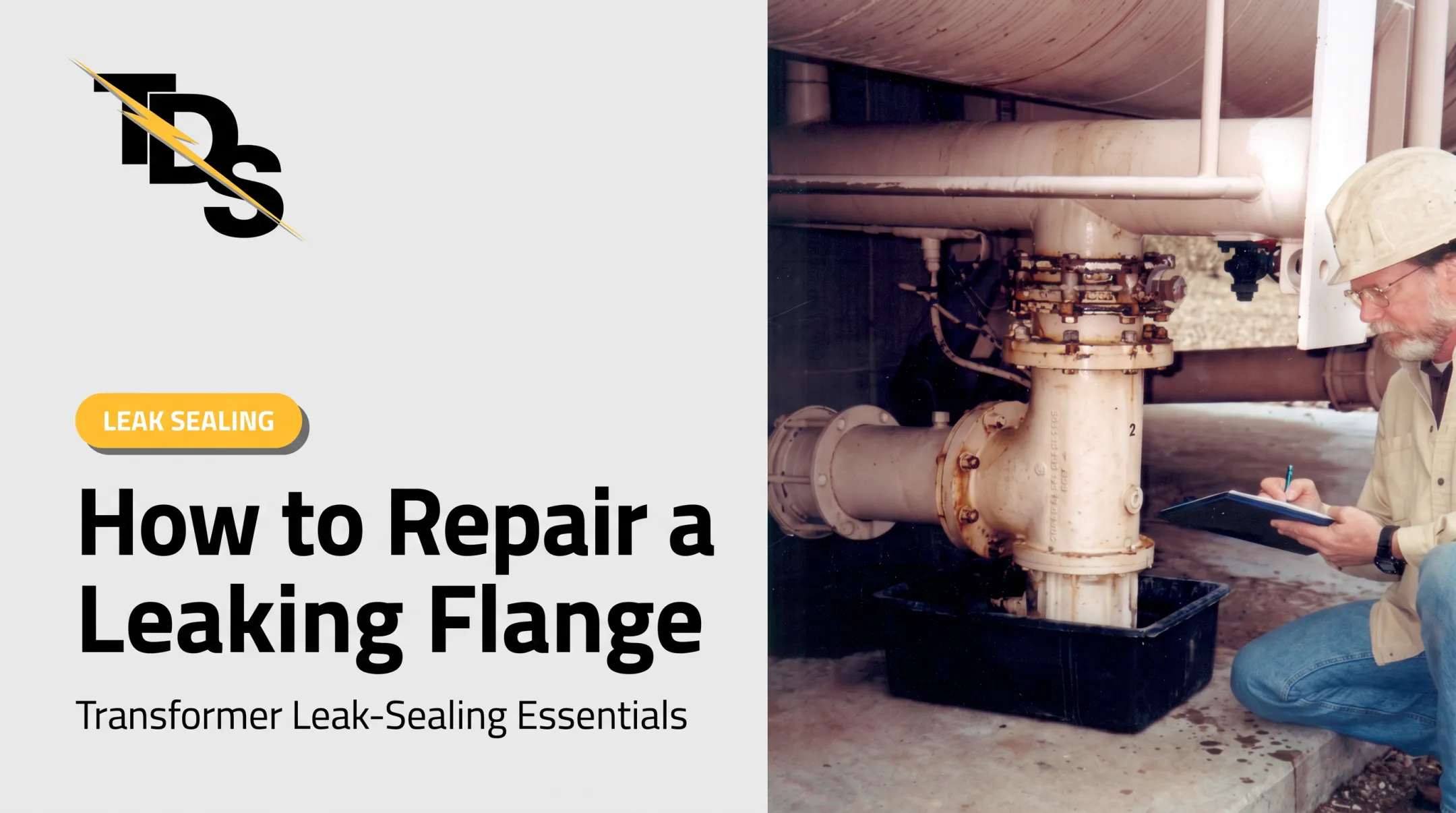
On transformers, TDS cleans the flange and sprays an oil leak detector that darkens on contact with oil. On one flapper valve it revealed that both the flange gasket and stem packing were leaking.
For SF6, detection options include infrared laser, ultrasonic detection, halogen meters, and soap solution.
Step 2: Confirm the Root Cause and Repair Suitability
- Classify the problem: gasket or joint failure, wall loss, crack, fitting issue, mechanical damage, seal failure, or an operating-condition issue.
- Check remaining wall, defect size, access, substrate condition, pressure and temperature range, and consequences of repair failure.
- Call for engineering review when structural integrity is uncertain. API 579-1/ASME FFS-1 is the fitness-for-service standard, and Part 4 covers general metal loss.
- Verify that any sealant, gasket, clamp, or composite is compatible with the fluid and the asset material.
- For oil- or SF6-filled equipment, confirm apparatus type, leak location, electrical condition, and owner requirements.
This step is where sealant-only fixes go wrong. In the CSB case, PBF's investigation concluded that high sealant pressure without adequate clamp support stretched and broke highly corroded pipe.
Step 3: Apply the Repair That Fits the Problem
A surface patch is not a substitute for restoring a badly weakened pressure boundary.
Gasket, flange, or joint failure. Decide whether the joint can be sealed in service or must be isolated, depressurized, and regasketed. Address alignment, bolt loading, damaged faces, and why it keeps failing. A qualified low-pressure method can target only the leaking area and avoid disassembly.
Corrosion, pinholing, or through-wall defects. Choose an engineered clamp, composite, seal, temporary containment, or replacement based on defect assessment, remaining wall, service conditions, and design life. Temporary containment is not permanent repair. Document the follow-up inspection, shutdown, or replacement it requires.
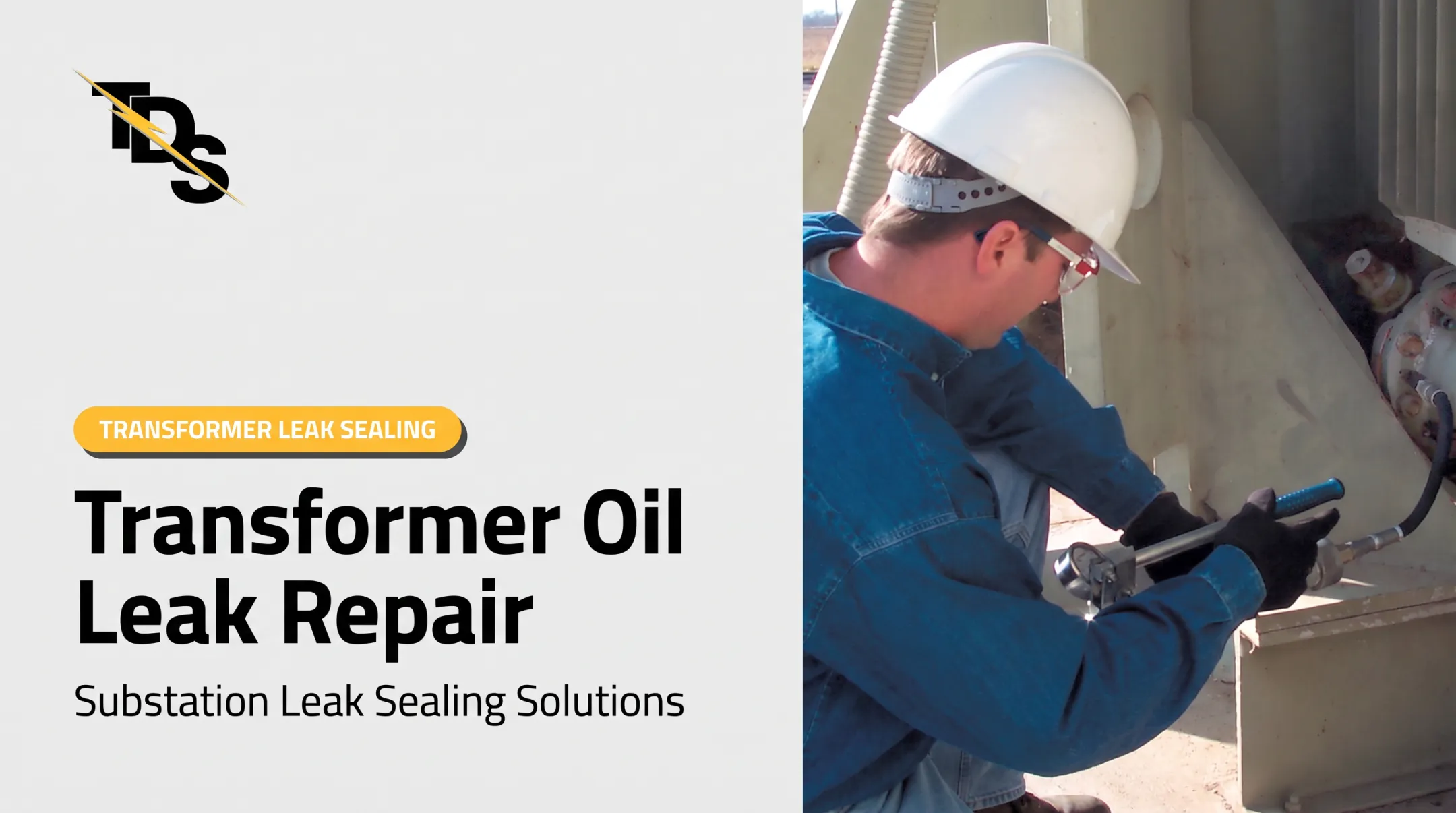
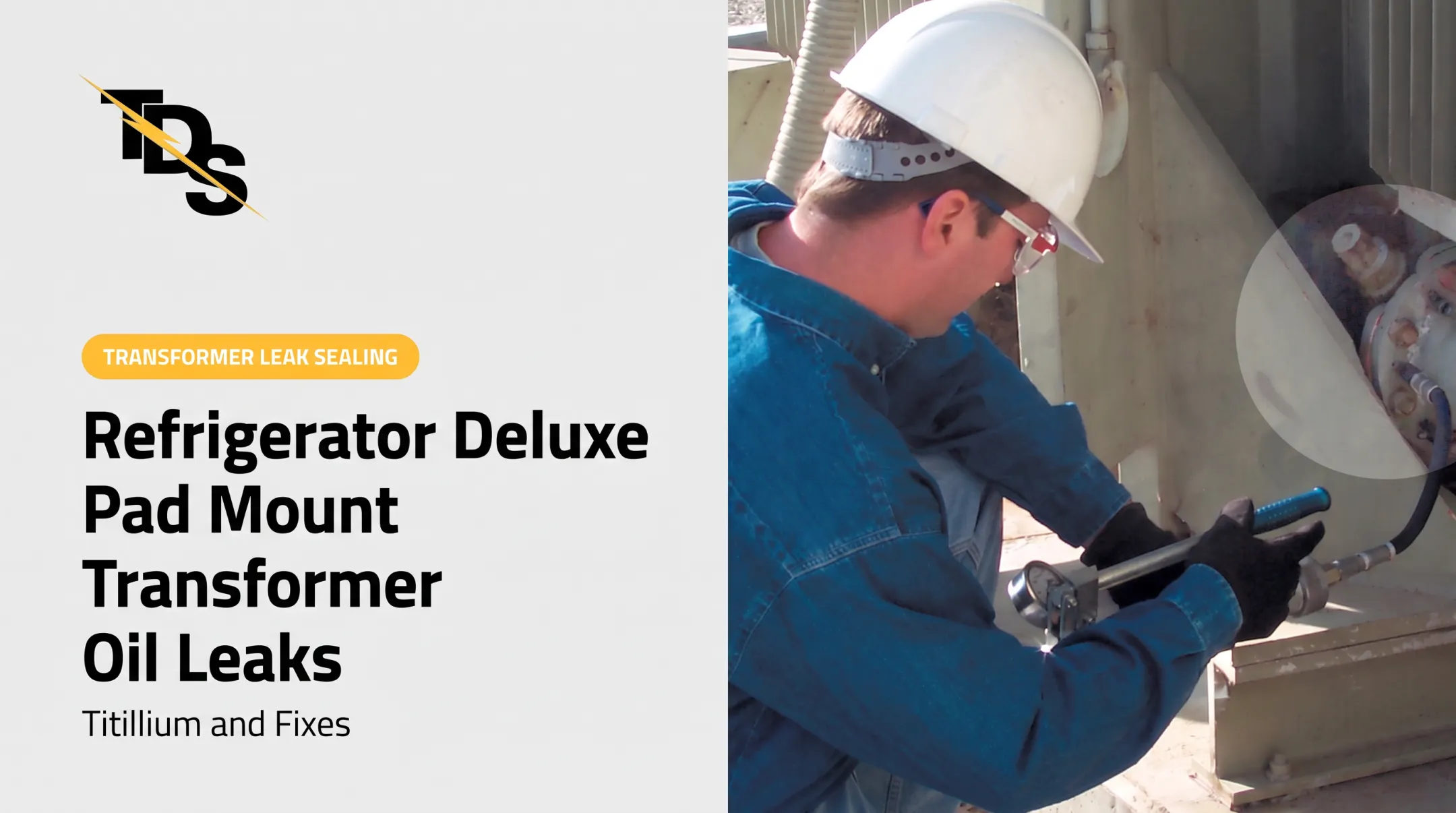
Transformer, circuit breaker, or GIS sealing. Specialists can use low-pressure sealing and cured-in-place gaskets without traditional disassembly when conditions allow. TDS does this work and offers a free equipment survey listing the equipment, leak location, repair method, and repair price.
Not every energized repair is suitable. TDS notes that upper leaks on a butterfly valve may require de-energizing and grounding, depending on proximity to bushings.
Contributing conditions. Correct vibration, thermal movement, contamination, unsupported pipework, unsuitable pressure, or incompatible materials where possible. Confirm that surface preparation can be done without uncontrolled exposure to fluid, gas, or electrical hazards.
Step 4: Test and Validate the Repair
- Run the site-approved leak test, pressure or integrity check, electrical test, gas monitoring, or visual inspection.
- Verify the leak has stopped at normal operating conditions and, where authorized, watch it through load, temperature, and pressure changes.
- Record defect location, findings, materials, installation conditions, test results, photos, approvals, and monitoring intervals.
- Define repair failure (renewed seepage, pressure or gas loss, temperature change) and when to isolate the asset.

When Should You Fix vs Replace the Pipe?
Deciding whether to fix or replace weighs safety, remaining integrity, repair qualification, outage cost, environmental risk, and long-term reliability. Repair price versus replacement price is only one input.
The stakes of replacement can be high. A DOE transformer report put a 2010 large power transformer at $2 million to $7.5 million at the factory, with transport and installation adding 25% to 30%.
| Scenario | Fix when | Replace or isolate when |
|---|---|---|
| Localized leak, sound surrounding material | Defect is confined, leak is characterized, a qualified method covers conditions | Widespread corrosion, severe thinning, cracking, distortion, or unknown remaining strength |
| Failed gasket or removable seal | Housing, flange, or mating surface is serviceable and an approved in-service method gives reliable containment | Components are damaged, misaligned, contaminated, or repeatedly fail |
| Asset hard to remove from service | Outage would be costly, repair fits a qualified envelope, owner's safety process permits it | Leak is an immediate hazard, conditions exceed the method, or the defect can't be inspected |
| Hazardous, sensitive, or incompatible media | Materials, work method, containment, and technician qualifications are demonstrably suitable | Compatibility is unknown, leak can't be contained during prep, or risk is unacceptable |
For substation equipment, in-service sealing gives asset managers flexibility. TDS's SF6 approach often costs less than methods that require lengthy outages and leaves room to decide later whether to replace or refurbish.
Common Mistakes to Avoid When Fixing a Live Leak
Live leak jobs go wrong in predictable ways. Avoid these patterns:
- Treating visible wetness instead of tracing the leak path, root cause, and condition of the surrounding pressure boundary
- Grabbing a generic epoxy, clamp, or sealant without checking compatibility, pressure and temperature limits, surface condition, and cure requirements
- Skipping post-repair testing, documentation, monitoring, or the planned permanent replacement after temporary containment
- Working on an energized or pressurized system without qualified personnel, authorization, PPE, hazard controls, and an emergency plan
The CSB case stacked several of these failures. Crews could not isolate the leaking section, so they designed a clamp and used a grinder to cut down its support. Workers kept adding sealant to the leaking clamp until the corroded pipe failed.
Preventive Measures to Avoid Future Issues
Prevention combines routine inspection, operating-condition control, and solid records. Catch a minor seep early and it stays minor.
- Inspect pipe walls, flanges, joints, supports, gaskets, transformer cases, breaker enclosures, and GIS sealing points for staining, corrosion, and recurring seepage.
- Schedule thickness measurements, leak detection, oil or gas monitoring, and electrical inspections using API 570 for intervals and corrosion rates, CIGRE Technical Brochure 962 for transformer maintenance, and owner or manufacturer requirements.
- Keep records of leak locations, repairs, materials, operating conditions, test results, and warranty terms so repeat failures trace to root cause.
- Train staff to report small leaks fast, control access to hazardous areas, and know when a task is an inspection versus a repair they are qualified to perform.
For substations, in-house crews can use oil leak detector spray and transformer cleaner during routine inspections. Documented leaks and an action plan also matter during EPA inspections.
Conclusion
Many localized leaks can be addressed without an immediate shutdown, but only after you've evaluated the leak source, asset condition, operating conditions, and repair compatibility.
Diagnosis and validation matter more than the fastest visible patch, particularly for pressurized piping and oil- or SF6-filled substation equipment.
If the work involves an energized or revenue-producing asset, request a professional survey. TDS provides specialized substation leak sealing, and its leak-seal repairs carry four-year warranty coverage.
Frequently Asked Questions
Can a live leak be repaired while a pipe remains in service?
Some can. The defect, operating conditions, repair materials, and safety controls must all suit the method, and the work must be done by qualified professionals.
What causes a live pipe leak?
Corrosion, erosion, vibration, thermal cycling, damaged fittings, failed gaskets, pressure changes, installation errors, and poor maintenance. The visible leak point may not be the root cause.
Is live leak pipe repair a permanent solution?
It depends. Engineered permanent repairs differ from temporary containment. Durability depends on the defect, material compatibility, design conditions, installation quality, and follow-up verification.
How do you repair a leak in a pressurized pipe?
Professionals secure the area, identify the fluid and source, assess the pressure boundary, select a compatible, qualified method, install it, and test it. This isn't a DIY job.
When should a leaking pipe be replaced instead of repaired?
Replace or isolate when corrosion is widespread, the wall is severely weakened, the component is cracked or distorted, compatibility is uncertain, or the defect can't be safely characterized.
How can I get a live leak assessed safely?
Contact a qualified leak-sealing or asset-integrity specialist. Share the equipment, fluid or gas, pressure, temperature, leak location, and whether the system is energized or in service.