
Introduction
A small oil weep on a distribution transformer rarely stays small. Oil insulates and cools the windings, so a falling level and moisture entry can reduce dielectric strength and shorten the unit's life. Add environmental exposure and the risk of an unplanned outage, and "we'll watch it" becomes an expensive plan.
Not every problem calls for the same fix. This article separates general repair, internal rebuilding and replacement from specialized field leak sealing. It covers warning signs, the repair process, cost factors and the repair-versus-replace decision.
Key Takeaways
- Leak location, failure mode and test results decide the repair method.
- A contained external leak may suit low-pressure sealing; winding or core damage needs shop work or replacement.
- Energized repair is possible only when equipment, site conditions and safety controls allow it.
- Get an assessment, itemized scope, testing plan and warranty terms in writing before authorizing work.
What Distribution Transformer Repair Services Include
Distribution transformer repair covers a wide range of work. Common scopes include:
- Field diagnosis and leak sealing
- Component replacement and oil work
- Electrical testing
- Shop reconditioning, rewinding, or full replacement
The fault decides which path you need.
External leak points
Technicians typically evaluate:
- Tank-cover and handhole gaskets
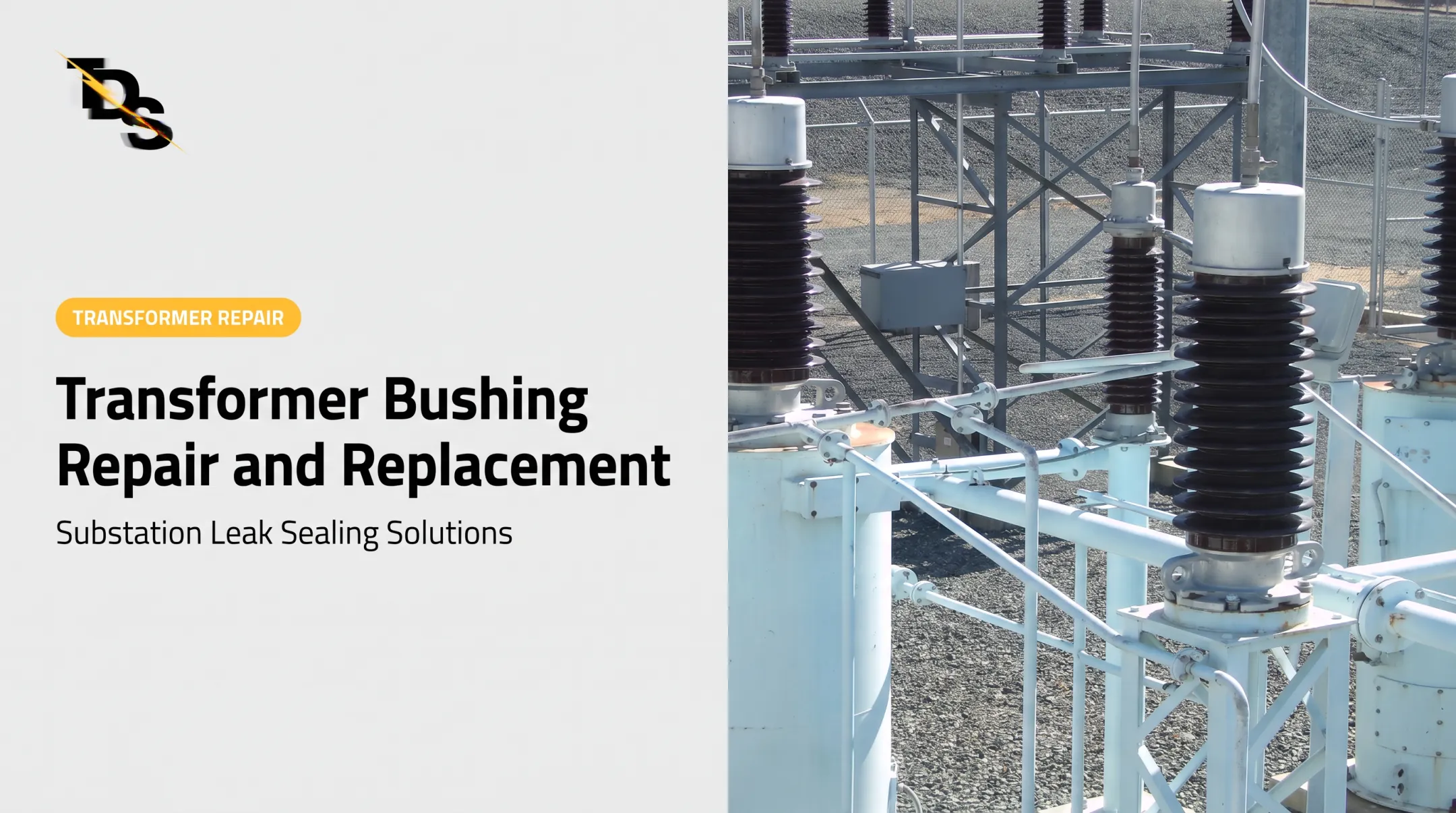
- Bushings and flanges
- Valves, fill plugs and gauges
- Radiators and tank welds
- Fuse and operating-device gaskets
According to Maddox's troubleshooting guide, causes include worn gaskets, loose bolts, corrosion, poor welds and impact damage. Oil staining alone does not identify the source, and factory or shipping residue is not always an active leak. Confirm the exact point first.
Low-pressure, cured-in-place sealing
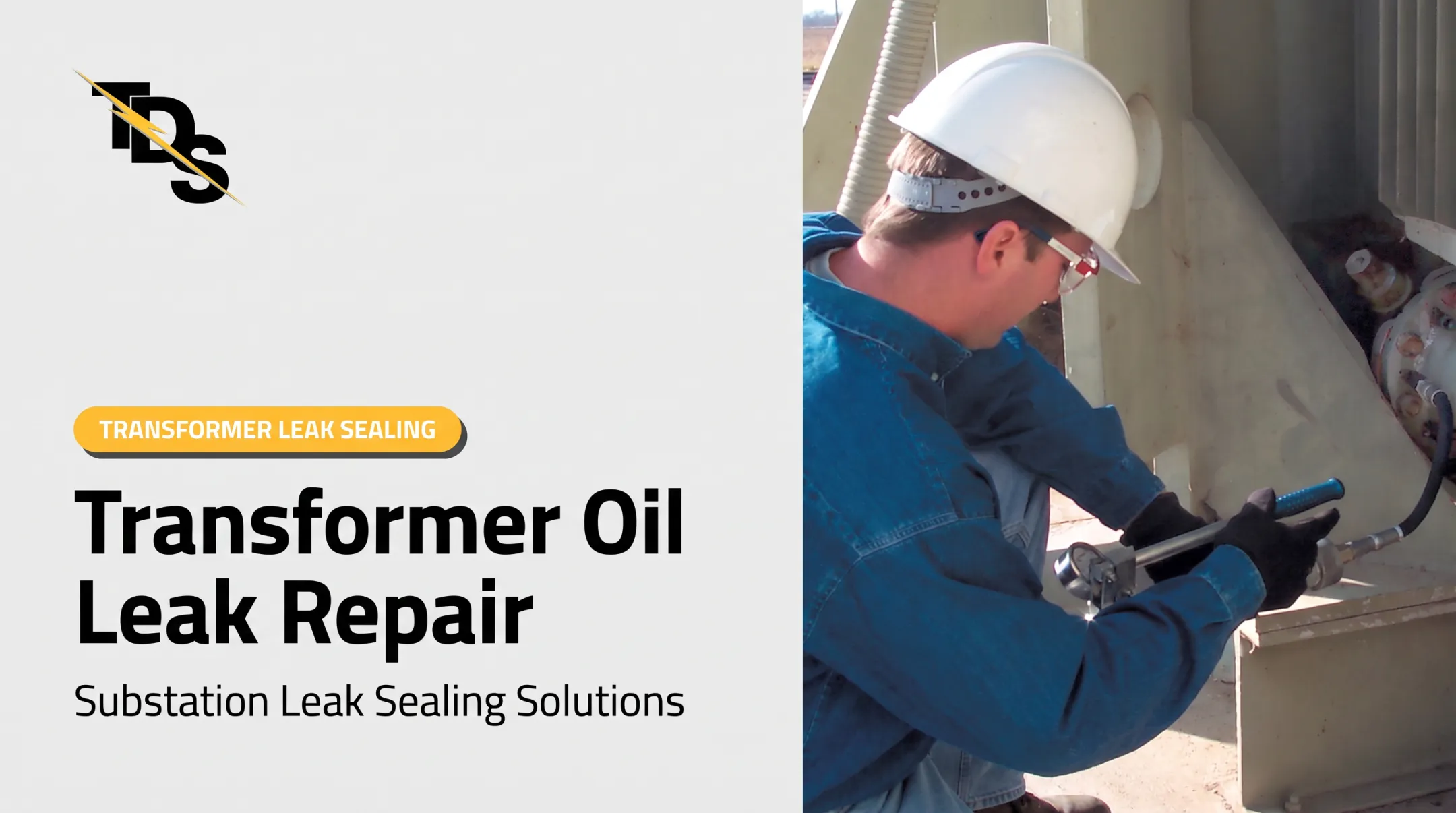
Instead of dismantling a joint and regasketing, a technician can install a cured-in-place gasket that replaces the failed material in place. When the component and equipment are suitable, that approach cuts oil handling, transport, and downtime. Transmission & Distribution Services (TDS) uses this method. Its technicians work only in substations, and the approach applies to oil-filled and SF6-filled apparatus.
Independent, distribution-specific data on cured-seal longevity or success rates is limited, so ask any provider for references and sealant test results.
Oil-filled versus SF6 equipment
SF6 gas handling in breakers and GIS is a different problem from sealing transformer oil. A provider should confirm the apparatus type, insulating medium, seal material and compatibility before proposing anything.
When sealing is not enough
Leak sealing is not a cure for every failure. These generally need a broader transformer specialist:
- Internal winding faults or core damage
- Major insulation deterioration
- Severe overheating or extensive contamination
- Tank damage
- Repeated failures
Common Distribution Transformer Problems That Need Professional Repair
Leaks and failing seals
Leaking oil can mean falling fluid levels, reduced insulation performance, contamination, corrosion, and overheating. Topping up the fluid hides the symptom. Treat a suspected leak as a condition that needs assessment.
Unchecked leaks also create regulatory exposure. EPA's SPCC rules apply at qualifying facilities with aboveground oil capacity above 1,320 gallons, counting containers of 55 gallons or more. A single transformer does not automatically trigger a plan, but total site capacity matters.

Warning signs
- Oil residue or unusual odors
- Abnormal humming or buzzing
- Discolored or overheated connections and hot spots
- Cracked bushings, corrosion, or tank damage
- Alarms and unexplained protection trips
What testing can reveal
Oil analysis can identify moisture, dielectric deterioration, contamination, acidity, and dissolved gases. Relevant methods include:
- ASTM D3612 for dissolved gases
- D1533 for water content
- D1816 and D877 for dielectric breakdown
- D974 for acid number
IEEE C57.104-2019 guides dissolved gas interpretation. Report each result with its method name, and follow the manufacturer's or utility's sampling schedule rather than a generic interval.
Causes and how they're investigated
| Cause | Typical investigation |
|---|---|
| Overloading, poor cooling | Loading review per IEEE C57.91, infrared imaging |
| Loose connections | Infrared scan, winding resistance |
| Bushing problems | Visual inspection, power factor testing |
| Lightning or fault events | Turns-ratio and insulation resistance tests |
| Aging insulation, moisture | Oil analysis, insulation resistance |
When to escalate
Stop treating the issue as routine if you see:
- An active or fast-worsening leak
- Low fluid level, smoke, or fire
- Severe overheating or exposed damage
- Repeated trips or signs of internal failure
Follow site isolation, lockout/tagout, arc-flash, environmental, and utility procedures. Do not attempt an unsafe field repair.
How the Distribution Transformer Repair Process Works
1. Information and safety review
TDS gathers the nameplate, equipment type, insulating medium, operating status, maintenance and leak history, photos, site access, and switching requirements. The team also confirms any limits on taking the unit out of service.
2. Confirming the leak
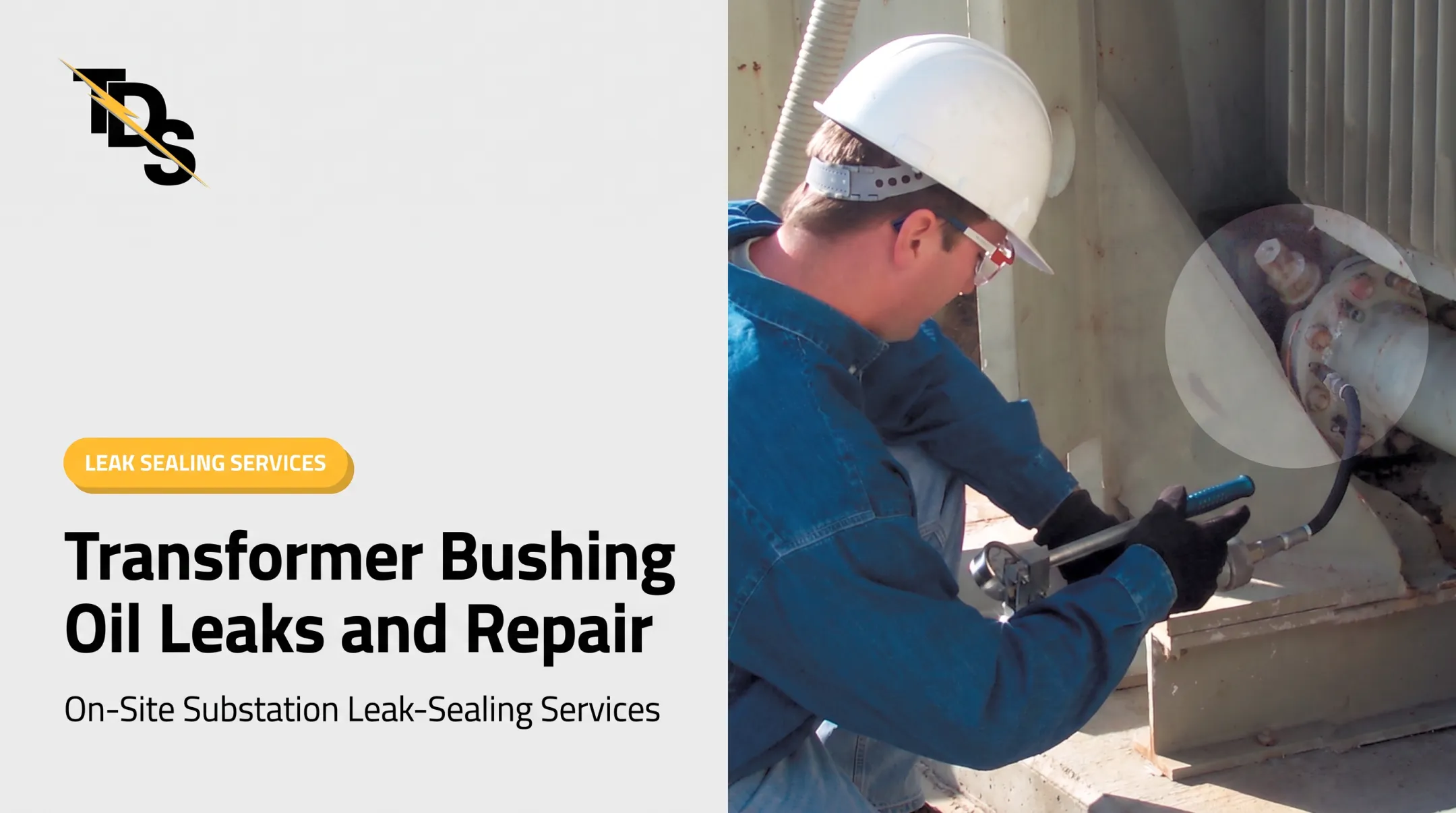
Visual checks alone can mislead. TDS technicians clean the flange and apply an oil leak detector spray. Darkening at the split line pinpoints a leaking gasket.
On one 4-bolt flapper valve, this revealed leaks at both the flange gasket and the stem packing. Fix only what is leaking.
3. Choosing the repair
- Contained external leak: low-pressure sealing
- Damaged external part: component replacement
- Internal or structural damage: shop teardown, rewinding, remanufacturing or replacement
4. Field execution
TDS uses low-pressure sealing and a cured-in-place gasket on compatible oil-filled and SF6-filled apparatus, often avoiding disassembly.
Work while energized depends on equipment suitability, site conditions, safety controls, and customer approval. Lower leaks such as bottom-connection flapper valves can often be repaired energized. Upper leaks near the bushings may require de-energizing and grounding.

Many distribution manufacturers require full de-energization and grounding before servicing, so follow model-specific instructions.
5. Verification and closeout
- Confirm the leak has stopped and check for secondary leaks
- Restore operating fluid levels
- Run electrical or fluid tests required by the manufacturer, utility procedures or standards such as ANSI/NETA MTS
- Collect photos, repair records and warranty documents
- Set up recommended monitoring
Repair or Replace: How to Choose the Right Path
Age alone should not decide. Weigh condition, failure mode, maintenance and test history, remaining service needs, repeat failures, and replacement availability together.
Compare total cost, not just the quote:
- Field labor, teardown, transport and oil handling
- Parts and testing
- Outage duration and lost production or service
- Temporary equipment and disposal
- Replacement lead time and future maintenance
Lead time can drive the choice. NREL's 2024 report described distribution transformer lead times of up to two years, four times pre-2022 levels. Treat that as context, not a current quote. DOE rulemaking documents describe Idaho Power refurbishing a unit mainly for availability, not cost.

Repair often fits when a localized external leak affects an otherwise healthy unit.
Rebuilding or replacement often fits when you face:
- Winding or core damage
- Extensive insulation deterioration
- Severe tank damage
- Obsolete protection requirements
- Repeated failures
- A repair scope near replacement cost
Have an engineer or qualified transformer specialist validate the decision. Check fluid classification for disposal as well, since PCB rules under 40 CFR 761 apply at 50 ppm or greater.
Why Specialized Leak-Sealing Expertise Matters
A provider that works only on substation apparatus brings more relevant diagnosis and planning than a general contractor. TDS specializes in transformer oil and SF6 leaks, and its technicians are OSHA certified. The company is also WOSB-certified and ISNetworld, SAM, and Avetta approved.
Start with a survey
TDS offers a free equipment survey documenting the facility, exact equipment, leak location, repair method, and price, with travel estimates. TDS states that customers do not pay if TDS cannot stop the leak. Confirm current service terms before you commit.
What to verify before hiring
- Sealant compatibility with transformer oil or SF6
- Safety qualifications and in-service repair limits
- Environmental practices
- Repair documentation, such as daily work logs
- Response capability and references
- Warranty coverage
TDS cites a four-year leak-seal warranty. Get the exact terms and exclusions in writing. To arrange an assessment, contact Transmission & Distribution Services.
Frequently Asked Questions
How much does it cost to repair a distribution transformer?
Cost depends on the failure mode, leak accessibility, transformer size and condition, testing, parts, outage needs, transport and whether work is field or shop based. Get an equipment survey and itemized quote.
What are the common causes of distribution transformer failure?
Causes include insulation deterioration, overheating, overloading, moisture, oil loss or contamination, bushing and connection problems, lightning or faults, corrosion and poor maintenance. Testing confirms the actual cause.
What is the average lifespan of a distribution transformer?
It depends on loading, temperature, oil and insulation condition, environment and fault history. DOE's analysis models a 32-year average and 60-year maximum, which are analytical assumptions, not guarantees.
What is the 80% rule for transformers?
It usually comes from the National Electrical Code, where continuous loads are sized at 125% (80% of device rating) for circuits and overcurrent devices. It is not a universal transformer loading limit. Check the nameplate, manufacturer instructions and utility standards.
Can a leaking distribution transformer be repaired without taking it out of service?
Some compatible external leaks can be sealed at low pressure while energized when conditions permit. Equipment design, leak location, hazards and switching procedures decide, and a qualified technician must assess it.
When should a distribution transformer be replaced instead of repaired?
Consider replacement for extensive internal damage, severe insulation deterioration, unsafe or obsolete equipment, repeated failures, poor test results, unavailable parts or repair costs near replacement. Request a documented engineering and lifecycle-cost evaluation.