
For utilities and industrial facilities, a PCB-contaminated oil leak is more than a housekeeping problem. It can expose workers, spread through soil or water, interrupt operations, and trigger regulated cleanup and disposal duties. EPA's PCB fact sheet notes that legacy equipment may remain in use for 30 or more years, so these risks persist.
Below: how to recognize a suspected leak, what to do first, whether equipment can be repaired, and how to reduce future releases under current US federal requirements.
Key Takeaways
- Treat any suspected PCB-oil release as a safety and environmental event: isolate, then notify.
- Never judge PCB status by oil color; rely on records, labels, and qualified sampling.
- Plan cleanup, transport, and disposal around EPA, TSCA, DOT, and state rules.
- Sealing a leak does not erase characterization, reporting, or waste obligations.
What Are Polychlorinated Biphenyls (PCBs), and Why Do PCB Leaks Matter?
What does PCB mean in this context?
PCBs are manufactured chemicals once used for electrical insulation and heat transfer. They are unrelated to printed circuit boards or PCB leakage current. U.S. production ended in 1977, and EPA banned manufacture and import in 1979. Equipment filled before then, and some filled after, can still be in service.
Why were PCBs used in electrical equipment?
They are stable, nearly nonflammable, and good insulators, which made them attractive as coolants in transformers and capacitors. Those same traits also make PCBs persist: they resist breakdown, bind to soil and sediment, and accumulate in fatty tissue.
Legacy equipment that may hold PCB fluids or residues includes:
- Older transformers
- Capacitors
- Circuit breakers
- Associated materials such as absorbents and oil-soaked components
Not every older unit contains PCBs. Many were drained, retrofilled, or never filled with PCB fluid at all.
How can a PCB leak affect people and the environment?
The Agency for Toxic Substances and Disease Registry (ATSDR) identifies inhalation, ingestion, and skin contact as exposure routes. Workers handling spills or maintaining equipment have historically seen higher exposure. Released oil can move through soil, reach drainage or groundwater pathways, and linger in sediment.
Interpret health evidence carefully. ATSDR reports mixed human findings and animal tumor evidence, and IARC Volume 107 classifies PCBs as carcinogenic to humans. That is a hazard classification, not proof that every contact causes illness.
Why do PCB concentration and equipment history matter?
Handling, labeling, cleanup, and disposal decisions follow documented history and verified concentration, not age or appearance. Under 40 CFR 761.3:
- PCB Transformer: 500 ppm PCBs or more
- PCB-contaminated electrical equipment: 50 ppm to under 500 ppm
Untested equipment falls under assumption rules in 40 CFR 761.2 that vary by equipment type and manufacture date. For example, untested mineral-oil equipment made before July 2, 1979 is generally assumed contaminated. Check the exact subsection and exceptions. State rules may add requirements beyond the federal baseline.
Where Do PCB Leaks Occur, and How Are They Identified?
Common sources of PCB leaks in substations
Likely sources include:
- Deteriorated gaskets or seals
- Corrosion
- Cracked bushings or fittings
- Impact damage
- Overpressure
- Loose connections
EPRI maintenance guidance names gaskets, valves, hoses, and vacuum-pump connections as common leak points. No authoritative breakdown by percentage exists, so only a qualified inspection can name the real source.
Signs that may indicate a leak
- Oil staining, pooling, or drips
- Residue around flanges or bushings
- Falling fluid levels
- Unusual odors
- Repeated maintenance findings
None of these confirms PCBs. They confirm only that oil is going somewhere it shouldn't.
Confirming PCB status
Start with the paper trail: asset inventories, nameplates, manufacturer data, maintenance records, prior lab results, and labels. PCB Transformers require the ML mark, but PCB-contaminated equipment is generally not required to carry it, so a missing label proves little. Qualified sampling settles the question.
Warning: Do not open equipment, collect samples, wipe surfaces, or handle contaminated absorbents without proper training, PPE, and a documented chain of custody.
What Should You Do When a PCB Leak Is Suspected?
Make the area safe first
Stop nonessential work and keep untrained people out. Set an exclusion zone and follow the facility emergency response plan. Energized substation equipment adds electrical hazards to chemical ones, so only authorized, qualified personnel should assess the apparatus or change its operating state.
Limit migration without adding exposure
Trained responders use compatible secondary containment, barriers, and drip control to keep oil away from drains, soil, and waterways. Avoid:
- Improvised cleanup
- Pressure washing
- Uncontrolled absorbent use
- Putting contaminated material in ordinary trash
Notify the right people
Work down the chain: site supervisor, EHS team, asset owner, emergency coordinator, then regulators. Two federal thresholds are easy to confuse:
- CERCLA reportable quantity: 1 lb of PCBs in 24 hours must be reported to the National Response Center.
- PCB Spill Cleanup Policy: EPA Regional notification within 24 hours for spills over 10 lb, or any spill reaching sensitive locations such as surface water, sewers, drinking-water sources, grazing land, or gardens.
A fire involving a PCB Transformer requires immediate National Response Center reporting. Each EPA region has a PCB Coordinator. State rules differ; California and Washington, for instance, each have their own immediate-reporting pathways.
Document and characterize
Record key details as soon as conditions allow:
- Discovery time and equipment ID
- Suspected source and visible spread
- Weather, actions taken, and people involved
- Photos where safe, notifications, samples, and waste generated
Then bring in a qualified lab and site assessor. 40 CFR 761.130 calls for verification sampling and a statistically valid approach, and EPA guidance advises collecting "as found" samples before disturbing material.
Arrange compliant cleanup and disposal
Cleanup targets depend on the surface. Examples from 40 CFR 761.125 include:
- 100 micrograms/100 cm² for outdoor electrical substation surfaces
- 10 ppm for non-restricted-access soil
Timelines run from 24 to 48 hours depending on spill category.
PCB waste stored for disposal generally must leave within one year. Off-site shipments typically use the Uniform Hazardous Waste Manifest (EPA Form 8700-22), with DOT classification checked against the current hazardous materials table. Don't assume a general oil-recycling or hazardous-waste route before characterization.

Can PCB-Contaminated Equipment Be Repaired?
What "repairing PCB" means
PCBs are chemicals; they aren't repaired. The real question is whether the leaking transformer, breaker, or capacitor can be repaired, decontaminated, retrofilled, removed, or replaced. Stopping an active leak is also different from remediating contaminated soil, structures, absorbents, and waste. Both are needed.
Factors that decide whether repair makes sense
- Equipment condition and leak location
- PCB concentration and extent of contamination
- Electrical criticality and outage constraints
- Accessibility and manufacturer requirements
- Worker protection
- Regulatory restrictions
A leaking PCB transformer is not automatically removed. Under 40 CFR 761.30, EPA authorizes specified servicing for remaining useful life.
Where a leak causes or threatens runoff, the owner must repair or replace to eliminate it, clean up released PCBs, and meet the 48-hour requirement. Containment and daily inspection apply while a leak awaits correction. A joint electrical and environmental assessment, not leak sealing by reflex, should drive the decision.
Where specialized leak sealing fits
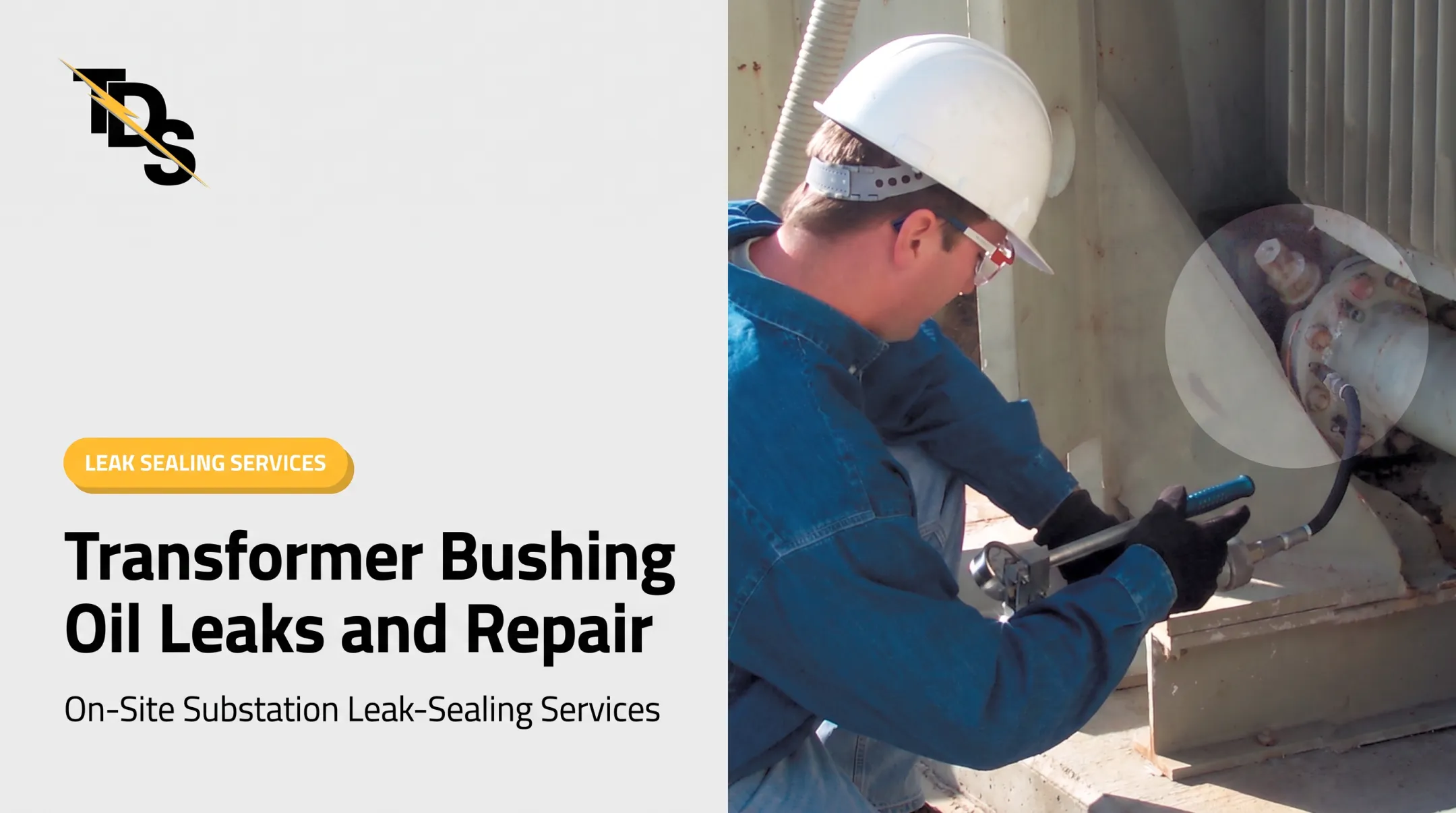
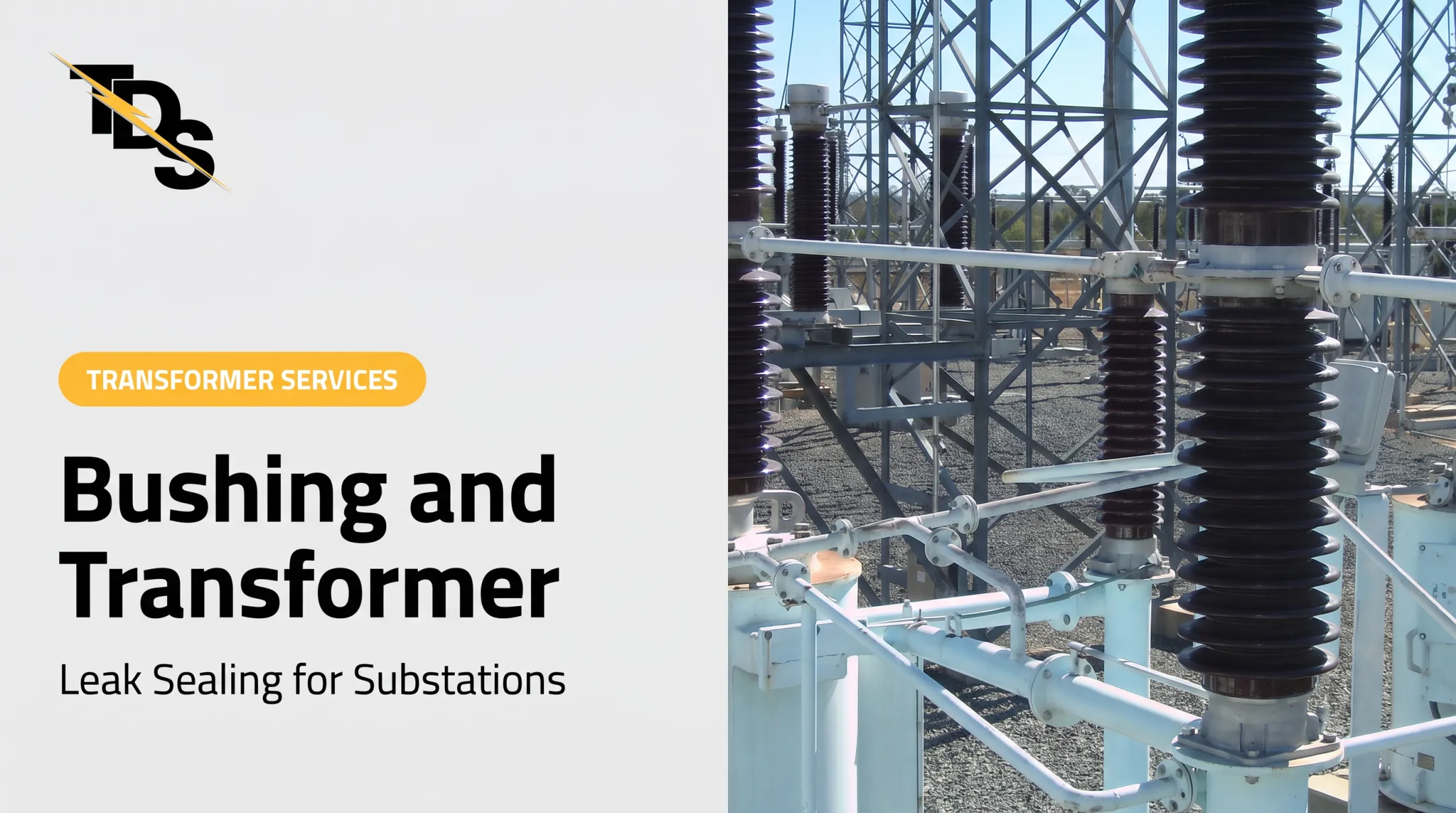
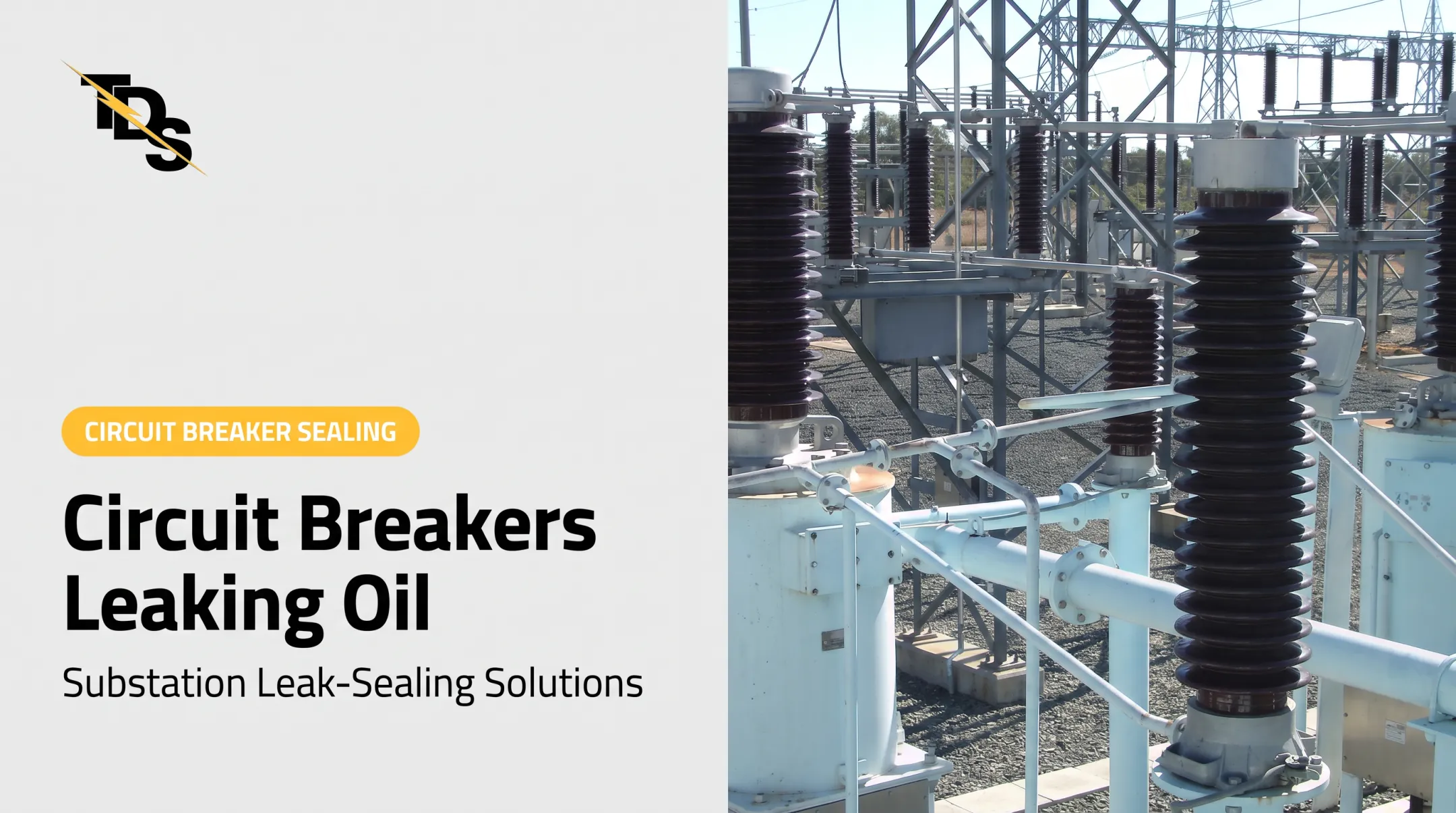
Transmission & Distribution Services (TDS) works exclusively in substations, sealing leaks on oil-filled transformers and circuit breakers with a low-pressure approach. Its cured-in-place method aims to avoid traditional teardown and regasketing when conditions allow.
What the process involves, as TDS describes it:
- A free equipment survey that identifies the equipment, leak location, repair price, and method
- Confirmation of the exact leak location first, then repair of only what is leaking
- Sealant that TDS states will not react adversely with transformer oil
- Many repairs possible with equipment energized and in service, when access to energized top components isn't needed
- OSHA-certified technicians and a four-year leak-seal warranty
Confirm sealant compatibility with your PCB fluid before work begins. Energized work depends on equipment condition and site safety, and any repair on PCB equipment must meet regulatory requirements.

What should happen after repair
Require a post-repair inspection and record the location, method, date, equipment status, and verification results. Operators may still need:
- Follow-up monitoring
- Fluid or surface testing
- Updated asset records and regulatory documentation
- Cleanup of earlier releases
Retrofilling has its own rule: the prescribed test comes 3 months afterward, and new oil doesn't make a transformer non-PCB on its own.
When removal or replacement fits better
Consider decommissioning, replacement, or specialized decontamination when you see:
- Extensive corrosion
- Inaccessible damage
- Repeated leaks
- Severe contamination
- Unsafe operating conditions
- A design that can't be reliably repaired
Only a site assessment can pick the option. Whatever the outcome, disposal follows PCB equipment, transport, and disposal rules.
How Can Utilities Prevent PCB Leaks?
Keep a PCB-aware inventory and inspection program
Track the details that set inspection priority and response:
- Age, manufacturer, and fluid type
- PCB status and prior test results
- Leak history and gasket condition
- Containment features and inspection intervals
PCB transformers need visual inspection at least every 3 months. Facilities meeting 761.180 thresholds keep annual records, with the document log due July 1.
Qualified staff can add infrared scans, fluid-level checks, and bushing and flange inspections. EPRI describes infrared thermography as a fast, non-contact condition tool. It spots thermal anomalies but cannot measure PCB concentration.
Prepare containment and spill response
Facilities under SPCC must provide containment or diversionary structures for oil discharges (40 CFR 112.7). SPCC is an oil rule, not a PCB concentration rule, so pair it with Part 761 duties. Plan for distinct scenarios:
- Storm events overwhelming drains
- Vehicle impact
- Fire
- Equipment failure
- Transport and staging
Stock compatible spill kits, drain protection, temporary storage, and emergency contacts.
Train people and keep records
Train by role on:
- Electrical hazards and PCB recognition
- PPE and spill notification
- Sampling controls and waste handling
- Contractor coordination
Retain inspection records, test results, manifests, cleanup documentation, repair records, and regulator correspondence. Years later, decommissioning decisions will rest on them.

Frequently Asked Questions
What is the medical meaning of PCB?
In environmental and occupational health, PCB means polychlorinated biphenyls. Medical discussions concern potential effects of exposure, not a diagnosis. It is not printed circuit boards.
Can PCB be repaired?
The chemical is not repaired. PCB-contaminated equipment may be repaired, decontaminated, retrofilled, removed, or replaced after qualified technical and regulatory assessment.
Are PCBs recyclable?
Some equipment, oil, or metals may qualify for controlled recovery, but only after characterization and through an authorized pathway. Diluting PCB waste to avoid regulation is prohibited.
How do you clean up a PCB leak?
Isolate the area, contain the spill if safe, and notify environmental and emergency contacts. Use qualified PCB spill professionals for sampling, cleanup, packaging, transport, and disposal.
How can you tell if transformer oil contains PCBs?
Appearance is unreliable. Use equipment records, labels, historical data, and qualified laboratory sampling with safety and chain-of-custody controls.