
Readers should limit themselves to external checks or an authorized reset. Internal, energized, medium-voltage, high-voltage, and substation work belongs to qualified electrical personnel using proper isolation and safety procedures.
This article covers common failure symptoms, root-cause diagnosis, safe repair pathways, repair-versus-replacement decisions, and when to bring in a specialist.
What Is a Circuit Breaker?
A circuit breaker is a resettable switching and protection device. It interrupts current when it detects an overload, short circuit, ground fault, or other abnormal condition.
The NEC definition, reproduced by Eaton, describes a device that opens automatically on a predetermined overcurrent without injury to itself when properly applied within its rating.
Protection functions vary:
- Thermal: a bimetal heats under sustained overload and trips the mechanism
- Magnetic: an electromagnet trips instantly at a preset current
- Electronic: current transformers and solid-state monitoring initiate the trip
Breakers also differ by construction and interrupting medium. Molded-case breakers are common in panels and motor control. Air, vacuum, oil, and SF6 power breakers serve larger systems. Their service specifications are not interchangeable.
"Repairing" a breaker can mean several things:
- Correcting the external fault that caused the trip
- Replacing a failed breaker
- Reconditioning an eligible industrial unit
- Recalibrating protection components
- Sealing an oil or SF6 enclosure leak
Key Takeaways
- Frequent tripping, failure to close, overheating, damage, odd sounds, and leaks need diagnosis, not repeated resets.
- Confirm the cause and voltage class before any repair.
- Some breakers can be reconditioned; damaged, obsolete, or repeat-failure units usually should be replaced.
- Lockout/tagout, voltage verification, arc-flash controls, and post-repair testing are essential.
- Oil or SF6 leaks may call for specialist substation leak sealing.
Common Problems With Circuit Breakers
Failures follow recognizable patterns, but one symptom can have several causes. Diagnosis has to consider the breaker, the connected equipment, protection settings, and the surrounding system.
Frequent or Unexplained Tripping
Typical symptoms include:
- Repeated trips under apparently normal load
- Trips at equipment startup
- Nuisance trips after a fault
- Trips only under certain conditions
Possible causes include:
- Overloads, short circuits, or ground faults
- Incorrect coordination or settings
- Deteriorated contacts or a failing trip unit
- Downstream equipment problems
Separate a one-time fault from a recurring condition. Heat matters too: Eaton notes that elevated ambient temperature reduces the carrying capacity of thermal-magnetic breakers and promotes nuisance trips.
Breaker Will Not Reset, Close, or Stay Closed
A breaker that trips immediately, refuses to latch, or won't close may still be seeing an active fault. It may also have a damaged operating mechanism. An interlock or control-circuit problem can block it as well.
Sort the problem into one of four buckets:
- A manual reset problem
- An electrical close-command problem
- A mechanical latch failure
- A fault that must be cleared before re-energization
Overheating, Scorching, Burning Smells, Buzzing, or Arcing
Discoloration, melted insulation, unusual heat, crackling, buzzing, smoke, and arcing evidence are urgent. Don't monitor them casually.
Rockwell's instructions for industrial M-frame breakers list these as signs of arcing:
- Loose terminals
- Discoloration
- Blistered insulation
- Pitted conductor surfaces
Replace the breaker when there are cracks or severe discoloration. Other causes include worn contacts, inadequate interrupting capacity, contamination, overload, and bus or enclosure damage.
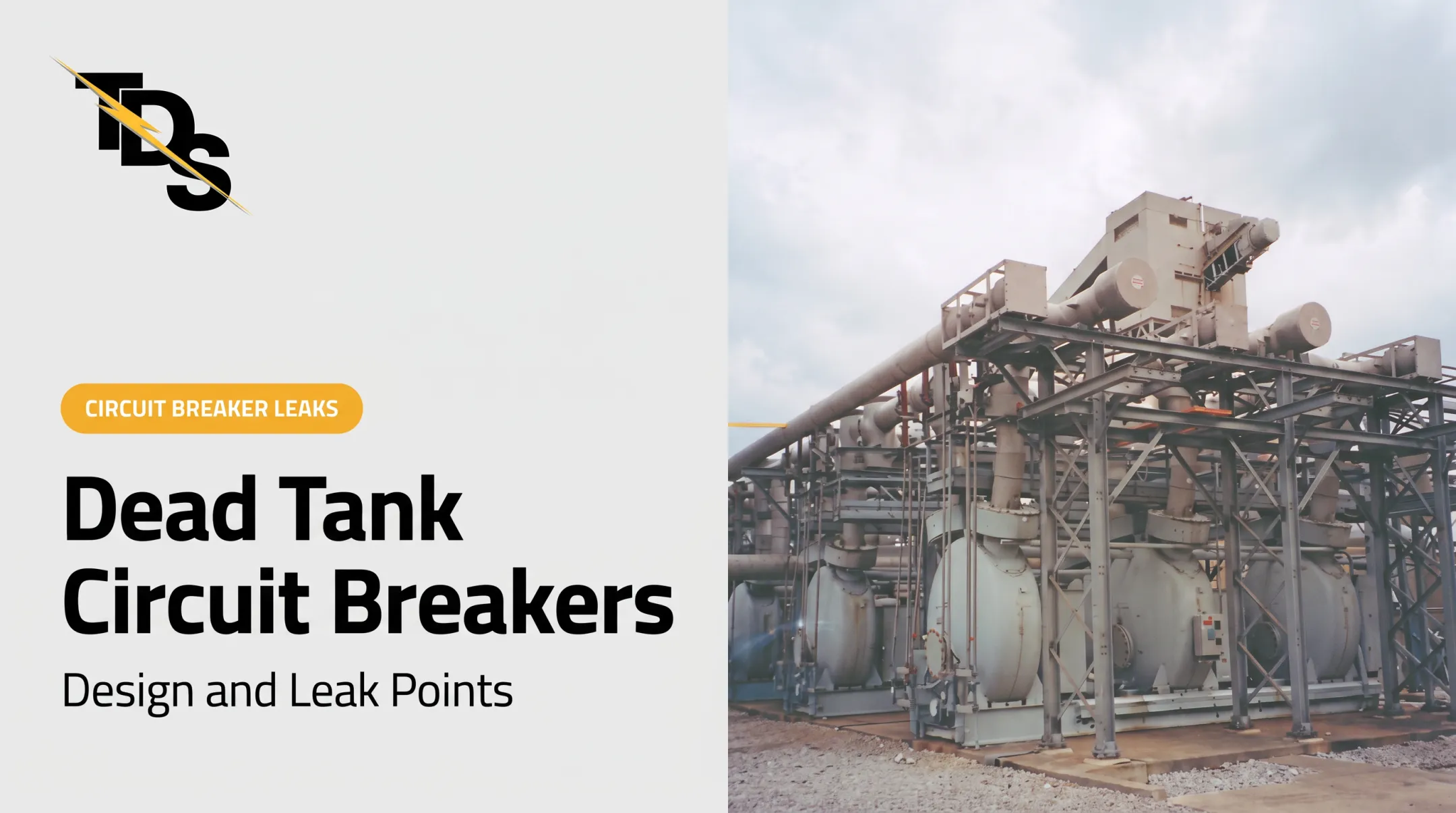
Oil or SF6 Leakage From Substation Breakers
Oil staining, pressure loss, gas alarms, bubbling, residue around gaskets, or repeated top-offs can point to a leaking seal, gasket, flange, bushing, valve, or enclosure part. A leak isn't necessarily an internal mechanism failure. It still creates environmental, compliance, insulation, and reliability risks, so evaluate it promptly.
The stakes are real. EPA gives SF6 a 100-year warming potential of 23,500 times that of CO2.

Why Circuit Breakers Fail
Common drivers:
- Repeated fault interruptions and heavy switching duty
- Moisture, dust, corrosion, and vibration
- Improper installation or incorrect ratings and settings
- Aging components and skipped preventive maintenance
In high-voltage populations, IEEE survey data shows operating mechanisms are responsible for most major failures. Those rates don't transfer to molded-case breakers, but the lesson holds: mechanisms deserve attention.
Ignoring the condition risks unreliable fault interruption, equipment damage, arc-flash exposure, fluid or gas releases, unplanned outages, and costlier repairs.
How to Fix a Circuit Breaker: Step-by-Step
Resetting or replacing a breaker without finding the cause leaves the fault in place and creates false confidence. The steps below are a framework for qualified personnel and authorized operators. Actual procedures must follow the manufacturer, the site safety program, applicable OSHA requirements, and the breaker's voltage class.
Step 1: Establish a Safe Work Boundary
- De-energize where required and apply lockout/tagout
- Verify absence of voltage with a properly rated instrument
- Respect arc-flash boundaries and wear appropriate PPE
- Release stored energy and control remote or backfeed sources
Don't remove covers, disconnect conductors, defeat interlocks, or work inside an energized panel or substation breaker unless you're qualified and authorized.
Step 2: Identify the Exact Problem
Document the trip or failure event:
- Affected load and alarms
- Pressure indications and operating sequence
- Weather at the time of the event
- Whether it happens at startup, during switching, or in continuous operation
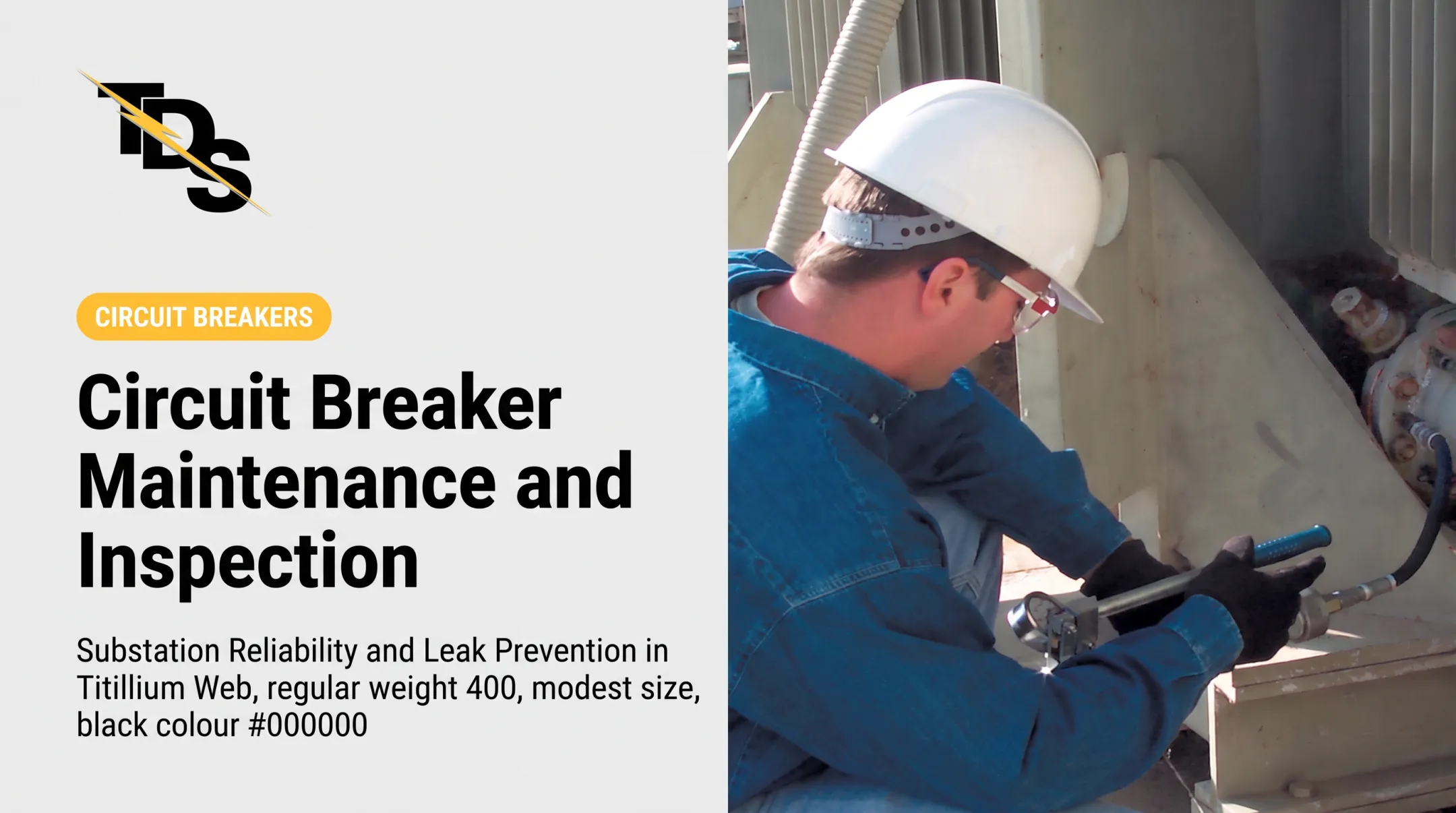
Safe external checks include:
- Abnormal temperature, odor, or noise
- Visible damage, oil residue, or SF6 indications
- Control-power status
- Obvious downstream faults
Visual inspection never replaces testing.
Step 3: Confirm the Root-Cause Category
Sort the issue before choosing a repair:
- Mechanical: worn contacts, springs, linkages, latches, operating mechanisms, interlocks
- Electrical or protection: loose connections, damaged conductors, failed trip units, control-power problems, wrong settings, insulation or wiring faults
- Environmental or operational: contamination, moisture, corrosion, vibration, excessive duty, overload
- Fluid or gas containment: degraded seals, gaskets, fittings, flanges, or enclosure parts
Testing should rule out upstream, downstream, load, control, and protection-system causes before anyone replaces a breaker.
Step 4: Apply the Repair That Fits the Confirmed Problem
Depending on the diagnosis, the repair may be:
- Correcting the external circuit fault
- Tightening or replacing approved connections
- Cleaning or replacing damaged components
- Servicing the operating mechanism
- Recalibrating the trip unit
- Replacing the breaker
- Repairing a compatible seal or enclosure component
Use manufacturer-approved parts and match ratings, interrupting capacity, and coordination. Follow torque requirements, confirm insulation compatibility, and document every change.
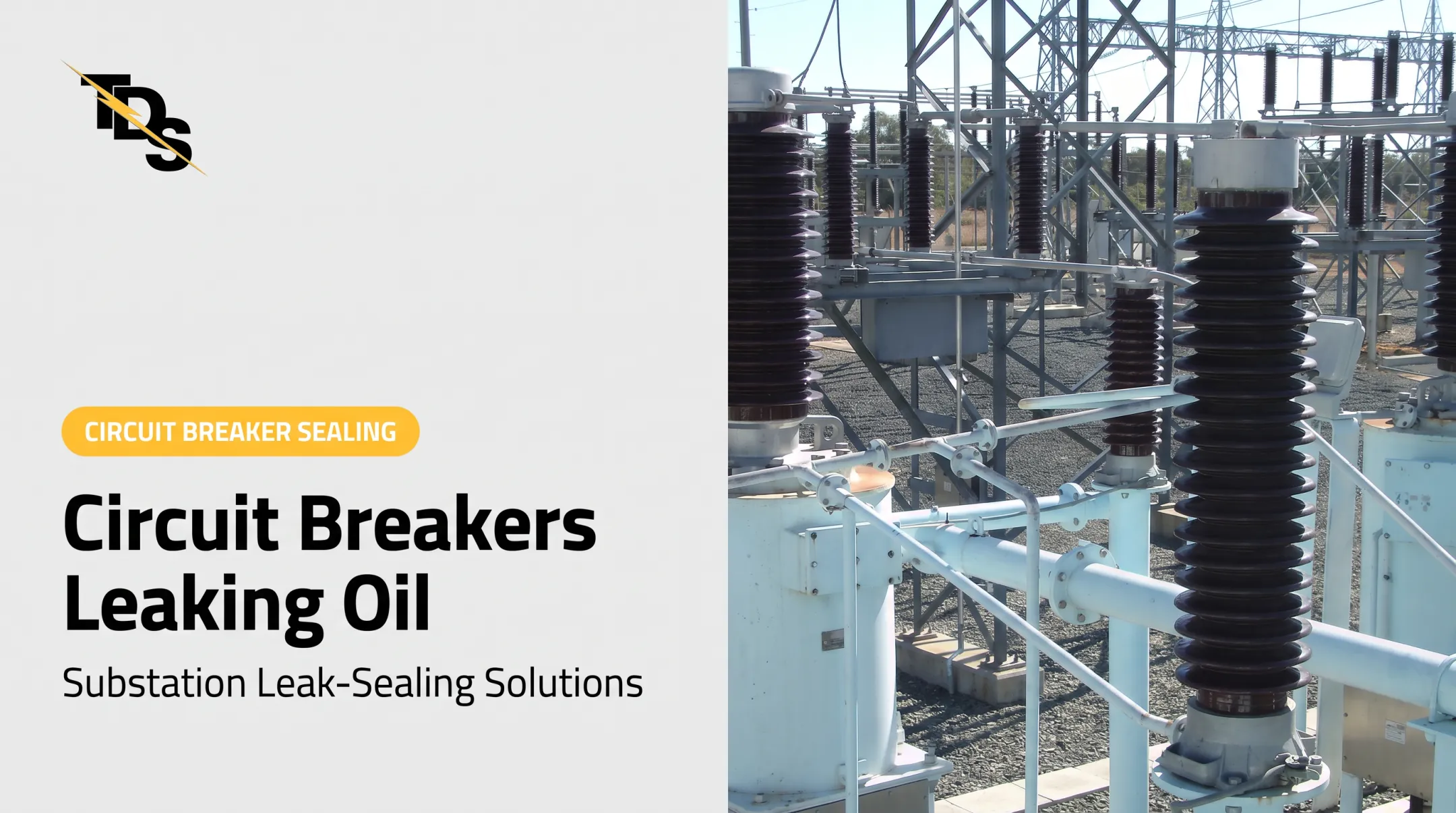
For oil-filled or SF6-filled substation apparatus, Transmission & Distribution Services (TDS) specializes in low-pressure leak sealing. Its free equipment surveys identify the leak location, repair method, and price. For SF6 leaks, TDS uses custom cast aluminum clamps with a rubber-based, non-adhering sealant. For oil breakers, TDS handles bushing and drain valve leaks with drill-and-inject procedures or custom enclosures.
These repairs can reduce the need for full disassembly. Some may be done while equipment stays in service, but only when site conditions and safety requirements permit. Some SF6 repairs may require an outage to switch out, ground, and safely reach the repair location.
Leak sealing fixes containment. It doesn't replace testing or repairing a failed trip mechanism, damaged contacts, compromised insulation, or a defective control system.
Step 5: Test, Validate, and Document
Qualified personnel should run tests suited to the breaker type and repair:
- Mechanical operation checks
- Insulation and contact resistance assessment
- Trip and close function testing, plus timing
- Protection verification
- Pressure or leak checks
- Alarm and interlock function tests
Eaton flags a pole-resistance deviation above 50% from the lowest pole as a reason to investigate, not an automatic replacement trigger. There's no universal pass value, so manufacturer limits govern.
Return the breaker to service only when results meet manufacturer, site, and industry requirements. Record the fault, measurements, parts, settings, test results, and recommended follow-up interval.

When Should You Fix vs Replace a Circuit Breaker?
Weigh these factors before you decide:
- Safety and post-repair reliability
- Availability of approved parts
- Outage impact and lifecycle cost
- Equipment age
- Whether original performance can be verified after repair
Temporary Overload or External Fault Confirmed
Fix the load, wiring, equipment, or coordination issue. Reset or return the breaker to service only after authorized testing confirms proper operation. Replace it if it shows internal damage, operates incorrectly after the fault is cleared, or fails functional and protection tests.
Localized, Repairable Problem
Repair or recondition when the manufacturer supports the unit, approved parts exist, insulation and enclosure are sound, and testing can verify performance. A seal leak on a sound breaker often fits here. Replace the unit when damage reaches the housing, bus connection, insulation system, or interrupting assembly.
Eligible for Reconditioning
Design matters. NEMA's position lists molded-case breakers as not recommended for reconditioning unless the original manufacturer indicates otherwise. Low-, medium-, and high-voltage power breakers may be candidates.
Reconditioning goes beyond cleaning. It requires:
- Documented inspection
- Wear-part replacement
- Calibration
- Dielectric and functional testing
- Traceability
Obsolete, Repeatedly Failing, or Severely Damaged
Evaluate replacement when parts are unavailable, faults keep recurring, insulation is compromised, or ratings no longer match the system. Compare lifecycle costs, not purchase price alone:
- Outage costs and lead time
- Engineering changes, testing, and coordination studies
- Environmental obligations
- Risk of another failure

Purchase price alone misleads.
Common Mistakes to Avoid, Preventive Measures, and When to Call an Expert
Common Mistakes
- Repeatedly resetting a breaker
- Bypassing a protective device
- Installing the wrong rating or an incompatible breaker
- Using unapproved parts
- Tightening connections without the correct procedure
- Skipping post-repair testing
Treating symptoms alone leaves the root cause active. A short circuit, overload, control fault, hot connection, or leak can remain in place behind the apparent fix.
Preventive Measures
- Condition-based inspections and manufacturer-specified maintenance
- Operating-duty records and load and protection reviews
- Thermal or visual inspections
- Corrosion and contamination control
- Documented testing by qualified personnel
NFPA 70B-2026 adds a P-F curve method for setting maximum maintenance intervals.
Load and protection reviews should account for continuous-load sizing. Under NEC 210.20(A), a branch overcurrent device must be rated for noncontinuous load plus 125% of continuous load (3 hours or more). For an all-continuous load, that works out to 80% of the device rating.
An exception applies when the assembly, including its overcurrent devices, is listed for 100% operation. The 80% figure is a sizing rule, not proof that a breaker loaded above 80% has failed, and it is not universal across industrial applications.
For oil or SF6 equipment, also check pressure or density indications, alarm history, gasket condition, and reporting duties. Subpart DD of 40 CFR Part 98 covers fluorinated-GHG-containing transmission and distribution equipment, including breakers. Oil-filled breakers may fall under SPCC rules.
When Professional Intervention Is Required
Escalate immediately for:
- Smoke, arcing, burning odor, severe heating, or visible damage
- Repeated failed trips or inability to interrupt or close
- Pressure alarms, SF6 leakage, or oil release
- Unknown breaker condition
- Any medium- or high-voltage work
Choose a provider with the right voltage-class experience, safety program, test equipment, manufacturer knowledge, and documentation practices. TDS fits one specific need: sealing oil and SF6 leaks on substation apparatus. It doesn't replace breakers or repair interruption mechanisms.
Conclusion
Breaker repair starts with finding the actual fault, not resetting repeatedly or replacing on reflex. Some issues can be corrected or reconditioned. Obsolete, damaged, repeatedly failing, or untestable breakers generally should be replaced.
Qualified personnel, proper isolation, manufacturer procedures, and post-repair testing protect people, reliability, uptime, and environmental compliance.
Frequently Asked Questions
Can a circuit breaker be repaired?
Sometimes. Resetting or fixing an external fault is simple, while internal repair, reconditioning, replacement, or oil/SF6 leak sealing depend on breaker type, condition, and test results.
How much does it cost to fix a circuit breaker?
No fixed price applies. Cost depends on voltage class, fault type, access, testing, parts, outage needs, reconditioning versus replacement, and whether an oil or SF6 leak is involved.
How do you tell if a breaker is blown?
A normal trip resets and holds. Suspect failure when it won't reset or close, trips repeatedly, or shows damage, heat, or odor. Qualified testing confirms internal failure.
What is the most common cause of circuit breaker failure?
It varies with breaker type and history. Common causes include overloads, short circuits, loose or high-resistance connections, mechanical wear, contamination, and incorrect settings.
What type of circuit breaker is designed to be reconditioned?
Eligibility varies by design and manufacturer. NEMA lists low-, medium-, and high-voltage power breakers as potential candidates, while molded-case breakers are generally not recommended unless the manufacturer says otherwise.
What is the expected lifespan of a molded case circuit breaker?
It depends on duty, fault interruptions, environment, maintenance, and test results. Schneider Electric cites about 30 years under favorable conditions with regular maintenance, but that isn't a guaranteed replacement age.