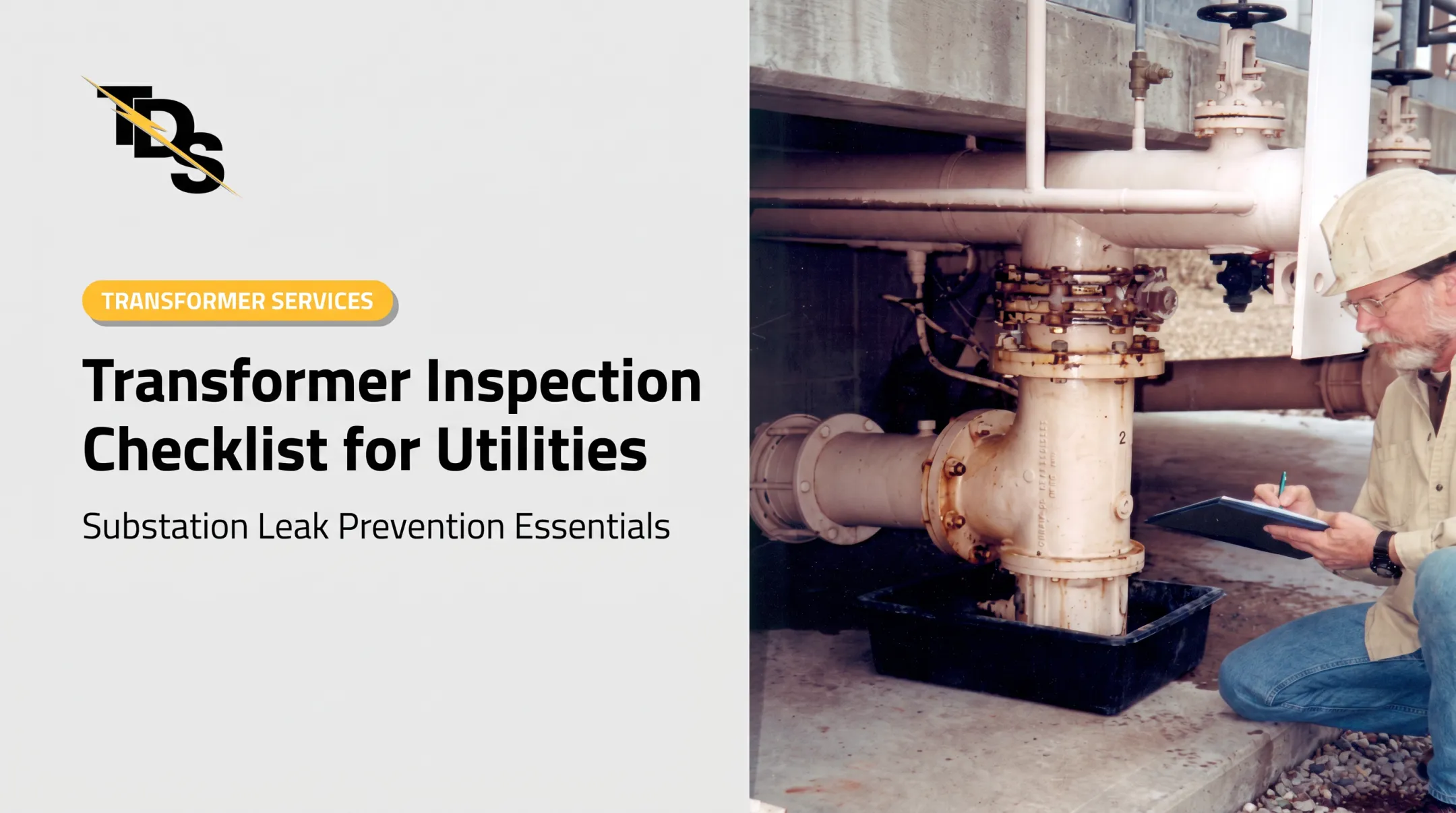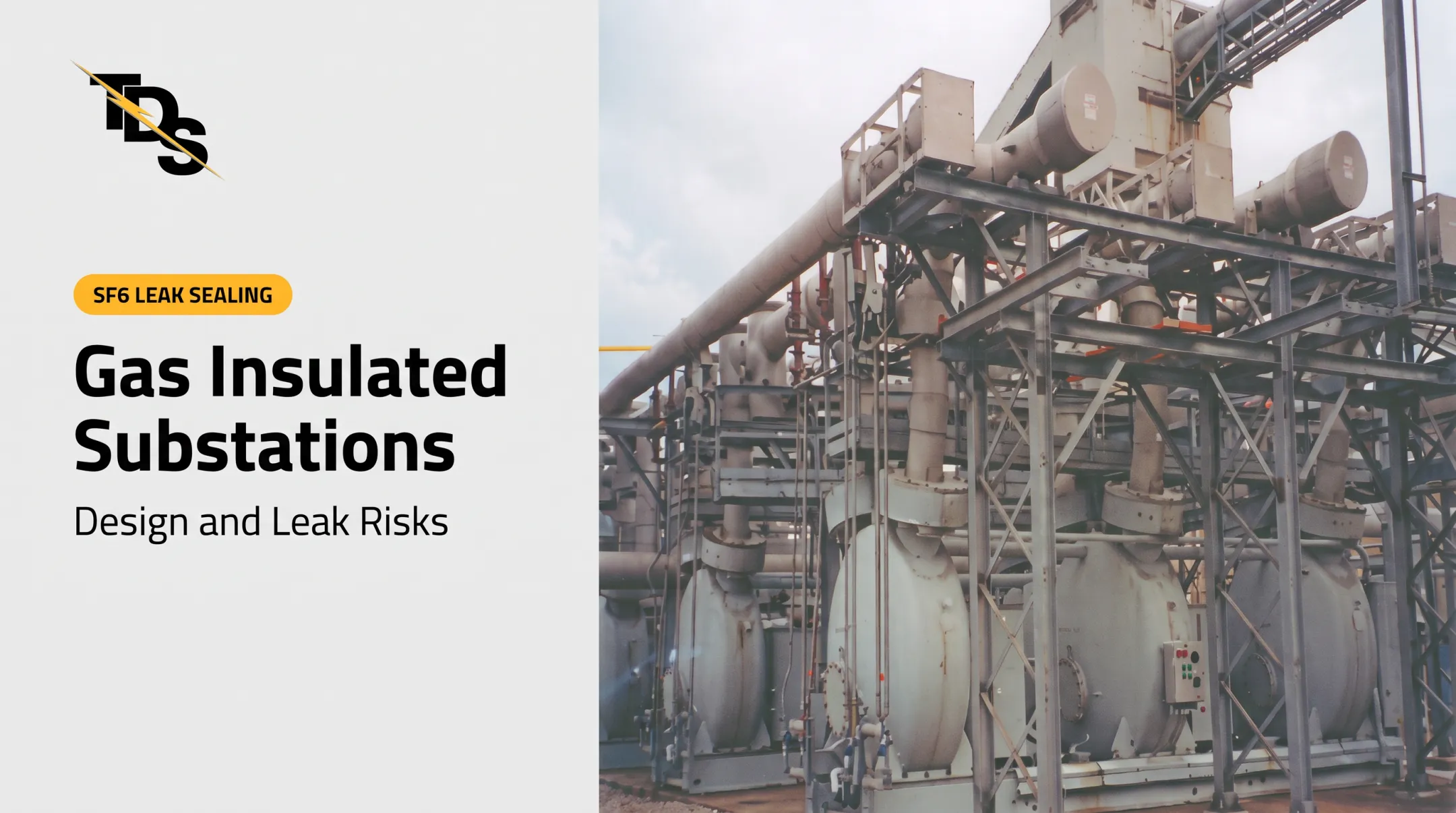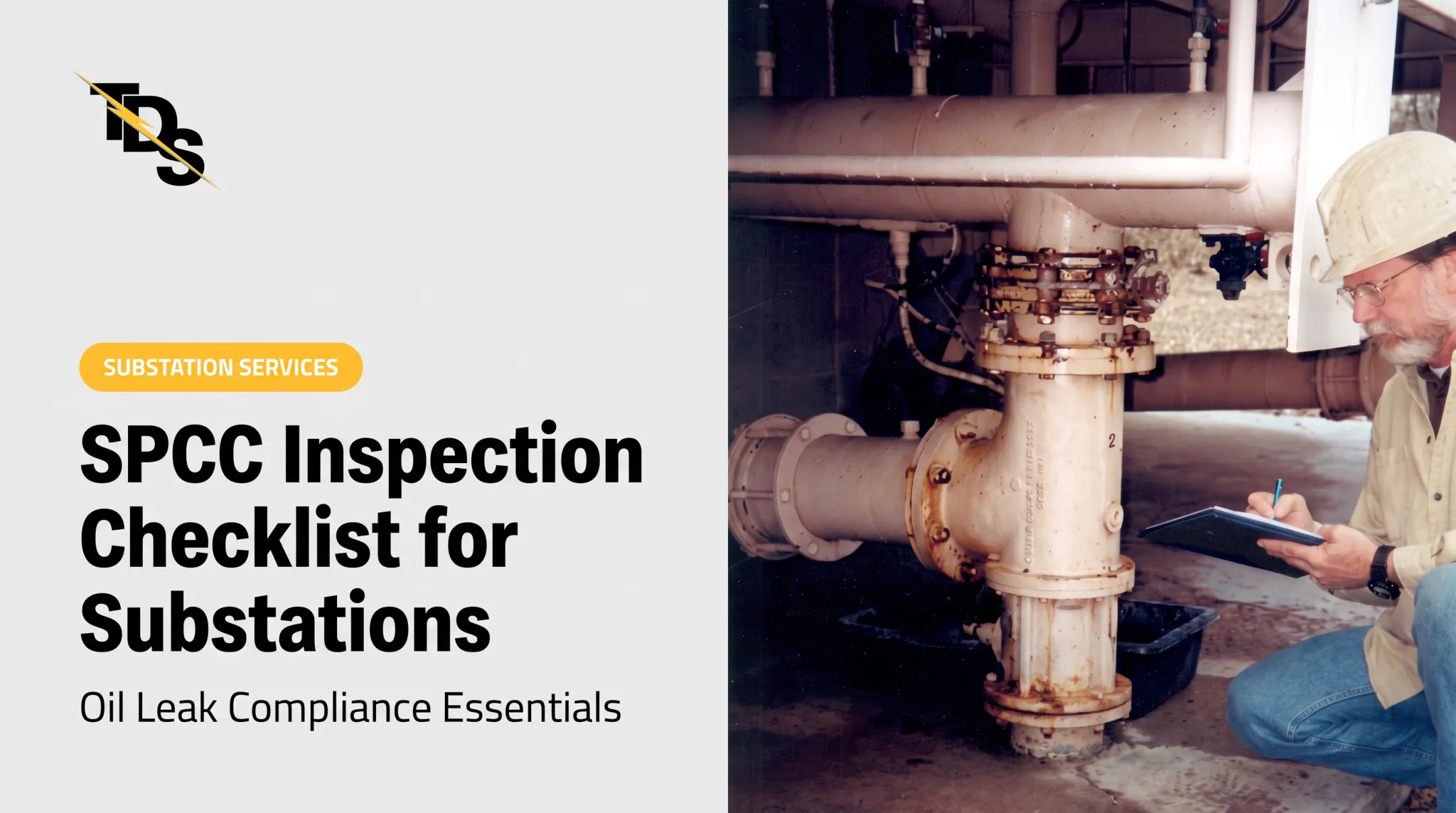

Done poorly, it produces a stack of "OK" boxes that hide a leaking bushing or a failing battery string. This guide covers the practical process: prepare the site and tools, inspect each asset group, choose the right methods, document evidence, classify findings, and escalate by risk.
Key Takeaways
- Start from current one-line diagrams, asset records, manufacturer instructions, and approved procedures.
- Inspect equipment and surroundings, from transformers and GIS to drainage, grounding, and oil or SF6 leak indicators.
- Pair visual walkdowns with qualified instrumented methods and trend review.
- Record enough that another qualified person can verify your result.
- Escalate active leaks, overheating, impaired protection, and unsafe access immediately.
What You Need to Check in a Substation Inspection
Reliable results depend on correct asset information, safe access, calibrated tools, and defined acceptance criteria. Sort these out before anyone enters the yard.
Tools and Indicators Required
Most inspections need:
- Current single-line and site drawings, plus the asset register
- Inspection form or digital device
- Camera, flashlight, and binoculars
- Calibrated thermal or electrical instruments, where authorized
- Oil-leak detection materials
- SF6 or multi-gas detection equipment, where applicable
- Radios or other communication equipment, barriers, and required PPE
Know what each tool can and cannot prove. A thermal image may reveal an abnormal temperature pattern, but it doesn't confirm the failure mode. A gas detector flags a presence, not the failed component.
For SF6, handheld detectors, soapy water, and ultrasonic devices can be affected by wind, noise, and survey thoroughness. Transmission & Distribution Services (TDS) notes that an infrared laser-scanning unit can scan an entire breaker and record the leak on video, which helps identify the exact failed component.
Your checklist should also capture:
- Instrument ID and calibration status
- Date and time
- Weather and loading conditions
- Exact measurement location
Without these, later readings can't be compared fairly.
Preconditions and Setup
Before entering the yard or control building, confirm:
- Inspection scope and asset list
- Current drawings and work order
- Switching status and job briefing
- Emergency contacts and access authorization
- Weather and communication plan
Energized inspections belong to qualified personnel working under the site's approved electrical safety, approach-boundary, switching, and job-planning procedures. Under OSHA 1910.269, qualified persons handle work on exposed energized parts, and job briefings cover hazards, procedures, and PPE.
Anything that requires isolation, lockout/tagout, testing for absence of voltage, grounding, or an outage must go through the site's formal process.
Keep routes, viewing points, lighting, loading, and instrument settings consistent where practical. Repeat inspections then produce comparable results.
Substation Inspection Checklist by Asset and Risk Area
Site and Yard
- Fencing, gates, signage, access and egress
- Vegetation, drainage, foundations, walkways
- Oil containment and fire protection
- Lighting, security systems, housekeeping
- Corrosion, storm damage, animal damage
Conductive substation fences must be grounded under OSHA 1910.269(u)(3), so check bonding at gates and corners.
Primary and Secondary Equipment
- Transformers: oil level and temperature indicators, bushings, radiators, conservators, breathers, cooling equipment, abnormal noise, oil leakage
- Breakers and disconnectors: position, operating mechanisms
- GIS: SF6 pressure and alarm indications
- Bus and insulators: condition, contamination, cracks
- Instrument transformers and surge arresters: condition, connections, contamination
- Protection and control: panels, relays, alarms
- Station batteries and chargers: voltage, connections, charger status
- Grounding, bonding, and communication equipment: continuity, corrosion, connections
Documentation and Environmental Items
Verify asset tags, nameplates, alarm status, previous findings, oil or SF6 leak records, open work orders, and photographs. Confirm any environmental reporting obligations that apply to your facility.
Those obligations vary. EPA's Subpart DD covers electric transmission and distribution equipment, including GIS, breakers, and switchgear. Oil rules under 40 CFR Part 112 apply at the facility level, and California has its own SF6 rule. Check which apply to you.
TDS's experience is that EPA inspections ask whether oil and SF6 leaks are documented and whether an action plan is in effect to repair them.

Use Specific Status Codes
Don't allow an unexplained pass/fail. Have inspectors choose one:
- Observed
- Measured
- Not accessible
- Not applicable
- Requires testing
Methods to Inspect a Substation
Choose methods by asset, failure mode, safety conditions, available equipment, and the confidence you need. Observation, condition-based measurement, and record review complement each other. None replaces the others.
Method 1: Visual Walkdown and Asset-by-Asset Checklist
Follow a controlled route that verifies identity, condition, indicators, alarms, leaks, overheating, corrosion, contamination, damage, sound, and access, without unnecessary contact with energized equipment.
- Confirm the asset tag. Compare equipment with the current drawing, nameplate, and inspection record.
- Observe. Check indicators, connections, enclosures, foundations, barriers, labels, and leaks. Photograph anything abnormal with a location reference.
- Record. Use specific language, assign a preliminary severity, and create a follow-up task if you can't resolve it on the spot.
Pros: broadly accessible and good at catching obvious defects. Cons: limited by lighting, viewing angle, inspector experience, and hidden internal conditions.
Visual checks often can't pinpoint a leaking component. To isolate the source, TDS crews clean an 8-bolt flange and apply oil leak detector spray. Oil darkens at the split line when the gasket is leaking.
Method 2: Instrumented and Condition-Based Inspection
Qualified use of infrared thermography, ultrasonic or acoustic inspection, oil or surface leak detection, SF6 detection, and electrical measurements can expose problems earlier. Each requires its own equipment, limits, settings, and safety controls.
- Stabilize conditions. Document loading, ambient conditions, instrument settings, and the exact point measured.
- Capture and compare. Take readings from comparable phases or assets and compare them with manufacturer guidance, approved limits, commissioning baselines, or past results.
- Escalate abnormal results. A qualified specialist evaluates before anyone changes settings, opens equipment, or returns it to service.

NETA's MTS specification recommends thermographic surveys at maximum possible load. EPRI's infrared guide lists emissivity, reflected background, distance, focus, and angle as factors that affect readings.
Pros: catches thermal, acoustic, gas, and electrical abnormalities early. Cons: misleading if uncalibrated, misconfigured, shot from the wrong distance, or read without load and baseline context.
Method 3: Records, Alarm, and Trend Review
Review prior readings, SCADA or annunciator alarms, transformer condition records, breaker operation data, battery records, leak history, work orders, outage reports, and photographs.
- Match history to the right asset. Check component, phase, tap position, measurement point, and date.
- Compare. Look for recurring, increasing, intermittent, or unresolved conditions rather than treating each visit as isolated.
- Convert trends to action. Options include corrective work, more testing, engineering review, planned outage work, or immediate escalation.
Pros: improves prioritization and exposes gradual deterioration. Cons: incomplete records, inconsistent methods, lost offline data, and wrong asset tags create false trends or hide real ones.
How to Interpret Inspection Results
Judge every finding against the right reference: manufacturer limits, approved drawings, commissioning records, applicable standards, site procedures, trends, and actual operating conditions. Limits vary by design, so avoid universal thresholds.
Even NETA's thermographic table gives suggested actions, not equipment limits. It also notes that temperature ratings vary by equipment and load current materially affects temperature rise.
Normal or Acceptable
The condition matches approved configuration, manufacturer guidance, expected range, and baseline. Document it and note when the next routine inspection or trend comparison is due.
Minor Issue or Watch Condition
Typical examples include:
- Slight deterioration
- Isolated corrosion
- Small housekeeping gaps
- Uncertain readings
- Early trend changes with no immediate threat
Assign an owner and open a dated work order for repeat observation, added measurement, or engineering review.
Out-of-Specification or Critical Finding
Treat conditions such as these as critical:
- Active oil or SF6 leakage
- Abnormal temperature patterns
- Damaged insulation
- Unexpected pressure or level indications
- Failed alarms or impaired protection
- Unsafe grounding or access
- Fire hazards or signs of imminent failure
Follow site escalation procedures and consider removal from service where authorized. Never allow informal resets or closeout without qualified review.

Common Errors, Safety, and Best Practices
Errors That Ruin Reliability
- Using obsolete drawings
- Inspecting the wrong asset
- Reading an indicator from the wrong position
- Skipping documentation of operating conditions
- Using an uncalibrated instrument
- Treating a visual symptom as a confirmed diagnosis
- Applying a generic limit instead of the manufacturer's or standard's criterion
Thermal readings are especially fragile. Inconsistent angles, emissivity settings, distance, weather, loading, background reflections, dirty lenses, and poor lighting all distort results.
Classify each finding as one of the following:
- Confirmed defect
- Indication needing more testing
- Inaccessible item
- Item outside scope
Safety Controls
- Complete a job briefing
- Follow lockout/tagout and switching rules
- Respect approach boundaries
- Wear task-appropriate PPE
- Keep access stable and housekeeping tidy
- Use a spotter or communication plan where needed
Stop work for severe weather, gas hazards, fire risk, damaged barriers, or uncertain equipment status.
Documentation and Follow-Up
- Use standardized severity categories
- Attach photos and readings to the correct asset
- Preserve offline data until synchronization is confirmed
- Assign owners and due dates
- Review recurring findings
- Verify closure with evidence, not just a status change
When a Leak Is Confirmed
If an inspection confirms an oil or SF6 leak, a qualified leak-sealing specialist may be appropriate. TDS works exclusively in substations and offers low-pressure leak sealing for oil-filled and SF6 equipment, sometimes on energized apparatus. TDS also states that the exact source of an SF6 leak must be found before a repair method is proposed.
Evaluate any repair method, especially near energized equipment, against site safety requirements and equipment condition.
Conclusion
A reliable inspection combines safe preparation, asset-specific observation, qualified measurement, accurate interpretation, and traceable follow-up. A checklist is a control tool. It doesn't replace engineering judgment, manufacturer requirements, commissioning records, or qualified testing.
Early, well-documented findings let maintenance teams prioritize risk, plan outages or repairs, and protect people and equipment before a condition becomes an operational event.
Frequently Asked Questions
What safety requirements and precautions should be checked during a substation inspection?
Confirm job briefings, qualified personnel, isolation and lockout/tagout where required, approach boundaries, PPE, site access, grounding, weather, and communications. Keep utility or facility procedures distinct from applicable OSHA, NESC, NEC, or NFPA requirements.
What should be included in a substation inspection checklist?
Cover site conditions, transformers, breakers, GIS, buswork, insulators, protection and control, batteries, grounding, fire and environmental controls, and documentation. Add readings, photographs, severity ratings, and corrective-action tracking.
Which IEC standards apply to substation design and inspection?
Applicability depends on jurisdiction and project specification. Verify current editions of IEC 61936-1 (installations above 1 kV AC) and the IEC 62271 series (high-voltage switchgear). US projects often rely on NESC, IEEE, NETA, NFPA, OSHA, and owner requirements.
What are the four types of substations?
Commonly discussed categories are transmission, distribution, collector, and converter or switching substations. One station can combine functions, so classify by actual voltage, purpose, equipment, and operating role.
How often should a substation be inspected?
Frequency depends on asset criticality, equipment type, manufacturer instructions, regulatory or utility requirements, environmental exposure, and condition history. Post-event, commissioning, and alarm-triggered inspections follow different timing than routine rounds.
What should happen when an inspection identifies a critical defect?
Protect personnel, notify the responsible control-room or maintenance authority, and follow site escalation and switching procedures. Preserve evidence, get a qualified technical assessment, and document the final disposition before returning equipment to normal service.