
In-situ repair brings the work to the installed equipment instead. It can reduce disassembly, transport, and downtime, though work near energized parts always depends on site-specific safety conditions and operating rules.
This article covers what in-situ repair means, how the process works, where it applies in substations, how it compares with teardown or replacement, and how to choose a provider.
Key Takeaways
- In-situ repair restores equipment at its installed location instead of in a workshop.
- For substation assets, it can address oil or SF6 leaks with less disassembly when conditions allow.
- A sound assessment confirms repairability, material compatibility, access, safety needs, and outage status.
- Look for documented surveys, qualified technicians, clear methods, verification, and precise warranty terms.
What Does In-Situ Repair Mean?
Definition and terminology
"In situ" means in the original position or place, according to Merriam-Webster. In-situ repair is work done where the equipment sits, rather than moving the affected component to a shop.
Related terms get used as if they mean the same thing, but they do not:
- Onsite repair describes location only. It does not mean the unit stays assembled or energized.
- In-place repair is a plain-language label for repair while the apparatus stays installed.
- In-service repair describes operating status. Some SF6 leaks can be sealed during operation and others cannot, per EPRI.
How it differs from conventional maintenance
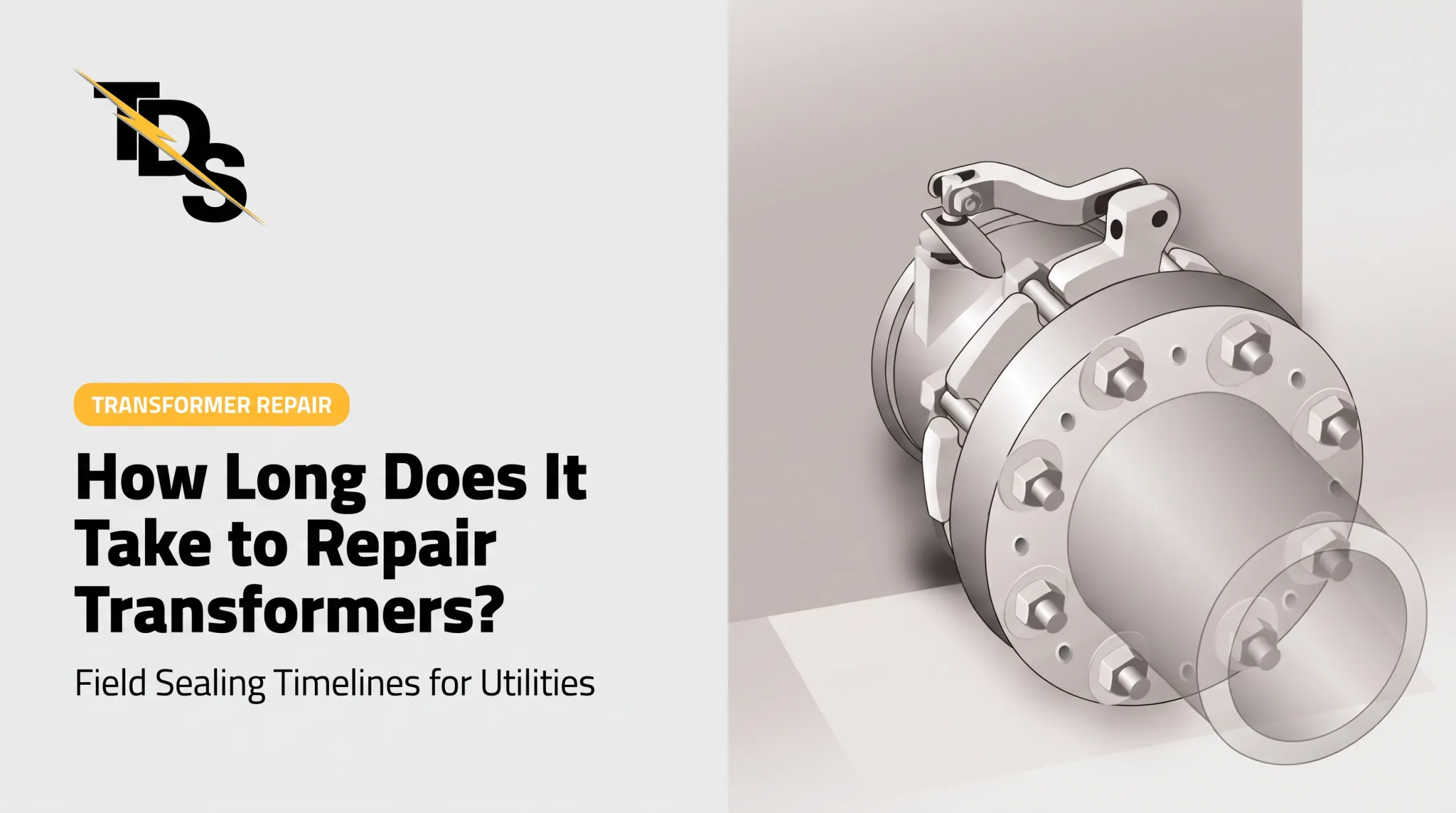
Conventional work follows a long chain: teardown, removal, transport, workshop repair, return shipment, reassembly, and recommissioning. For a 4-bolt radiator flange, the conventional fix normally means draining and removing the radiator bank, taking the transformer out of service.
That chain matters most for large, critical, hard-to-move, or revenue-producing equipment, where every step adds time and risk.
Broader than in-situ machining
In-situ machining usually means portable tools mounted on the workpiece for boring, milling, or flange resurfacing. Electrical equipment often needs something different: precise leak detection and low-pressure leak sealing that restores the seal without removing material.
What "in place" does not guarantee
In-situ does not automatically mean the equipment stays energized. It does not mean every defect can be fixed without disassembly, and it does not mean an outage is never needed.
Any in-service claim should rest on a qualified assessment, a site-specific work plan, clearance requirements, and customer approval.
Repair versus replacement
Choosing repair over replacement depends on the same practical factors:
- Defect type and structural condition
- Access, safety, and material compatibility
- Outage needs and replacement lead time
- Lifecycle cost
How In-Situ Repair and Maintenance Services Work
Inspection and equipment assessment
Technicians identify the apparatus, confirm the exact leak location, check access, and record operating condition. Confirming the source matters because without a thorough survey the failed component can be hard to identify.
A useful survey captures:
- Equipment identity and component location
- Leak medium (oil or SF6)
- Visible damage and site constraints
- The proposed repair method
For SF6, infrared laser scanning can cover an entire breaker and detect the gas's specific infrared signature. Field research on FPL switchgear documented infrared gas imaging of equipment that remained in service.
Planning, permits, and safety controls
Every job needs its own plan. It should cover:
- Energized or de-energized status and electrical clearances
- Arc-flash and shock hazards
- Lockout/tagout where applicable
- Work permits, access, and emergency procedures
OSHA 29 CFR 1910.269 limits work on or near exposed energized parts to qualified employees and requires arc-hazard assessment. Confirm which lockout rule applies instead of assuming 1910.147 alone governs utility apparatus. NFPA 70E is consensus guidance, not an OSHA regulation.
Oil and SF6 work also require containment, handling, ventilation, and recovery controls suited to the equipment and applicable US requirements. IEC 62271-4 covers gas handling for high-voltage switchgear during repair.
Selecting the repair method and materials
Match the method to the equipment, leak location, sealing component, medium, temperature, pressure, and surface condition. Compatibility with transformer oil or SF6 is non-negotiable. No single sealant suits every case; use only products backed by technical documentation for the application.
Performing the repair
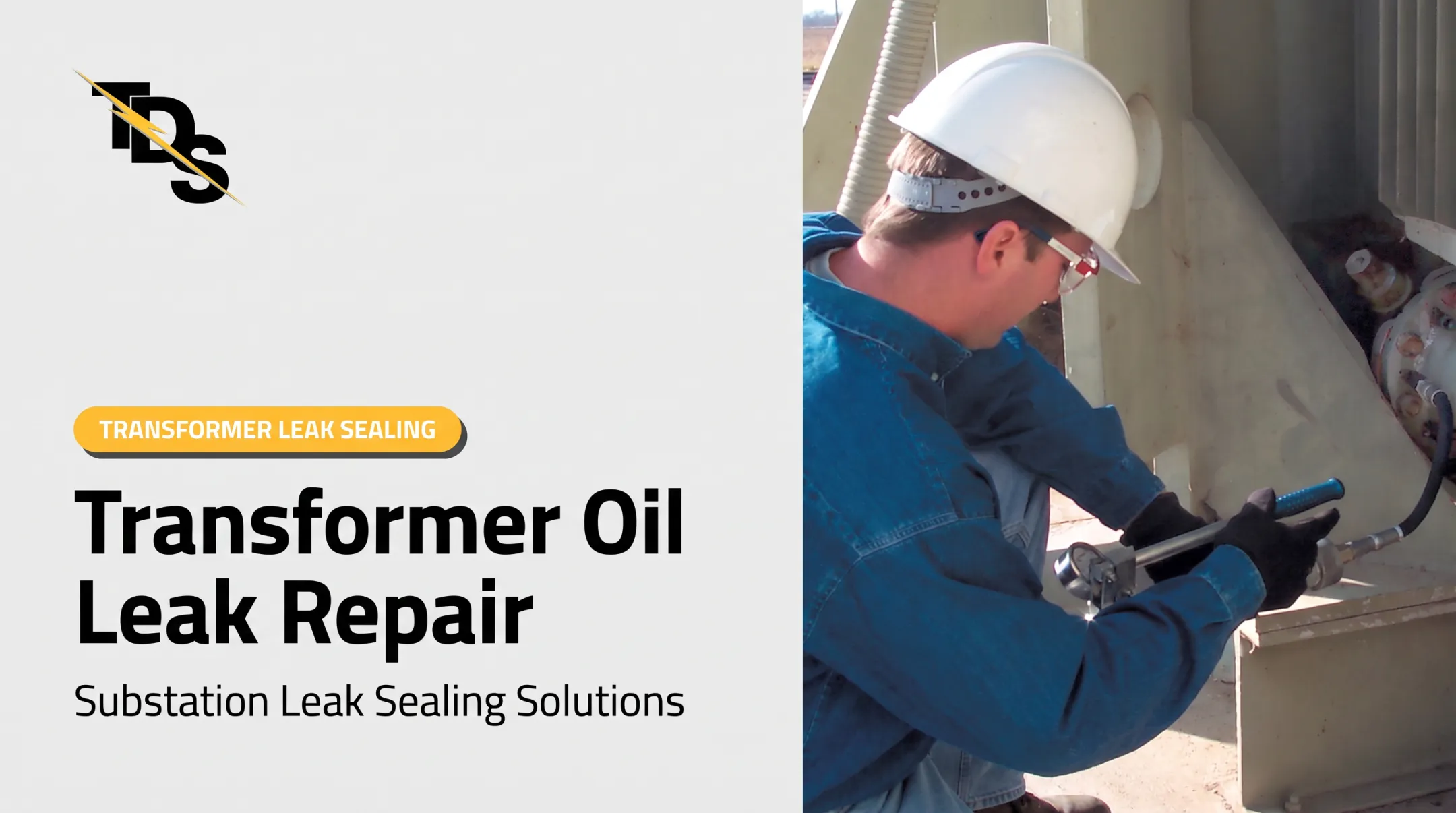
Technicians repair only the leaking component, which cuts unnecessary disassembly when equipment condition and site controls permit. Low-pressure sealing and cured-in-place gasket restoration are method-specific services, not cures for every failure.
Verification, documentation, and follow-up
Before the unit returns to normal operation, expect:
- Post-repair inspection and leak confirmation
- Equipment-specific testing and cleanup
- A written record of the asset, defect location, method, materials, results, operating status, recommendations, and warranty terms

Equipment and Applications for In-Situ Repair
Transformers and oil-filled apparatus
A 1998 DOE assessment lists common leak points:
- Gas-relay piping
- Valve packing
- CT pockets
- Tap changers
- Radiators
- Main-tank covers
EPRI adds cover and gasket interfaces, often tied to improper installation or incompatible materials.
Accessible leaks at gaskets, flanges, bushings, and fittings can suit in-situ work when the tank is structurally sound. Oil containment is part of the same call. Under 40 CFR 112, oil-filled equipment of 55 gallons or more counts toward a facility's SPCC capacity screen, and a leaking unit is an environmental exposure as well as a reliability one.
Oil and SF6 circuit breakers
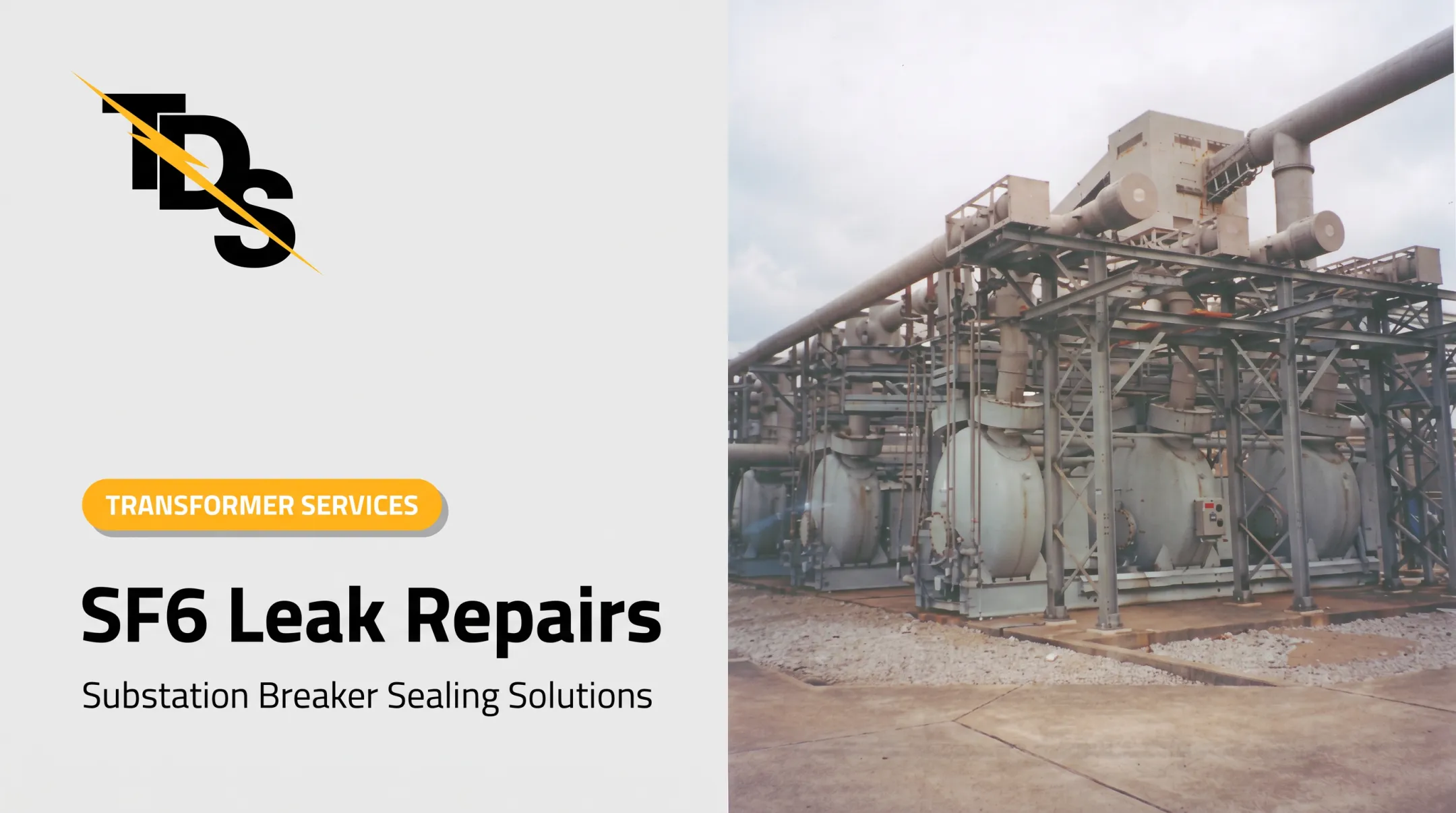
Oil and gas leaks carry different consequences. Oil leaks raise containment and cleanup concerns. SF6 leaks raise emissions concerns, since the gas has a 100-year global warming potential of 25,200 per IPCC AR6.
Confirm the medium first, then use compatible methods. Typical SF6 breaker leaks occur at
- Flange seals
- Bushings
- Gas tanks
Follow your utility's procedures and current EPA reporting requirements under GHGRP Subpart DD. California applies its own 1% annual leak limit, which is not a national figure.
GIS and related enclosed equipment
GIS can require specialized access, leak confirmation, gas-handling procedures, and experienced technicians. Common trouble spots include:
- Piping
- Flange connections
- Seam welds
Not every enclosure or defect suits in-situ repair, so a survey should settle suitability before work is scheduled.
Benefits, Limitations, and When In-Situ Repair Is Right
Reduced downtime and logistics
Replacement is slow. DOE's 2024 report says 36-month lead times were commonly quoted for large power transformers, some as high as 60 months. It also puts logistics at 3-20% of total transformer cost.

Sealing in place avoids those delays and logistics costs. A 4-bolt flange repair, for example, usually takes about two hours without draining oil.
Lower disruption to critical assets
Avoiding extensive disassembly cuts crane work, heavy lifting, transport coordination, and reassembly risk. It also limits disturbance to adjacent equipment.
Clearances, safe access, isolation where required, and final testing still apply.
Potential for in-service work
Some repairs can proceed with equipment energized, depending on access, defect location, method, risk assessment, and owner authorization. Upper-tank leaks near high-side, low-side, or neutral bushings may require de-energizing and grounding. SF6 work may need an outage for safe clearance. "Potentially energized" is never a blanket promise.
Environmental and asset-management value
Timely sealing limits oil or SF6 release, reduces contamination risk, and extends service life for repairable units. Check any environmental claim against current federal, state, and utility requirements.
When teardown or replacement is better
Conventional work may be the right call with:
- Structural damage or severe corrosion
- Inaccessible defects or uncertain leak sources
- Internal faults, which can over-pressurize a tank
- Contamination, manufacturer restrictions, or inadequate clearances
- A repair that cannot be verified
A quick checklist:
- Is the defect repairable?
- Can it be done safely?
- How critical is the asset?
- Can an outage be planned?
- Is a replacement available?
- What are the lifecycle costs and the consequences of a repeat failure?
How to Evaluate an In-Situ Repair Service Provider
Technical scope and safety qualifications
Confirm documented procedures and hands-on experience with your equipment type, oil- and SF6-filled apparatus, leak confirmation, and material compatibility. Also review:
- Technician training and OSHA-related qualifications
- Safety programs and insurance
- Contractor prequalification and your site's onboarding rules
Platforms help but do not replace proof. ISNetworld and Avetta handle contractor prequalification, SAM.gov is federal registration, and WOSB status is a contracting designation. None certifies field competence on its own.
Survey, estimate, and scope clarity
A strong proposal should name:
- Apparatus, defect location, and repair method
- Expected operating status during the work
- Exclusions, site requirements, price, and schedule
- Conditions that would change the approach
Ask whether an initial survey is offered, how failed repairs are handled, and what evidence you get if a defect can't be fixed.
A substation-focused example
Those checkpoints are easier to judge against a real specialist. Transmission & Distribution Services (TDS) focuses on low-pressure leak sealing for transformers, circuit breakers, GIS, and other oil- or SF6-filled substation apparatus. Its technicians are OSHA certified and work exclusively in substations. The company is WOSB designated and approved on ISNetworld, SAM, and Avetta.
Its free surveys photograph each leak and report the equipment, repair method, itemized cost, and outage requirements. If TDS can't fix a sample leak, the customer doesn't pay. TDS states a four-year warranty on original work, with daily work logs establishing coverage for each repair, plus an additional two-year limited extended warranty. Request the written terms and exclusions before you award the job.

Utility, generation, and substation maintenance teams can request an equipment survey or discuss a specific leak with TDS at 775-586-8300.
Frequently Asked Questions
What does "in situ repair" mean?
It means work performed at the equipment's installed location. It can reduce removal and disassembly but does not guarantee energized operation.
What are in situ techniques?
Techniques vary by asset. For substations they include leak detection, low-pressure leak sealing, cured-in-place gasket restoration, custom clamps, and verification. Portable machining and boring suit other equipment.
Can in-situ repairs be performed while equipment is energized?
Some can, when conditions allow. The decision depends on the defect, access, risk assessment, clearances, operating procedures, and customer authorization.
What equipment can in-situ repair and maintenance services address?
Repairable defects in transformers, oil and SF6 circuit breakers, GIS, and other qualifying substation apparatus. Equipment condition and access determine suitability.
How should a utility prepare for an in-situ repair survey?
Gather equipment records, leak history, photos, operating status, access details, safety requirements, outage constraints, and any manufacturer or maintenance documentation.