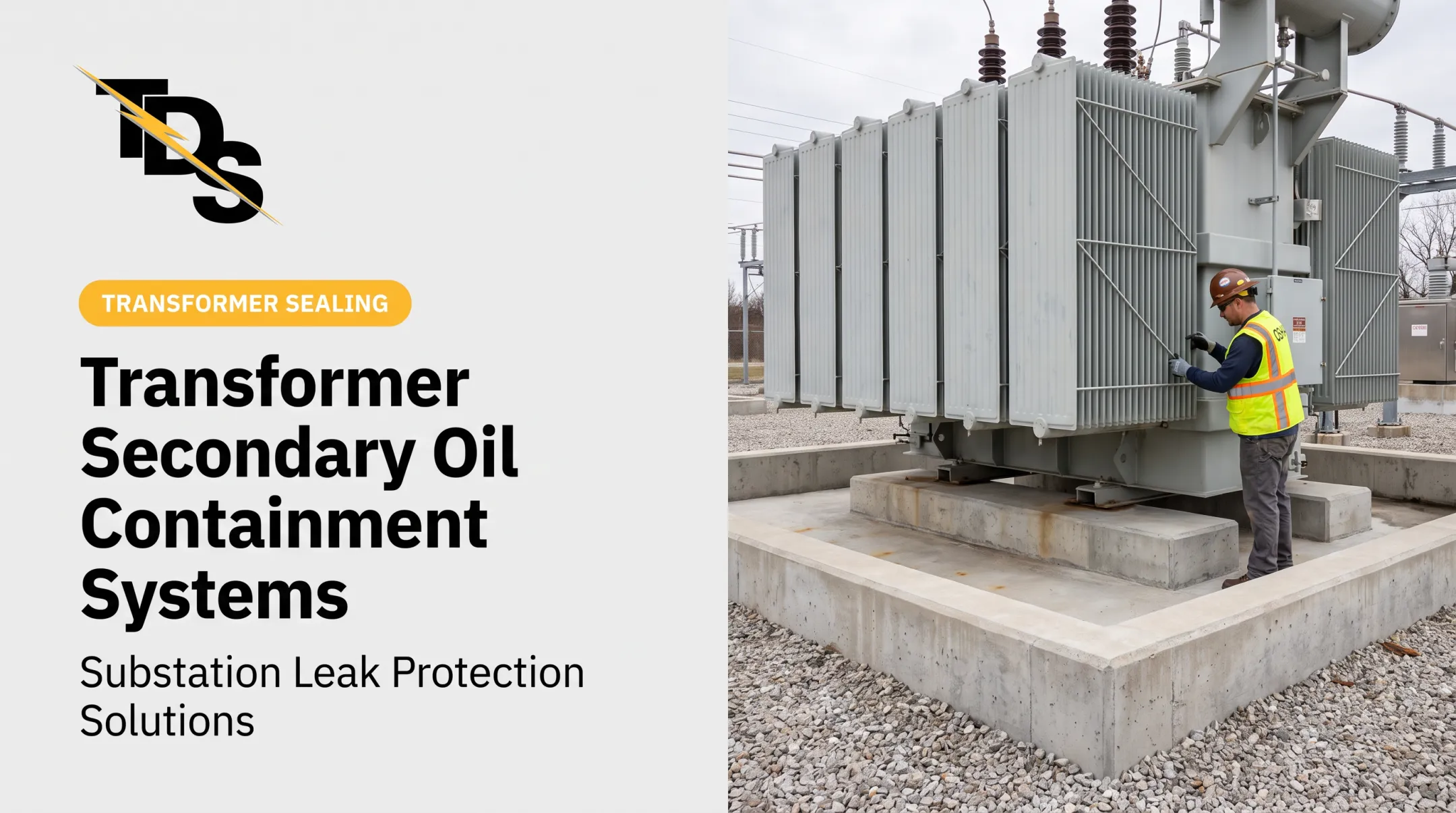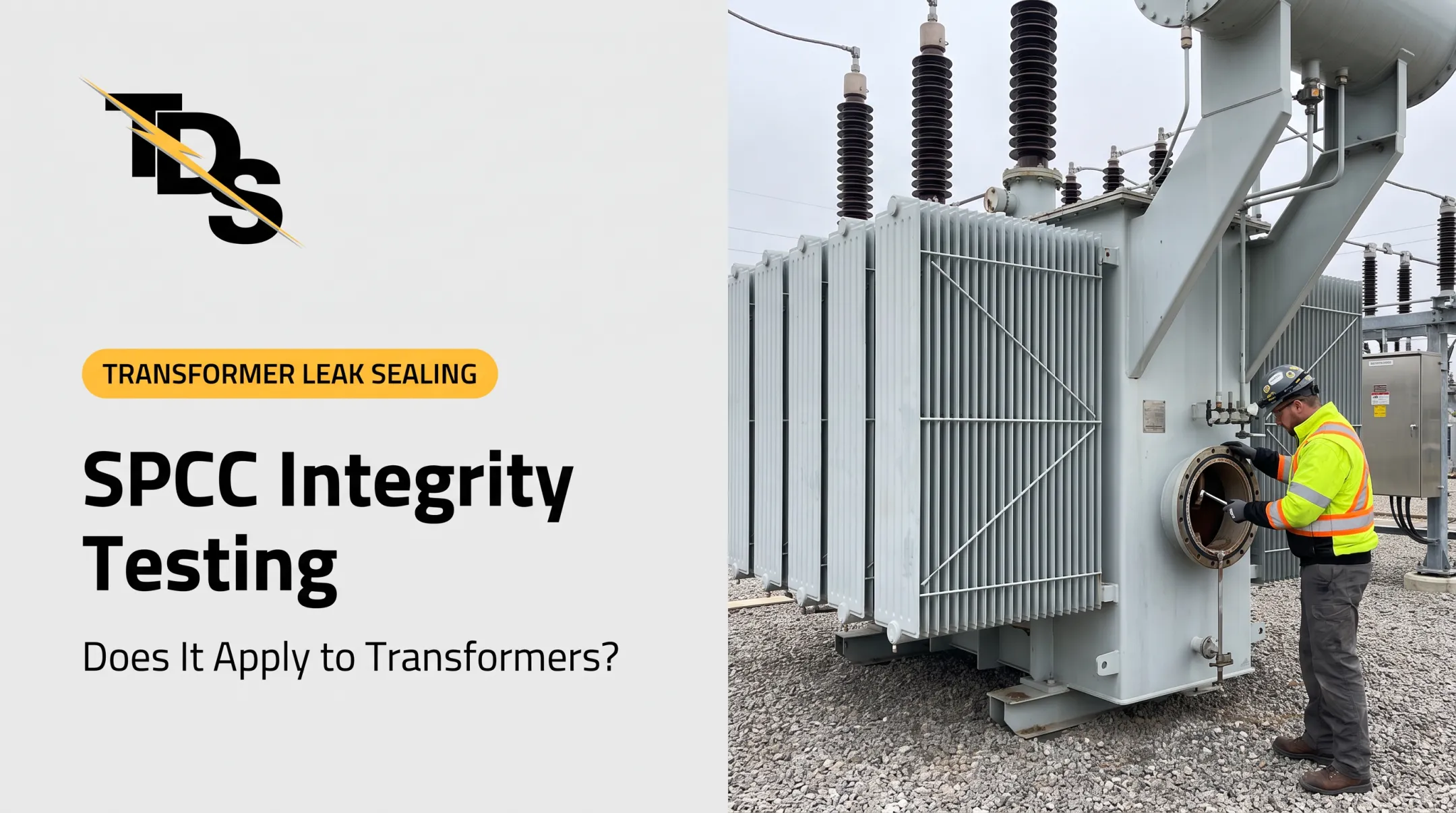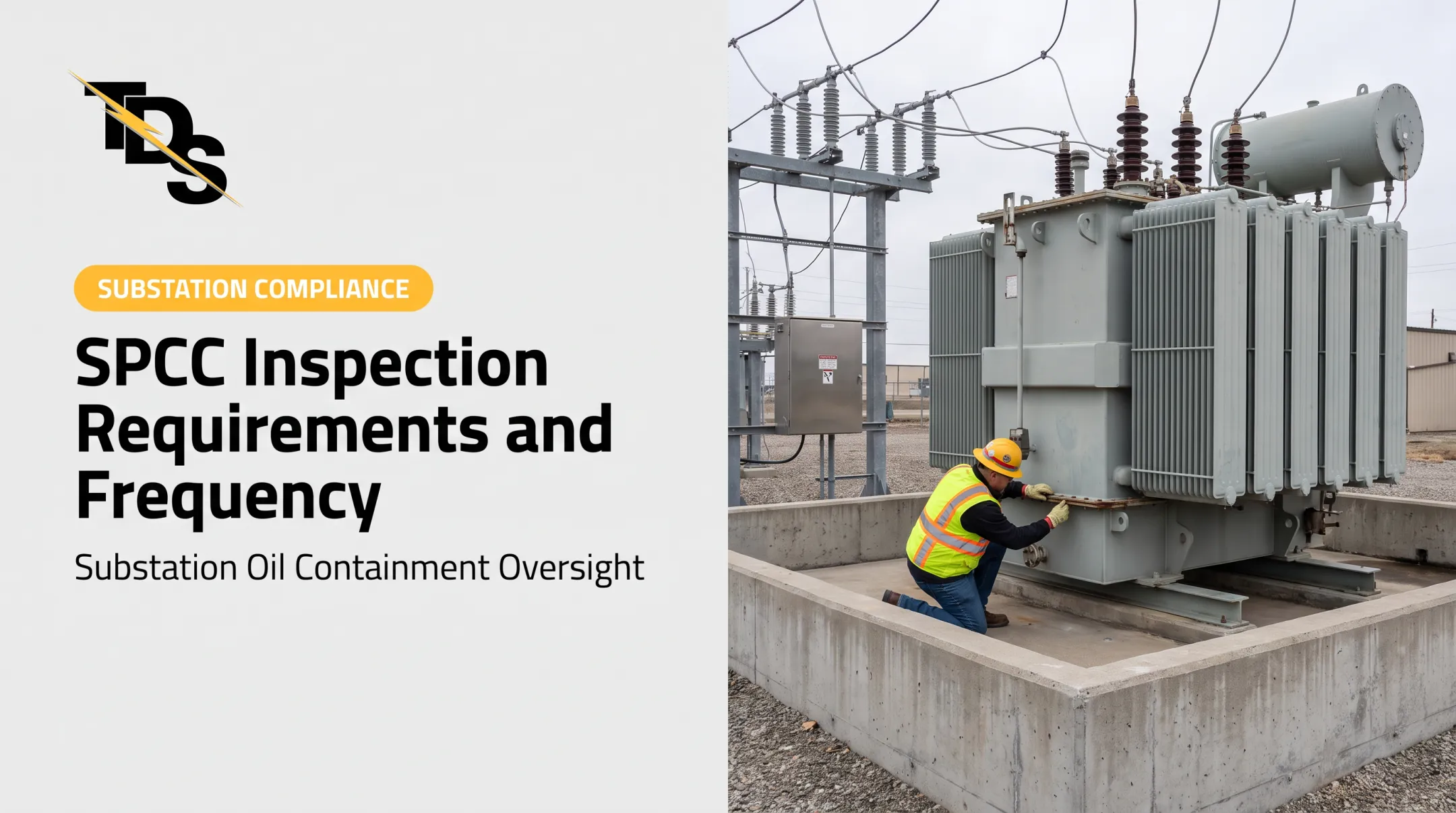

For substations and generating facilities, the stakes are real. A single transformer can hold thousands of gallons of mineral oil, and one failure can send that oil toward a creek. This article covers the federal SPCC framework, how to evaluate a containment design, what to do when containment is impracticable, where the "80% rule" fits (or doesn't), and how to handle leaks.
Key Takeaways
- Judge a transformer by the whole facility, drainage, and response context, not by oil volume or a drip pan alone.
- Containment, the SPCC plan, inspections, and spill response each cover a different piece of the risk.
- A documented alternative exists for qualified oil-filled operational equipment, but inconvenience alone doesn't justify it.
- Verify current eCFR language and get a qualified professional's review before building or changing containment.
Do Oil-Filled Transformers Need Secondary Containment?
Primary vs. secondary containment
Primary containment is the transformer tank and its sealed components. Secondary containment is whatever captures oil after a release: a berm, liner, vault, pit, or other engineered system.
The regulation doesn't define the two terms separately. Instead, 40 CFR 112.7(c) sets a functional standard.
The federal answer
For a covered facility, the default under 40 CFR 112.7 is appropriate containment or diversionary structures. The rule does not say every transformer needs a specific concrete basin or pan. Four questions drive the answer:

- Is the facility subject to the SPCC Rule?
- Does the transformer qualify as oil-filled operational equipment?
- Is secondary containment practicable?
- If not, is an alternative response approach properly documented?
Why transformers are a distinct risk
Transformers can hold large oil volumes, and many sit in substations where nobody is on site. Oil escapes through aging gaskets, radiators, bushings, valves, and tank seams.
Reclamation guidance directs inspectors to check the main tank for corrosion and leaks, especially at flanges and gaskets around bushings, valves, and radiators. TDS field work points to the same places:
- Failed gaskets at pipe flanges, bushing flanges, and drain valves
- Radiator fins and manway covers
Drip pans are not a full system
The rule lists drip pans as one possible component, but a pan is no safe harbor. A small pan can catch a slow weep at a valve. It won't handle a gasket blowout or a tank failure. Larger events need an impermeable containment area or engineered drainage control.
Rules beyond the federal baseline
State agencies, local authorities, fire officials, insurers, utility specifications, and permits may all add requirements. Common industry references include:
- IEEE 980-2021 guides oil-spill containment in substations
- NFPA 850 covers fire protection at generating plants
- FM Global Data Sheet 5-4 recommends spill containment for certain outdoor transformers
None of these is automatically an SPCC requirement, so identify the authority having jurisdiction before finalizing a design.
What EPA SPCC Requirements Apply to Oil-Filled Transformers?
Is the facility subject to the SPCC Rule?
Part 112 applies to a non-transportation facility with oil when a discharge could reasonably be expected to reach navigable waters or adjoining shorelines in harmful quantities. The exemption applies at aggregate aboveground capacity of 1,320 U.S. gallons or less, counting only containers of 55 gallons or more, per 40 CFR 112.1.
Assess the whole facility. One transformer in isolation tells you little, because EPA counts oil in equipment toward total storage capacity even when it serves an ancillary function.
Oil-filled operational equipment
Under 40 CFR 112.2, transformers are oil-filled operational equipment: the oil is present solely to support the equipment's function. That distinguishes them from bulk storage containers, which carry different rules.
Qualified equipment can use the optional 112.7(k) alternative instead of general containment. To qualify, a facility must meet a three-year discharge-history test:
- No single discharge from oil-filled operational equipment above 1,000 gallons
- No two discharges each above 42 gallons within any 12-month period
Without general containment, the Plan must document inspections or monitoring. It also needs a Part 109 oil-spill contingency plan and a written commitment of manpower, equipment, and materials, unless the facility has submitted a response plan under 112.20.
What the SPCC plan should cover
- Facility diagram and oil inventory, including type and capacity
- Written inspection procedures, with records kept three years
- Oil-handling personnel training and annual discharge-prevention briefings
- Spill-response roles and notification procedures
- Documented corrective actions
- Review at least every five years
Facilities with aggregate capacity of 10,000 gallons or less that meet discharge-history conditions may qualify for self-certification. Otherwise a licensed professional engineer must certify the Plan under 112.3(d).
The containment-capacity benchmark
You'll often hear "110% of the largest container." That figure comes from the bulk-storage provision, 112.8(c)(2), and EPA's guidance illustrates it with a 20,000-gallon tank, not a transformer.
Transformer containment follows the 112.7(c) performance standard, sized to the likely failure and quantity discharged. EPA inspector guidance says a 25-year, 24-hour storm can be a reasonable freeboard basis, but that is guidance, not a universal rule.
What is the "80% rule"?
Neither EPA, eCFR, IEEE, NFPA, nor FM Global defines an 80% transformer containment rule or ties one to SPCC. The phrase may circulate for loading, fill level, or utility practice, but it is not an SPCC requirement. Don't substitute it for the manufacturer's instructions, your SPCC plan, applicable electrical standards, or the engineered design.

How Should a Transformer Containment System Be Evaluated?
Define the release scenario and capacity
Start with the nameplate oil volume, the largest unit in the containment area, nearby oil-filled assets, and credible failure scenarios. Seattle City Light Standard 0735.50 (effective November 2025) offers one utility benchmark: nameplate oil volume plus a minimum 25-year, 6-hour design storm. That is a utility-specific criterion, not a federal minimum.
Usable capacity is smaller than gross volume. Subtract displacement from pads and piers, account for stone void space, slopes, and walls, and don't count gross stone volume as capacity without a site-specific design basis.
Weather, drainage, and pathways
Plan for rain, snowmelt, and stormwater flow. Check nearby drains, cable trenches, soil permeability, groundwater, and waterways. The goal is to keep oil from bypassing or overtopping the system.
Useful controls include impermeable liners, oil-water separators, outlet shutoff valves, and safe rainwater removal. Confirm that every material is compatible with transformer oil.
Substation safety constraints
Containment work happens around energized equipment. Account for:
- Electrical clearances and grounding grids
- Fire protection and cooling equipment
- Crane access, fencing, and roads
Standing water can create new hazards. FM Global's data sheet ties containment to fire protection and emergency drainage. Qualified electrical, environmental, and civil professionals should review any modification.
Comparing common approaches
| Approach | Notes |
|---|---|
| Pits, berms, walls, curbs | Listed in 112.7(c); must stay impervious and hold oil until cleanup |
| Pad with sealed liner | Seattle City Light requires sealed pad and liner penetrations |
| Basin, sump, separator | Needs periodic maintenance; Seattle caps basin slope at 2% |
| Gravel bed | Acceptable only if drainage can't become a conduit to surface waters |
| Pans, spill kits, blankets | Active measures; must suit the likely release and response conditions |
Compare options on:
- Capacity and impermeability
- Stormwater handling
- Installation disruption and inspection access
- Fire considerations, durability, and long-term maintenance
Build in inspection and maintenance
Containment only works if it stays accessible, sound, and oil-compatible. Plan for:
- Routine visual inspections and leak detection
- Wall and liner integrity checks
- Drain and valve condition checks
- Sediment and debris removal
- Safe water management, with records
- Documented corrective actions
Note that the rainwater-drainage steps in 112.8(c)(3) apply to bulk-storage dikes, not directly to transformers. Still, they're a sensible model.
What If Secondary Containment Is Impracticable?
Section 112.7(d) allows a documented alternative when containment isn't practicable. The Plan must explain why, include a Part 109 contingency plan (unless a response plan was submitted), and carry a written commitment of response resources. A PE certifies the Plan unless qualified-facility provisions apply.
Impracticability is site-specific. EPA guidance treats these factors as relevant:
- Space or geographic limits
- Zoning, fire codes, and safety
- Good engineering practice
- Electrical safety, precipitation, and site layout
- Environmental sensitivity and response time
Economic cost may be considered, but a preference for a cheaper contingency plan does not by itself establish impracticability.
Keep the two pathways straight. The 112.7(k) alternative for qualified equipment is separate and doesn't require an individual impracticability determination, but it does require inspections or monitoring.

An alternative never removes other duties:
- Preventive maintenance
- Spill reporting and cleanup
- Plan updates
- Stricter state, local, permit, fire-code, or utility requirements
The cost of getting it wrong can be steep. EPA reports that a 1998 transformer explosion at Allegheny Power's Belmont substation sent oil into tributaries of Cow Creek. Each of three transformers held about 27,000 gallons.
The EPA settlement cited roughly $450,000 in containment and cleanup costs and a $252,000 penalty. The complaint alleged SPCC violations for failing to submit a Plan, not a finding that containment was absent.
How to Prevent and Respond to Transformer Oil Leaks
Prevention
Small leaks become big ones. A practical routine looks like this:
- Inspect known leak points on a schedule.
- Trend oil levels and visible seepage.
- Investigate recurring leaks.
- Document equipment condition.
- Prioritize repairs before a seep becomes a release.
Reclamation's maintenance guidance recommends in-depth inspections after one month in service and yearly, and advises against ignoring small leaks. It links deteriorated gaskets and seals to moisture ingress.
About 90% of preventable bushing failures involve moisture entering through leaky gaskets, cracks, or seals, according to Reclamation's transformer manual. That's a bushing-failure figure, not a spill rate. Follow the manufacturer's and your utility's maintenance guidance for the specific unit.
Initial response
First steps include:
- Protect personnel and restrict access
- Follow the facility emergency plan
- Stop or isolate the source only when authorized and safe
- Protect drains and waterways
- Notify environmental and operations personnel
- Document the incident
Reporting thresholds differ. A sheen on water is a harmful discharge under 40 CFR 110.3, and the person in charge must notify the National Response Center immediately.
Separately, 40 CFR 112.4 requires a report to the EPA Regional Administrator within 60 days after a discharge over 1,000 gallons, or two over 42 gallons within 12 months. Safety also limits who can act on the equipment: under OSHA 1910.333, only qualified persons may work on energized parts, and live parts must be deenergized unless that is infeasible or creates added hazard.

Where leak sealing fits
Transmission & Distribution Services specializes in low-pressure leak sealing for oil-filled substation equipment. Its cured-in-place gasket method can replace failed OEM gasket material without traditional disassembly, and many repairs can be done with equipment in service when conditions allow. Its technicians work only in substations.
TDS offers a free equipment survey that photographs each leak and lists the location, equipment, repair method, itemized cost, and outage requirements. Repairs carry a four-year warranty, and daily work logs tie back to the survey. Leak repair complements containment, SPCC planning, inspections, and spill response. It doesn't replace them.
After the repair
- Verify the leak source is corrected
- Clean up and inspect the containment area
- Update inspection records and corrective-action logs
- Revise the SPCC plan if equipment or procedures changed
Frequently Asked Questions
Do oil-filled transformers need containment?
It depends on SPCC applicability, the oil-filled operational equipment provisions, site conditions, and state or local rules. Verify the current rule and your facility's obligations.
What are the EPA oil containment requirements for transformers?
Covered facilities must evaluate secondary containment under 112.7(c), keep a Plan, and inspect. Qualified equipment may use the 112.7(k) alternative. There is no universal containment percentage.
What is the 80% rule for transformers?
The phrase can refer to different loading or design concepts and isn't an EPA containment rule. Check the manufacturer, utility standard, and governing regulation.
What is secondary containment for a transformer?
It's a barrier, basin, pit, liner, berm, vault, or similar engineered control that captures oil released from the primary tank or components before it reaches soil, drains, or waterways.
What should a facility do when a transformer develops an oil leak?
Follow emergency and SPCC procedures, protect people and drainage paths, notify responsible personnel, and document the release. Then arrange qualified repair and confirm cleanup is complete.