
Many maintenance teams struggle with the same question: is this leak coming from a worn gasket, a loose fastener, or something more serious inside the bushing itself? The visible oil trail doesn't always point to the actual source. Oil can travel along a tank wall or mounting surface before it ever drips where you can see it.
This article walks through how bushings work, why they leak, how to diagnose the problem safely, and when a repair makes more sense than a full replacement. We'll also cover when it's time to bring in a specialist.
Key Takeaways
- Bushing leaks usually trace to gaskets, flanges, fasteners, or damaged sealing surfaces; residue alone doesn't confirm an active leak.
- A worn seal is often repairable; cracked insulation, internal electrical faults, or severe corrosion usually aren't.
- Safe diagnosis starts with containment, cleaning, and source confirmation, not bolt-tightening or sealant sprayed on a guess.
- Energized work requires qualified personnel under approved utility procedures, with specialist support when needed.
What Is a Transformer Bushing and Why Do Bushings Leak?
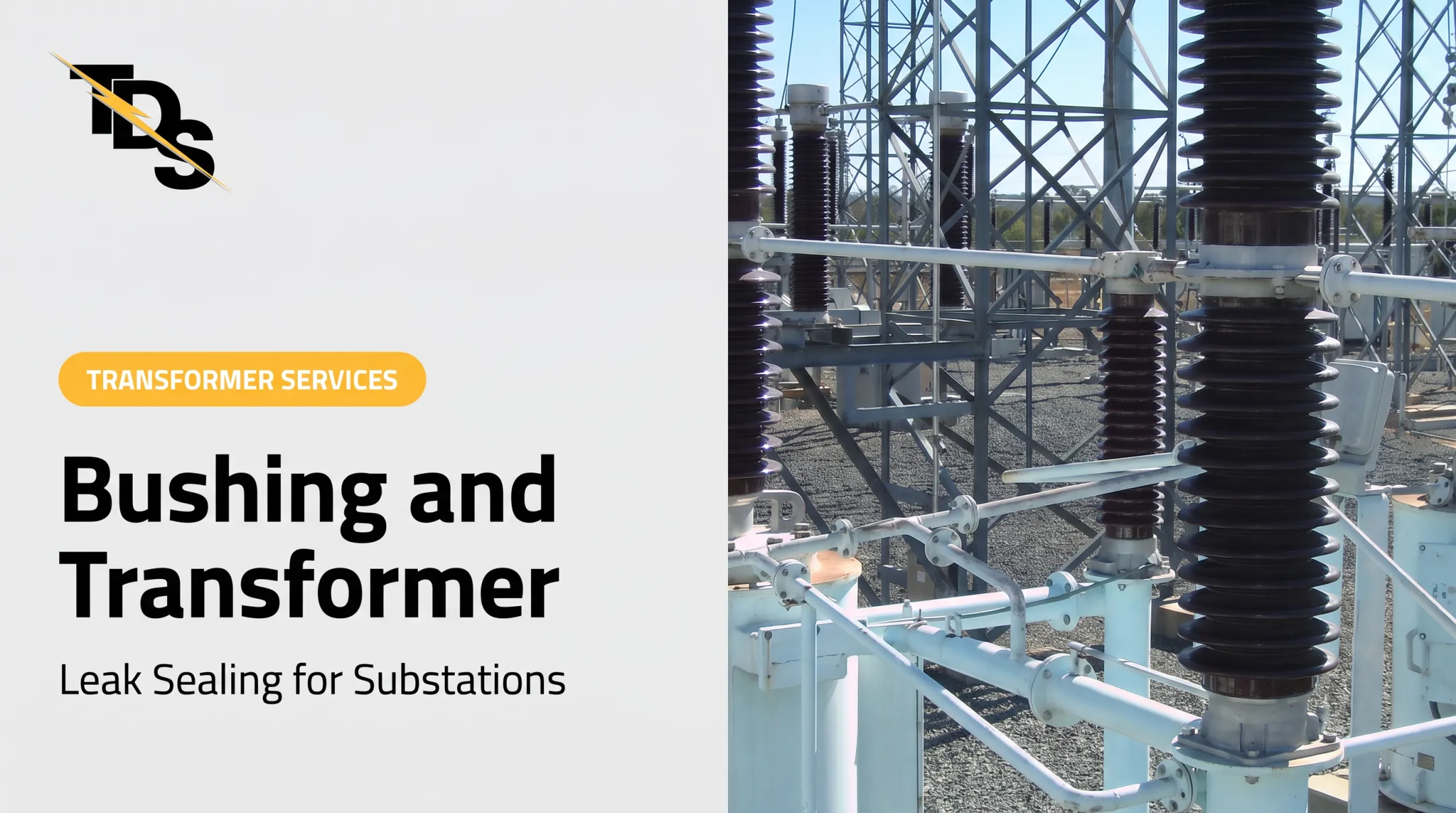
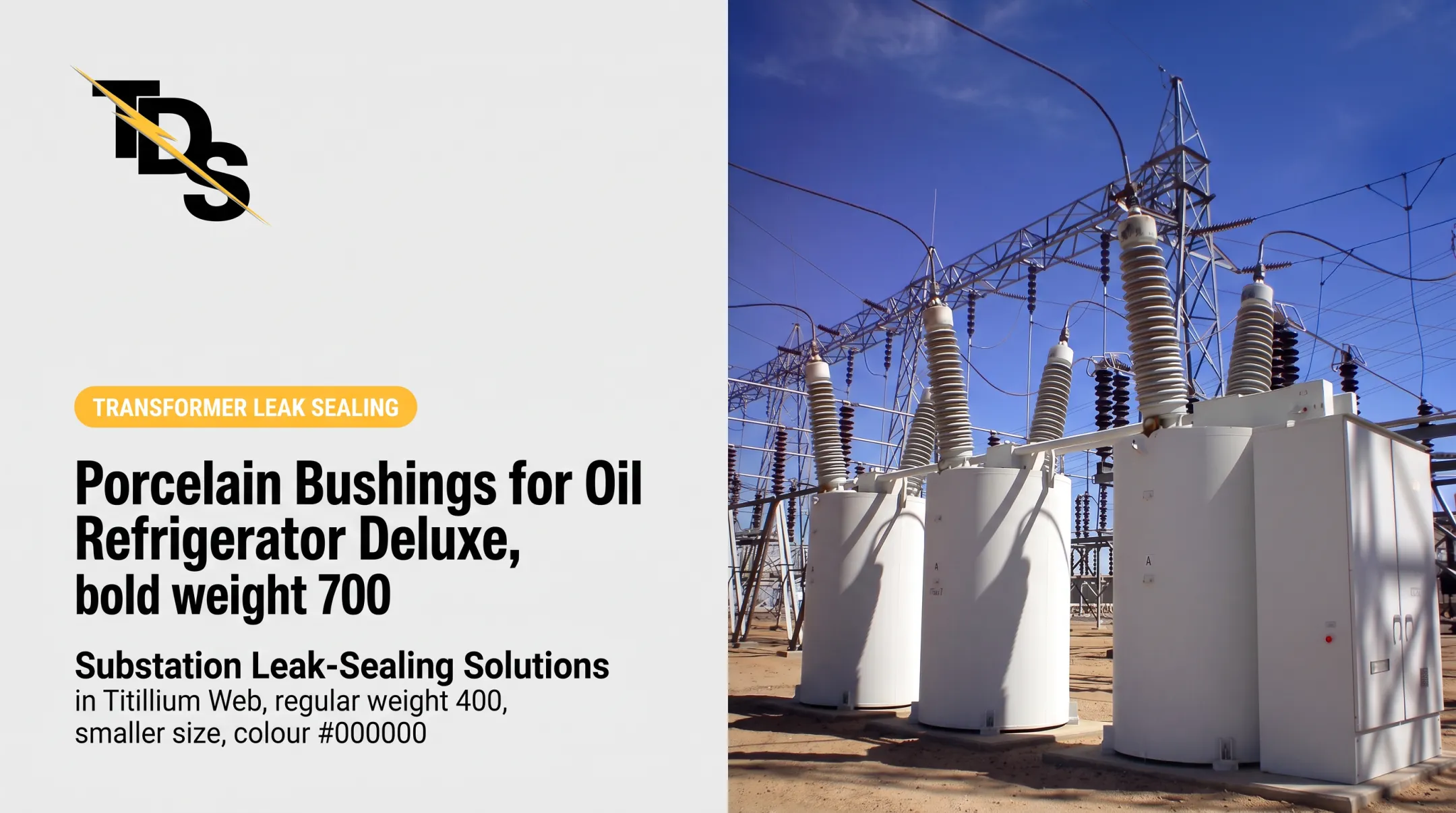
A transformer bushing is an insulated component that lets a high- or low-voltage conductor pass safely through the grounded tank wall. It keeps the conductor electrically isolated from the tank while maintaining a mechanical seal that holds the oil inside.
The IEC defines a bushing as a device that carries a conductor through a partition, such as a transformer tank, while insulating it from that partition. The mounting flange is considered part of the bushing itself, not a separate accessory.
Several components work together to keep this seal intact:
- The bushing body: porcelain or polymer, with the internal insulation system
- The mounting flange or pocket: where the bushing seats against the tank
- The gasket: the actual sealing surface between bushing and flange
- Fasteners: the bolts that compress the gasket to the correct tension
- Transformer oil: surrounding insulation that the seal is designed to contain
External Leak vs. Internal Fault
An external oil leak at the bushing interface does not automatically mean there's an internal electrical fault. A sound external seal also doesn't guarantee the bushing's insulation is healthy. These are two separate conditions that require separate checks.
Why Seals Degrade Over Time
Gaskets have a service life. GE Vernova's bushing installation documentation specifically instructs installers to check porcelain-to-metal joints for leakage after mounting, a reminder that this interface is a known failure point rather than an afterthought.
Degradation typically comes from a mix of factors:
- Thermal expansion and contraction
- Vibration
- Weather exposure
- Uneven bolt compression
- Aging of the original gasket material
Defective gasket composition or poor installation workmanship can also shorten a seal's life well before its expected end point.
Common Transformer Bushing Leak Problems and Root Causes
Source identification matters more than it sounds. Oil can migrate along the bushing body, down a tank wall, or across nearby hardware before pooling at the lowest visible point. The drip you find isn't necessarily the leak's origin.
A T&D World investigation into low-voltage bushing leaks found that oil from a horizontally mounted bushing had entered a bus duct without showing up during normal inspection rounds. That's a useful reminder to check concealed interfaces, not just the obvious ones.
Bushing Gasket or Flange Seepage
Watch for oil staining, dampness, slow drips, or a recurring wet ring around the base flange. Common causes include:
- Gasket compression loss over time
- Natural gasket aging and hardening
- Uneven bolt loading across the flange
- Incorrect torque during a prior installation
- Contamination on the sealing surface
- Repeated thermal cycling
Loose, Uneven, or Damaged Fasteners
Under-torqued, over-torqued, corroded, or unevenly tightened bolts can distort the gasket and open a leak path. Always follow the manufacturer's torque values and tightening sequence. No single "safe" torque number applies across every bushing design.
Cracked, Damaged, or Deteriorated Components
Visible porcelain or polymer cracking, flange damage, abnormal oil levels, unusual heat, or signs of electrical discharge point to a bushing condition issue, not a simple gasket problem. These signs warrant engineering or manufacturer assessment before any sealing attempt.
Environmental and Operational Contributors
Moisture, dirt, salt or chemical exposure, corrosion, vibration, pressure changes, and physical impact all chip away at seal integrity. Ignoring an active leak has real consequences:
- Oil loss and falling insulation margin from moisture ingress
- Contamination of the insulating system
- Higher risk of equipment damage or an unplanned outage
How to Diagnose and Repair a Transformer Bushing Oil Leak
Before touching anything, follow the utility's switching, approach-boundary, lockout/tagout, arc-flash, oil-handling, and environmental procedures. Diagnosis comes before repair, and safety comes before diagnosis.
Step 1: Make the Site Safe and Assess Severity
Determine whether the transformer is energized, whether oil is actively flowing, and whether it's reaching drains or soil. Check for alarms, abnormal temperatures, pressure changes, smoke, or arcing. If you see any sign of electrical or thermal distress, follow emergency procedures and contain the oil if it's safe to do so. Contact the transformer owner, manufacturer, or a qualified specialist. This isn't the moment for an improvised fix.
Step 2: Confirm Whether It's an Active Leak
Clean the suspected area using an approved method, photograph the condition, and mark the location. Monitor for renewed oil once the equipment returns to comparable operating conditions. Inspect the flange, gasket perimeter, mounting hardware, body, oil-level indicators, nearby valves, radiators, and tank welds so you don't mistake oil from another source for a bushing leak.
Step 3: Classify the Leak and Scope the Repair
Separate a gasket or interface leak from a cracked bushing, damaged flange, corroded tank, weld defect, or problem originating elsewhere. Review transformer records, bushing type, oil type, manufacturer instructions, and prior repairs before picking a method.
Step 4: Apply the Appropriate Repair
If the leak is caused by fasteners or gasket compression: Follow the manufacturer's torque values, tightening pattern, and inspection requirements. Don't tighten by feel: excessive force damages the gasket or flange. If the gasket needs full replacement, that means an outage, isolation, oil management, disassembly, inspection, reassembly, and leak verification, following the OEM manual step by step.
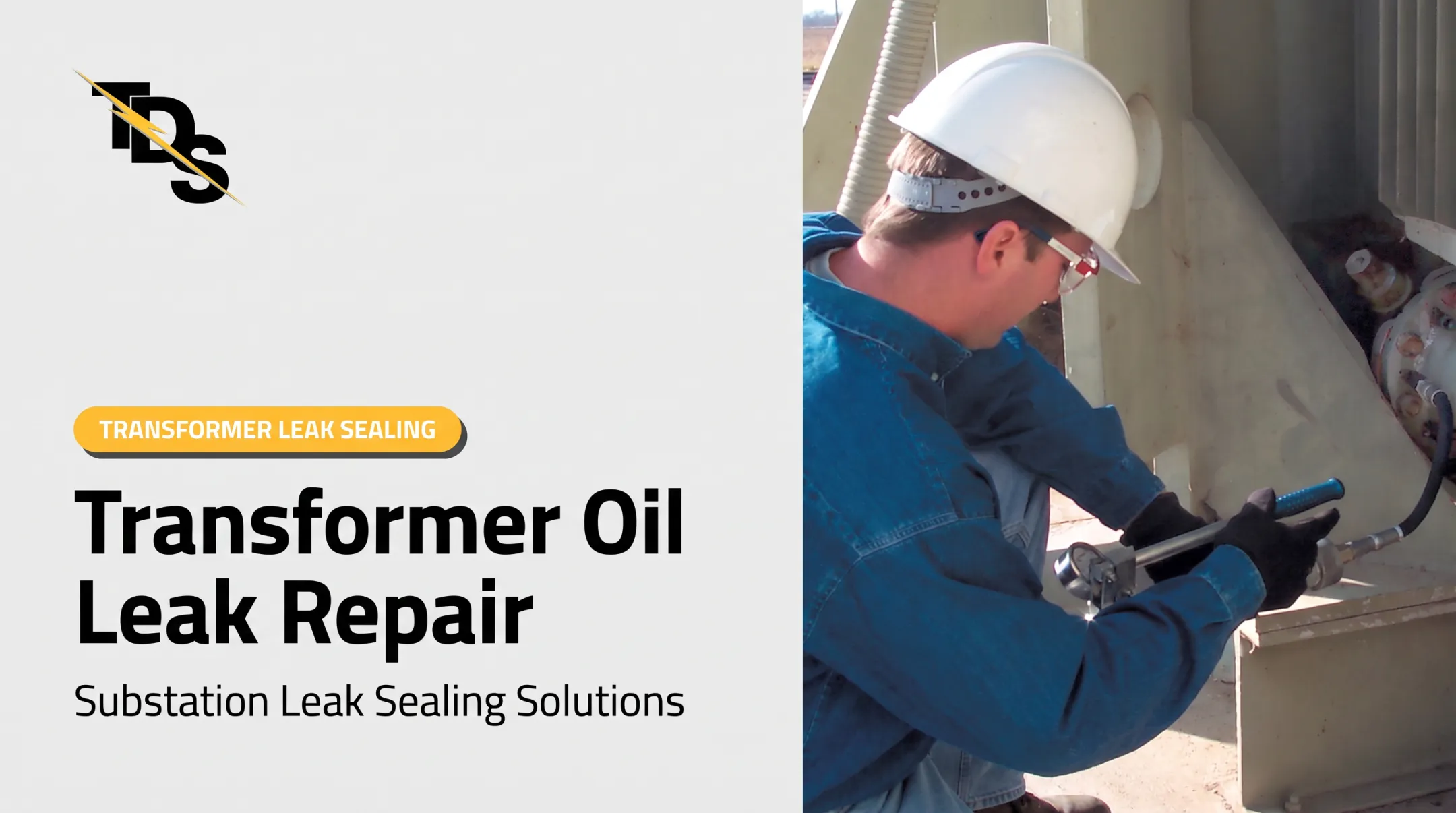
If a non-disassembly sealing repair fits: A qualified specialist can sometimes address an external gasket or interface leak using a compatible low-pressure, cured-in-place sealing method. This can reduce the disassembly, oil draining, and downtime that a conventional regasketing job requires, when equipment and site conditions allow it.
This is where Transmission & Distribution Services (TDS) fits in. TDS focuses exclusively on substation leak sealing and starts with a free equipment survey to confirm the exact leak location before proposing a repair method. Its sealant is formulated to be compatible with transformer oil, but suitability still depends on the specific bushing and operating conditions. Verify before committing.
If the bushing or tank is physically damaged: Cracked insulating material, severe corrosion, damaged mounting surfaces, or evidence of internal deterioration usually call for component replacement, factory repair, or a planned outage.
Step 5: Test and Document the Repair
Reinspect the area for renewed seepage. Confirm oil level and containment condition. Complete any electrical, insulation, power-factor, capacitance, or bushing diagnostic tests the owner or manufacturer specifies. Record the leak location, cause, repair materials, torque or installation data, photographs, test results, and a follow-up inspection date based on OEM and utility guidance.

When Should You Repair or Replace the Bushing?
This decision weighs safety, electrical condition, mechanical integrity, outage risk, equipment age, and lifecycle cost, not just the price tag on a gasket versus a new bushing.
Repair the existing seal when:
- The bushing body and insulation system are intact
- The issue is confirmed as an external gasket or interface leak
- Sealing surfaces remain serviceable
- The chosen repair method suits the equipment and approved procedures
Replace the bushing when:
- There's cracking, overheating, tracking, or partial discharge evidence
- Diagnostic results come back abnormal
- The flange, studs, or tank interface is too damaged or corroded to support a reliable repair
- Repeated repairs on the same spot keep failing
Siemens lists oil loss or an identified leak, bushing damage, combustible gas in bushing oil, and power-factor, capacitance, or partial-discharge readings above manufacturer limits among its replacement triggers. Those criteria support internal assessment, separate from whether the external seal looks fine.
Consider broader transformer work when:
- The leak originates from a weld, radiator, or tank wall
- Oil contamination or moisture damage is suspected
- The unit's overall condition makes a larger intervention the smarter long-term call
A documented engineering assessment and lifecycle-cost comparison (outage planning, oil handling, lifting requirements, and testing) beats guessing.

TDS can be a useful resource for the initial leak survey and a low-pressure sealing assessment. Not every bushing leak is repairable in place, and not every job can be done energized. A proper survey tells you which category you're in before you commit to a path.
Mistakes to Avoid and Preventive Measures
Some habits turn a manageable leak into a bigger headache. Avoid these:
- Treating visible oil staining as proof of the leak source without confirming it
- Applying incompatible sealants without checking fluid compatibility
- Tightening fasteners without OEM torque specs
- Working on energized equipment outside approved procedures
- Ignoring slow seepage because it "isn't that bad yet"
- Skipping post-repair testing
- Assuming a good external seal means the bushing's electrical condition is fine
On the compliance side, the EPA counts oil-filled equipment toward a facility's 1,320-gallon aboveground SPCC threshold when individual units hold 55 gallons or more. An undocumented, unchecked leak doesn't just risk equipment damage ; it can complicate a facility's regulatory standing.

Build these habits into your maintenance routine:
- Run routine visual inspections and track oil-level or pressure changes
- Monitor thermal and electrical condition at planned intervals
- Check for corrosion at pockets, flanges, and concealed interfaces
- Verify environmental containment is in place and functional
- Photograph and trend any recurring leak rather than treating each one as isolated
Train crews to verify sealant and gasket compatibility with the transformer fluid before applying anything, and to escalate unusual heat, discharge, cracking, rapid oil loss, or repeat leakage immediately. Review manufacturer recommendations and utility maintenance standards periodically, since equipment guidance changes as diagnostic methods improve.
Conclusion
Every bushing oil leak deserves a real diagnosis at the exact source, not a guess based on where the drip ended up. Treat it as both a reliability issue and an environmental one.
Some external gasket and interface leaks are genuinely repairable without a major teardown. Others (cracked insulation, compromised internals, severe corrosion, or major tank leaks) need replacement or broader transformer work instead.
Before choosing between conventional disassembly, specialist low-pressure sealing, or replacement, get a documented assessment from qualified personnel. That one step saves more time and money than any shortcut.
Frequently Asked Questions
How much does it cost to repair a transformer?
Cost depends on the leak source, bushing and transformer design, access, outage requirements, oil handling, testing, and whether replacement is needed. A site assessment gives a far more reliable number than any flat-rate estimate.
What is the best solution for transformer oil leakage?
It depends on whether the leak comes from a gasket, flange, bushing body, weld, radiator, or nearby component. Compatible specialist sealing or OEM repair can both work — but safe diagnosis of the actual source always comes first.
What happens if a transformer leaks oil?
The transformer loses insulating fluid and may take on moisture or air through the same opening, which reduces insulation and cooling performance. Left unaddressed, this can lead to equipment damage, environmental exposure, or an unplanned outage.
What are some signs a transformer is failing?
Persistent leaks, abnormal temperature, unusual sound, pressure or oil-level changes, cracking, abnormal bushing diagnostic results, alarms, smoke, or visible discharge are all warning signs. Any urgent sign calls for immediate qualified assessment.
What does a bushing do on a transformer?
A bushing provides an insulated passage for a conductor through the grounded transformer tank. It maintains electrical clearance while keeping the mechanical interface oil-tight.
How much oil is in a 200 kVA transformer?
Oil volume varies significantly by design, manufacturer, voltage class, cooling arrangement, and enclosure. Check the nameplate, manual, or manufacturer data sheet for that specific unit rather than relying on a general figure.