
Introduction
A transformer rarely fails without warning. The oil usually tells the story first, through rising moisture, shifting gas levels, or slow oxidation. The problem is that many operators collect samples without a clear plan for reading them.
The stakes are real. A U.S. Department of Energy study of insurance claims found that electrical disturbances caused 28 percent of power transformer failures between 1991 and 2010.
That figure describes the share of observed failures, not the effect of oil testing. Still, it shows how much stress these assets absorb.
This guide covers the main tests, the standards behind them, and a repeatable process for turning lab results into maintenance decisions.
Key Takeaways
- Oil testing checks the fluid's insulating and cooling performance and flags signs of transformer deterioration.
- Core tests include breakdown voltage, moisture, dissolved gas analysis (DGA), acidity, interfacial tension, and furans.
- ASTM defines test methods; IEEE, IEC, manufacturers, and owners define how to use the results.
- No single ppm value is "acceptable" for transformer oil.
- Sampling quality, trending, and follow-through matter as much as the lab work.
What Is Transformer Oil Testing, and Why Does It Matter?
Transformer oil testing is the laboratory and field evaluation of insulating fluid. It answers two questions: is the oil still fit for insulation and cooling, and does it carry evidence of equipment problems?
Utilities and plants use it at several points:
- New-oil acceptance and commissioning
- Routine condition monitoring
- Verification after maintenance or repair
- Troubleshooting alarms and investigating abnormal events
Three Testing Approaches
- Screening tests catch visible contamination or broad changes in oil condition.
- Routine condition tests trend moisture, dielectric strength, oxidation, and contamination.
- Diagnostic tests, such as DGA and furan analysis, point to internal thermal, electrical, or cellulose-insulation problems.
Degraded oil can lose insulating strength, form sludge, impair cooling, and raise the risk of arcing or overheating.
Oil results are one input. Read them alongside load history, temperatures, alarms, electrical tests, inspections, and manufacturer guidance. The Bureau of Reclamation's FIST 3-30 manual treats DGA trends and oil properties as key condition evidence, and cautions against deciding from one result or one type of test.
What Tests Are Performed and Which Standards Apply?
Keep three things separate: a test method (how to measure), a guidance document (how to interpret), and an action limit (what to do). Always confirm the current edition of any standard before relying on it.
Dielectric, Moisture, and Visual Tests
- Breakdown voltage (ASTM D877 and D1816): D877 uses disk electrodes and suits in-use liquids; D1816 uses VDE electrodes. ASTM notes a high D877 result does not prove low contaminant levels.
- Water content (ASTM D1533): Coulometric Karl Fischer titration. Moisture weakens dielectric strength and attacks cellulose. Oil temperature matters when judging saturation.
- Visual and color (ASTM D1524 and D1500): Useful for screening and trending. Color alone cannot establish transformer health.
Chemical Aging and Physical Tests
- Acidity (ASTM D974) and interfacial tension (ASTM D971) reveal oxidation by-products and contaminants.
- Power factor (D924) and resistivity (D1169): Electrical checks selected by fluid, equipment, and diagnostic need.
- Viscosity (D445), density (D4052), flash point (D92), and inhibitor content (D2668): Physical and additive tests matched to the same factors.
Fault and Insulation-Aging Diagnostics
- DGA (ASTM D3612): Three extraction procedures exist: vacuum extraction, stripper column, and headspace. Evaluate gas patterns and trends, never one gas in isolation.
- Furans (ASTM D5837): Furanic compounds are cellulose degradation products and complement DGA.
- Dissolved metals (D7151) and PCBs (D4059): Condition-specific or compliance-related. D4059 is an analytical method, not EPA's classification rule. Under 40 CFR 761.3, a PCB Transformer contains 500 ppm PCBs or more.

Guidance Documents
| Standard | Role |
|---|---|
| IEEE C57.104-2019 | Interpreting gases in mineral oil-immersed transformers |
| IEEE C57.106-2015 | Acceptance and maintenance of mineral oil; listed Inactive-Reserved, so check current status |
| IEC 60422:2024 | Supervision and maintenance of in-service mineral oil |
| IEC 60296:2020 | Specification for unused mineral oil |
| IEEE C57.147-2018 | Natural-ester acceptance and maintenance |
Acceptance criteria shift with new versus in-service oil, mineral versus ester fluid, voltage class, age, criticality, and owner procedures. No single limits table covers every combination.
The ppm Problem
Moisture, hydrogen, acetylene, and other parameters are all reported in ppm. FIST also expresses gas generation as ppm per month. Before judging a number, identify the analyte, the unit, whether it is a concentration or rate, the sample type, and the governing standard.
How Transformer Oil Testing Works: Step by Step
This process turns a one-off result into a repeatable program. Common failures include:
- Poor sample handling
- Missing equipment history
- Isolated interpretation
- No corrective follow-up
Step 1: Define the Objective
Identify the transformer, fluid type, history, and reason for testing: routine monitoring, commissioning, suspected contamination, alarms, leakage, or post-repair checks. State the decision the results must support, such as continued service, closer monitoring, oil treatment, internal inspection, or outage planning.
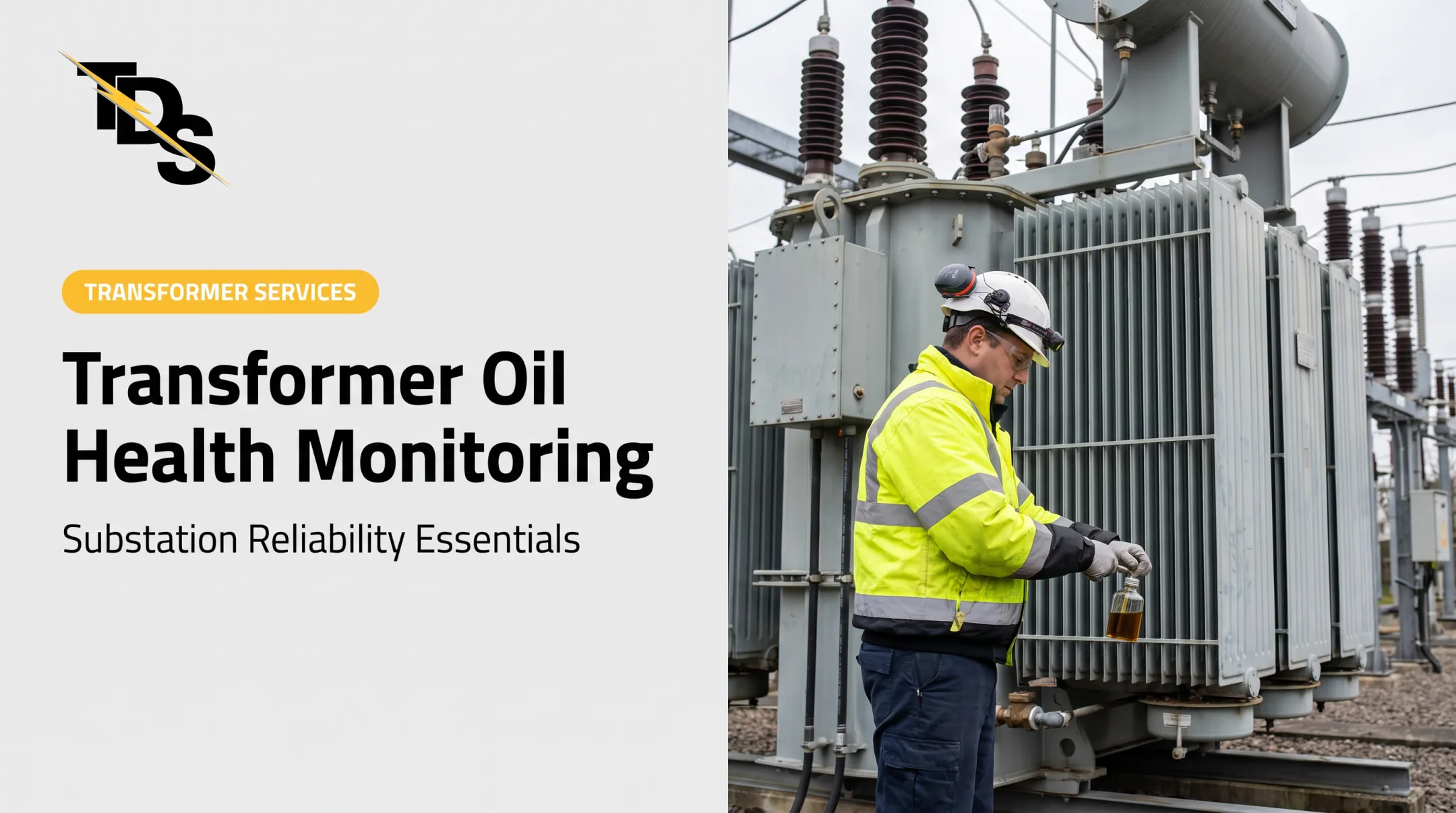
Step 2: Gather and Protect the Sample
ASTM D923 is the practice for sampling insulating liquids and stresses representative, uncontaminated samples. In practice:
- Use the correct sampling point, clean dry equipment, and proper containers
- Flush valves, label clearly, and document chain of custody
- For DGA, prevent air ingress, bubbles, heat, and delays. ABB's sampling guide warns that sampling errors can lose gases or add water
Qualified personnel must perform sampling under the owner's electrical safety, isolation, energized-work, and environmental procedures.
Step 3: Select Tests and Standards
Match the panel to the objective, criticality, fluid, age, and prior results. A basic dielectric and physical screen may suffice for routine checks. DGA, furans, acidity, IFT, or PCB testing are justified by specific questions. Verify current ASTM, IEEE, IEC, manufacturer, and owner documents before applying any criteria.
Step 4: Interpret in Context
Compare against baseline, history, and similar assets. Read related results together: moisture with breakdown voltage, acidity with IFT and color, DGA with loading and electrical test data. FIST recommends establishing an early-service baseline DGA and comparing several samples over time.
An abnormal result does not automatically name a fault or require removal from service. Confirm with a second sample and get qualified review.
Step 5: Act, Document, and Review
Possible actions include:
- Repeat sampling
- Filtration, dehydration, or reclamation
- Oil replacement
- Internal investigation
- Outage planning
FIST describes reconditioning as particulate filtration and drying, with reclamation considered for aging indicators such as power factor, IFT, or neutralization number.
Record the sample, method, lab, result, interpretation, action, and follow-up date. Retest after treatment or repair to confirm the problem was addressed.

Example Walkthrough
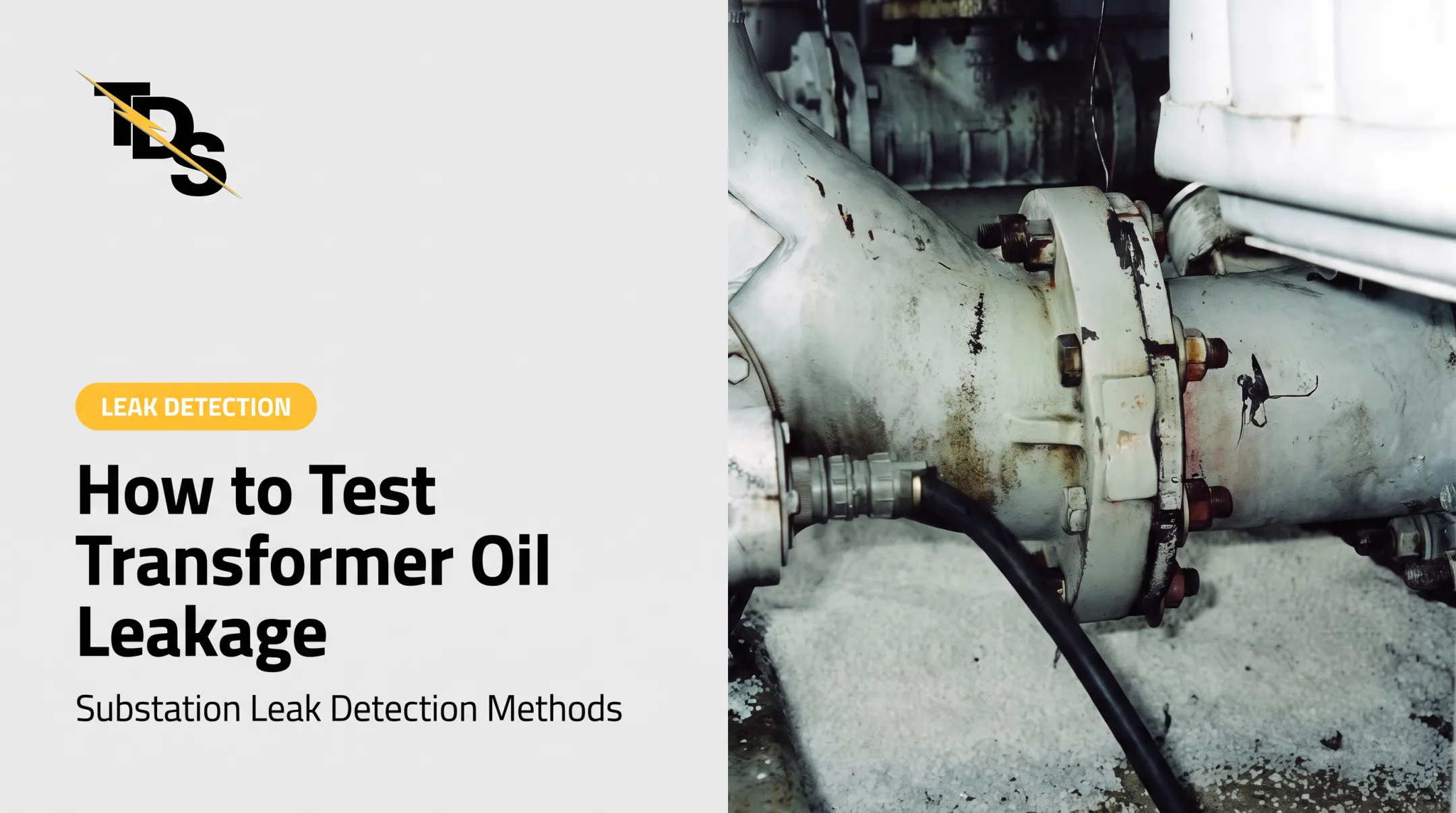
Picture a substation transformer with visible oil seepage and an unfavorable change in oil-condition indicators. No confirmed fault exists yet.
The team defines the decision: monitor, treat, or investigate. They verify the sample and history, then order a focused panel and check methods against ASTM and IEEE/IEC guidance.
FIST gives a useful pattern: in a conservator-type unit, rising nitrogen, oxygen, and carbon dioxide can point to a tank leak or poor oil processing. It is a trigger to investigate, not proof.
The team compares prior DGAs, takes a confirmation sample if the change was sudden, and inspects gasketed openings and the pressure-relief area for residue.
Depending on the combined results, the action could be trend monitoring, oil treatment, added electrical diagnostics, or a specialist leak survey. No single test should drive an irreversible decision. The follow-up plan is measurable: retest on a set date, compare trends, reinspect the equipment, and confirm the chosen fix reduced the risk.
How Transmission & Distribution Services Can Help
Transmission & Distribution Services (TDS) is a substation leak-sealing specialist. It is not an oil-testing laboratory and does not provide transformer diagnostic engineering.
Oil analysis documents fluid condition and supports maintenance planning. When an external leak is confirmed, TDS can seal it.
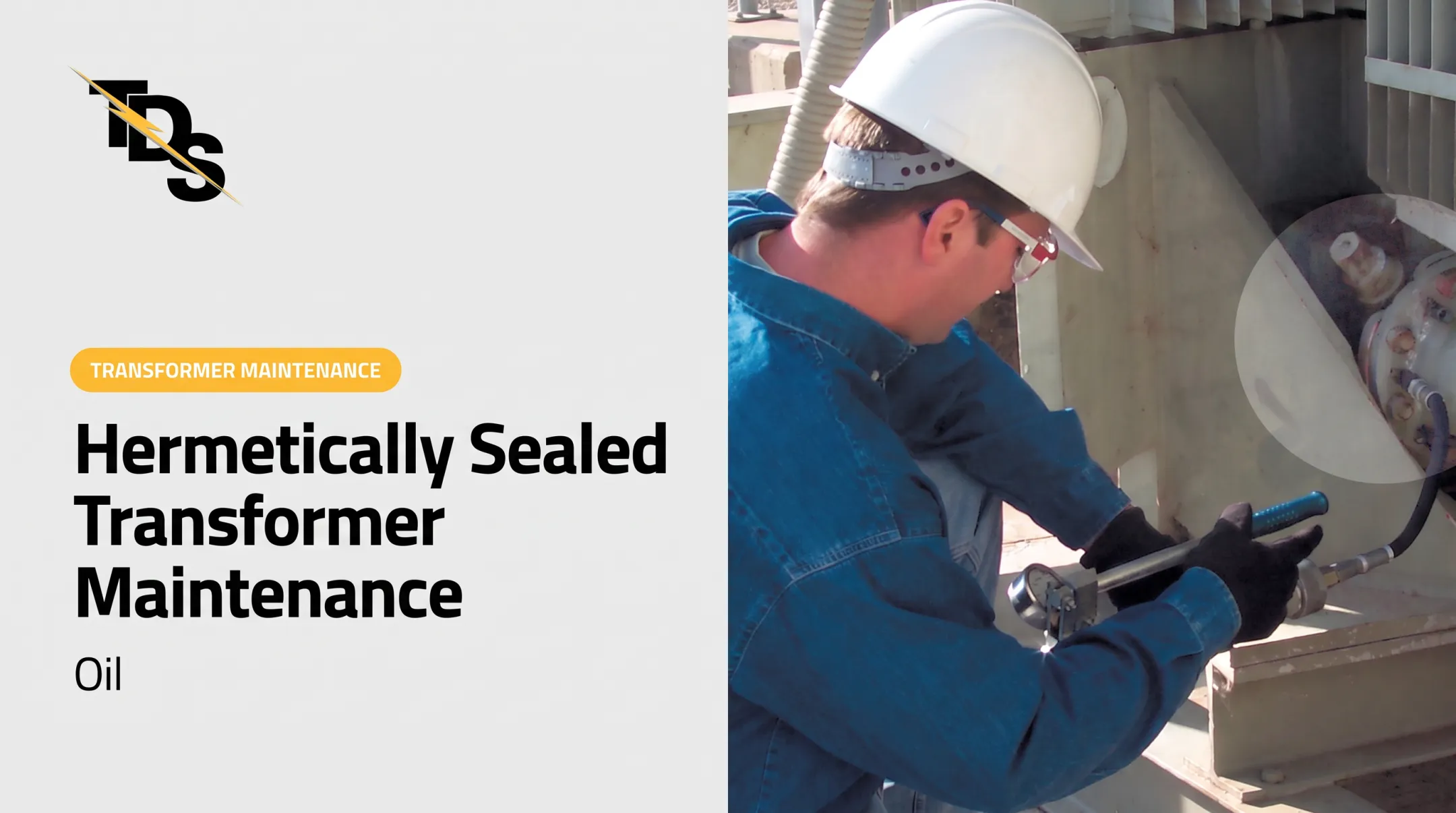
- Low-pressure, cured-in-place gasket repairs avoid traditional disassembly and regasketing where conditions allow
- Many repairs can be done with apparatus energized and in service when access to energized components is unnecessary
- Precise leak detection identifies the exact failure location before repair

The next step is a no-charge survey listing the facility, equipment, leak location, repair method, and price. TDS backs its original leak-seal work with a four-year warranty. That warranty covers the repair, not unrelated transformer conditions.
All oil testing, electrical diagnostics, sampling, and decisions about continued operation should follow the owner's procedures, applicable standards, and qualified technical advice.
Conclusion
Oil testing pairs fluid-quality checks with early insight into transformer condition. Useful decisions depend on representative samples, the right standards, trend analysis, and qualified interpretation.
ASTM methods keep procedures consistent. IEEE, IEC, manufacturer, and owner guidance supply the context for acceptance and maintenance. Review your program periodically and coordinate lab findings with inspections, electrical testing, leak management, and planned maintenance.
Frequently Asked Questions
How often should transformer oil be tested?
No universal interval exists. Set frequency by criticality, fluid, age, condition, manufacturer guidance, and trends. IEC ties intervals to risk; FIST's example is DGA at one month and yearly, with extra tests after faults, repairs, or alarms.
What tests are done on transformer oil?
Common tests are breakdown voltage, moisture, DGA, acidity, interfacial tension, color and visual exam, and furans. Physical, environmental, and PCB tests are added as needed. The panel depends on the maintenance objective.
What are the standards used for transformer oil testing?
ASTM covers individual methods. IEEE C57.104 guides DGA interpretation, and IEC 60422 and 60296 cover mineral oil maintenance and specification. Apply manufacturer requirements and verify current editions (IEEE C57.106 is listed Inactive-Reserved).
What is the acceptable ppm value for transformer oil?
There isn't one. ppm can describe moisture or any dissolved gas. Identify the parameter, fluid, transformer condition, standard, and whether the oil is new or in service.
What kind of oil is in a transformer?
Many units use mineral insulating oil. Synthetic or natural esters are also used. Confirm the fluid from the nameplate, records, and manufacturer guidance before interpreting results or mixing fluids.