
Introduction
Oil around a no-load tap changer handle is a warning, not a verdict. It may point to a worn shaft seal, O-ring, packing, or cover gasket. It may also be oil that migrated from a nearby flange, fitting, or tank seam. Either way, it deserves a look before oil loss or damage progresses.
Hard numbers on how often handle leaks occur don't exist, so treat every wet handle as site-specific. A small seep on a transformer with a spare is a scheduling problem. On a generator step-up unit with no spare, it's a risk to revenue.
This article defines DETCs, explains why handles leak, covers safe source confirmation, compares repair approaches, and clarifies when to bring in a leak-sealing specialist.
Key Takeaways
- Operate a DETC only when the transformer is de-energized per the OEM; "unloaded" isn't "safe."
- The wet spot near the handle may not be the true leak source.
- Don't force the handle, cycle it repeatedly, tighten blindly, or apply unapproved sealant.
- Repair choice depends on leak rate, location, oil compatibility, environmental risk, and outage options.
What Is a No-Load (DETC) Tap Changer?
How a DETC adjusts transformer voltage
A tap changer changes the number of active winding turns, which alters the turns ratio and shifts output voltage. IEC 60214-1 defines a de-energized tap changer (DETC) as one that changes winding connections only while the transformer is de-energized and isolated from the system. "Off-circuit tap changer" is an accepted alternative name.
Tap range and step vary by design. One OEM documents five positions: nominal, plus or minus 2.5%, and plus or minus 5%. Another lists several alternatives, so confirm the arrangement on the nameplate and in the OEM documentation.
Why "no-load" means more than a disconnected secondary
You'll see de-energized, off-circuit, off-load, and no-load used for the same device. Terminology varies by manufacturer and region. TDS's own materials use "NLTC."
The critical distinction: a transformer with no connected load is not the same as one that is de-energized. Before anyone touches the handle, the transformer must be:
- Isolated from all sources
- Proven de-energized
- Grounded
- Under the site's approved lockout/tagout procedure
Eaton warns against operating its tap changer while the transformer is energized, citing severe injury and equipment damage.
How the handle relates to a leak
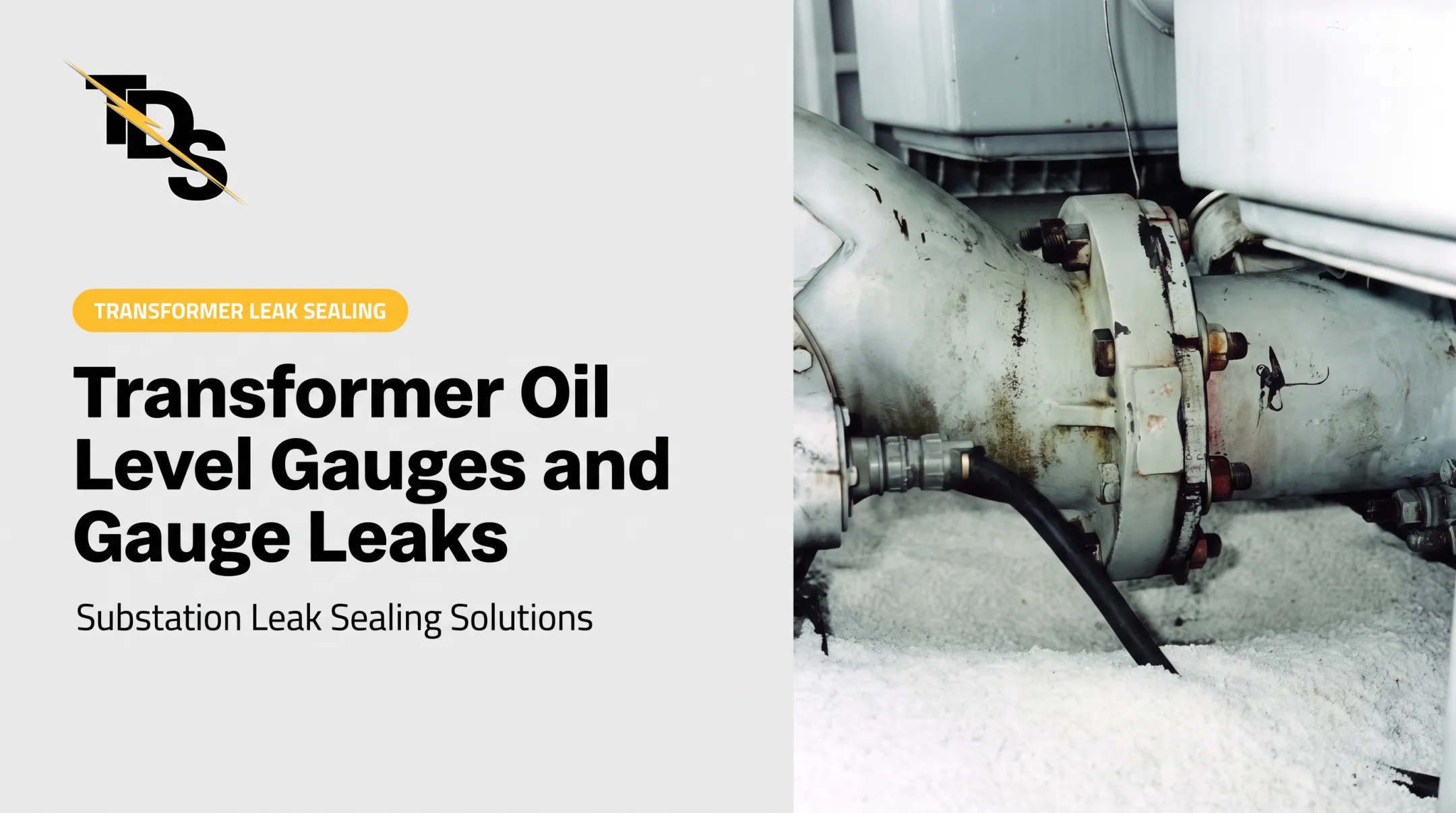
The external handle turns an operating shaft that passes through the tank wall or cover. Position indicators and sealing interfaces sit around it. Eaton's 100 A external tap changer, for example, seals its shaft with two high-temperature O-rings, and its installation manual shows a separate mounting gasket at the tank wall.

That is one model. Designs differ, so verify yours. Many designs also use packing around the handle stem, which TDS can drill and inject with sealant.
Why DETC Handles Leak: Causes and Warning Signs
Common leak paths around the handle
- Aged seals: Gaskets lose resilience with age and temperature extremes, according to the Bureau of Reclamation. EPRI likewise ties gasket leakage to thermal-cycling aging and improper assembly.
- Stressed hardware: A loose, misaligned, or over-torqued assembly can load the sealing surface. Reclamation notes that improper torque can bow a flange and create uneven gasket pressure. Confirm model-specific torque and assembly details in the OEM manual.
- Migrated oil: Oil from a nearby flange, drain, bushing, tank seam, or fitting can track toward the handle. Clean and confirm before choosing a repair.
Conditions that speed leakage
Factors that accelerate leakage include:
- Thermal cycling, weather, and vibration
- Corrosion and mechanical impact
- Past repairs with the wrong gasket, sealant, or tightening method
Reclamation lists expansion, contraction, and vibration as movements a gasket must absorb.
Repeatedly operating a stiff or damaged handle makes things worse. It can wear a seal or shaft and add a separate mechanical problem.
Warning signs and consequences
Light staining, persistent wetness, active dripping, and pooling each signal a different stage of leakage. No universal severity thresholds exist, so use site procedures and qualified personnel.
Continued loss carries real costs:
- Lower oil level and possible cooling or insulation concerns
- Water and air ingress. Reclamation says moisture and oxygen speed paper insulation deterioration
- Slip hazards
- Environmental release and regulatory exposure
On the regulatory side, EPA's reporting rules treat a sheen on water as a harmful discharge requiring immediate notice to the National Response Center. SPCC plans generally apply to facilities with more than 1,320 gallons of aboveground oil storage.
Document each leak with:
- Exact location and photos
- Transformer temperature and tap position
- Recent handle operation and oil level
- Prior repairs
EPRI advises recording leak location and degree.
How to Evaluate a DETC Handle Leak Safely
Establish the safety boundary first
Qualified personnel only. Stay inside the site electrical safety program and OEM instructions, and put these controls in place before any hands-on work:
- Lockout/tagout and isolation from every source
- Absence-of-voltage verification and grounding
- Correct PPE and spill controls
OSHA 1910.269 requires verifying absence of voltage before protective grounds go on.
Operations staff may observe from a safe distance. Opening covers, touching the handle, cleaning near energized equipment, or attempting repairs still needs site and OEM authorization.
Gather history
Pull the records that support diagnosis:
- Nameplate, tap-changer model, and position information
- OEM manual and oil-level data
- Recent operating events and prior leak repairs
- Notes on handle resistance
A new seep right after tap operation suggests a disturbed interface. Gradual increasing wetness points to age-related seal deterioration or a developing mechanical issue.
Confirm the actual source
Don't assume the lowest drip is the origin. Inspect the highest wet point, compare nearby interfaces, clean using approved methods when it's safe, then recheck for fresh oil. Eaton's drawings show a separate handle/shaft seal and tank-wall gasket, so oil near a handle doesn't say which one is leaking.

Where facility procedures allow, TDS oil leak detector spray is an option for in-house tracing. After the flange is cleaned, the powder darkens where oil contacts it. It doesn't replace electrical isolation, qualified diagnosis, or repair planning.
Classify and escalate
Separate an accessible external seal or gasket issue from deeper problems such as:
- Damaged housing or cracked weld
- Distorted shaft
- Internal compartment leak
- Low oil level
- Leak near energized parts
Escalate promptly under your maintenance or emergency procedure for:
- Active dripping or rapidly falling oil level
- Visible mechanical damage
- A source you can't confirm
- Environmental release
- Abnormal tap position
- A handle that won't move as designed
Repair Options and When to Use a Specialist
OEM replacement or traditional resealing
Some leaks need a new OEM seal, O-ring, packing, gasket, shaft, or housing. That may involve an outage, oil management, access work, testing, and recommissioning. TDS notes that conventional repairs typically require de-energizing, grounding, draining oil, and disassembly.
The correct component, material, torque, lubricant, oil-handling process, and post-repair testing come from the OEM or a qualified repair organization.
Why quick fixes backfire
- Indiscriminate tightening can damage the sealing surface
- Household or incompatible sealants can contaminate oil and restrict handle movement
- External patches can hide the real source or a structural defect
- Operating the tap changer to "test" a repair, without an approved procedure, is a hazard
Any of these can make the eventual OEM repair harder.
Targeted low-pressure leak sealing
Low-pressure sealing can avoid full teardown when the leak is localized, the substrate and interface are suitable, and the method is compatible with the oil and operating conditions. TDS seals NLTC handle-stem leaks by drilling and injecting sealant into the packing area, and replaces gasket material with a cured-in-place gasket.
This approach is not right for every handle. Use another path when you face:
- Structural damage or internal failure
- Severe oil loss
- Inaccessible damage
- An OEM requirement for component replacement
Independent performance data for sealing a moving shaft interface is limited, so ask any vendor how the method accommodates handle movement.

Where TDS fits
Transmission & Distribution Services works exclusively in substations on oil-filled and SF6 apparatus. Its free equipment survey identifies the facility, equipment, leak location, repair method, and repair price before you authorize work. TDS confirms the exact leak and fixes only what is leaking.
TDS also states that many repairs can be done with equipment in service, when access to energized components on top of the apparatus isn't needed. Whether that applies to your unit is decided in the survey.
TDS offers a four-year leak-seal warranty on its original work. Warranty coverage and repair suitability depend on the assessed equipment and completed scope.
Verify the repair
Confirm that:
- The leak has stopped
- The handle and position indicator work correctly when authorized
- Oil level and condition are acceptable
- Containment is removed properly
- Required electrical or commissioning checks are complete
Keep a service record that includes:
- Original leak location
- Method and materials
- Inspection findings and test results
- Photos
- Follow-up interval
- Any restrictions on future tap operation
Preventing Repeat Leaks and Planning the Next Step
Build the handle into routine inspections
Schedule visual checks for:
- New wetness, staining, or corrosion
- Loose hardware and damaged position indicators
- Abnormal handle resistance
- Oil-level changes
MR's DEETAP instructions call for occasional visual inspection of the tap-changer head and drive, including sealing points.
Trend your photos against prior records. A series of small seeps tells a different story than a one-off.
Operate and maintain the DETC correctly
- Restrict handle operation to authorized personnel
- Confirm the unit is de-energized before any movement
- Stay within the manufacturer's sequence and position limits
- Keep labels, position markings, weather protection, and enclosures in good condition so the mechanism isn't forced or misread
Know when to plan an outage or survey
Plan corrective work before a seep becomes an active leak, especially on units supporting generation, critical distribution, or a facility with no spare.
Accurate source confirmation and a repair method matched to the equipment can limit unnecessary teardown while protecting safety, environmental controls, and reliability.
Frequently Asked Questions
How does a tap changer work?
It selects different winding connection points to change the transformer turns ratio and regulate output voltage. Because a DETC switches those connections mechanically, the transformer must be de-energized first.
What is the difference between an OLTC and an off-circuit tap changer?
An OLTC changes taps while energized and carrying load. An off-circuit tap changer (DETC) requires the transformer to be isolated and de-energized before adjustment.
What are the two types of tap changers?
De-energized (off-circuit) and on-load tap changers. Selection depends on voltage variability, continuity requirements, control needs, and maintenance strategy.
Why use a tap changer in a transformer?
It compensates for supply, load, and network voltage variation by adjusting the effective turns ratio, helping hold the required secondary voltage.
Why do transformers need 2.5% tap changing?
They don't always. 2.5% steps are common in some designs, but tap range and step size depend on rating, system voltage variation, and OEM specification.